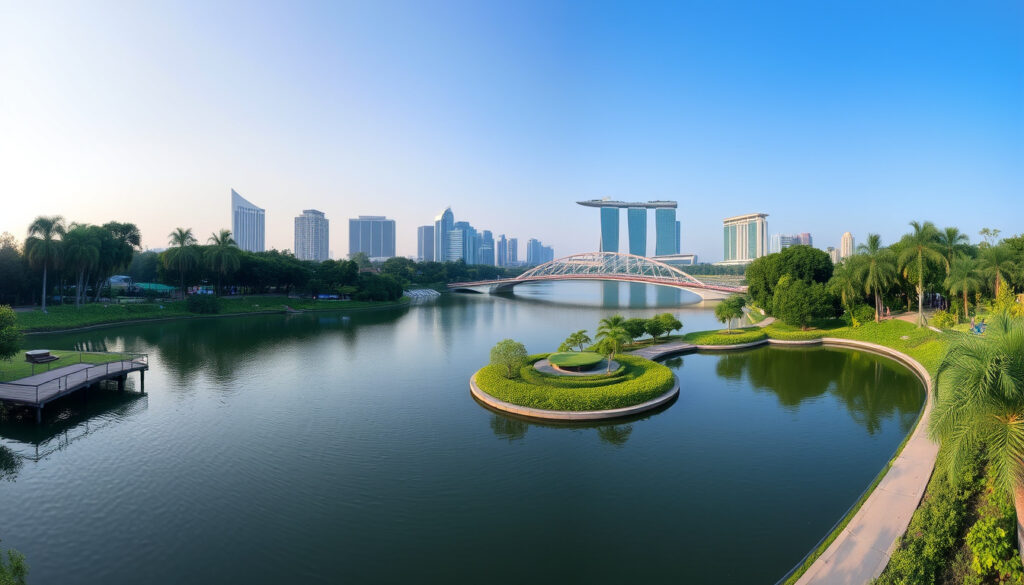
Jurong Lake Gardens Photos: Best Photo Spots & Guide
There’s a reason shutterbugs and families keep heading to Jurong Lake Gardens: it’s a 53-hectare playground of light, water, and greenery that photographs beautifully at nearly any hour. Whether you’re planning a sunrise shoot at the Grasslands or a family portrait under the Water Wall Court, this guide walks you through the best photo spots, the rules you need to know, and the practical details that make your visit smooth.
Total area: 53 hectares ·
Admission: Free ·
Nearest MRT station: Chinese Garden (EW25) ·
Number of themed areas: 3
Quick snapshot
- Free admission to all three gardens (NParks official site)
- Closest MRT is Chinese Garden station; total park area is 53 hectares (NParks Jurong Lake Gardens)
- Lakeside Garden open 24 hours; one park section is closed on Mondays for maintenance (NParks official brochure)
- Exact walking trail length in kilometres
- Whether all paths are fully wheelchair accessible
- Exact opening hours for every individual entrance gate
- Rejuvenated Chinese and Japanese Gardens opened in 2024 (NParks News)
- 2024 rejuvenation complete; ongoing seasonal events likely (check NParks events calendar)
The facts that matter most for planning a photo trip can be scanned in a single glance here.
| Detail | Value |
|---|---|
| Total area | 53 hectares |
| Admission | Free |
| Nearest MRT | Chinese Garden (EW25) |
| Number of gardens | 3 |
| Parking | Available |
How long does it take to walk Jurong Lake Gardens?
The loop trail around the lake connects all three gardens, with the main walking path stretching through Lakeside Garden, across the bridge to Chinese Garden, and around Japanese Garden. Most visitors report taking between 1.5 and 2 hours for a relaxed walk that stops at the key photo spots.
Walking trail distance and time
The NParks brochure does not specify an exact trail distance in kilometres, but the full circuit of Jurong Lake Gardens — covering Lakeside Garden, Chinese Garden, and Japanese Garden — takes about 1.5 to 2 hours at a leisurely pace. The path is mostly flat and paved, suitable for strollers and wheelchairs on the main routes.
Best photo spots along the walk
- The Grasslands — open field with tall grasses, ideal for golden-hour portraits. Note: flash lighting is prohibited to protect biodiversity (NParks photography permit rules).
- Clusia Cove — water play area with shallow pools, but photography is not allowed here for visitor convenience (NParks permit guidelines).
- Lakeside Boardwalk — wooden walkway along the water, reflecting the skyline at sunset.
- Chinese Garden Bridge — the iconic pagoda-style bridge connecting the gardens, popular for wide-angle shots.
- Water Lily Garden — located in Japanese Garden, it houses the largest collection of water lilies in Singapore (NParks News).
- Water Wall Court — a courtyard enclosed by 3-metre-high waterfalls, creating a dramatic backdrop for portraits and long exposures (NParks News).
For portrait and wedding photographers, the combination of the Grasslands’ open light and the Water Wall Court’s structured water features gives two completely different looks within a 15-minute walk — a rare range for a single outdoor location.
What this means: the 1.5-to-2-hour loop doubles as a practical scouting route, letting you check light and angles at every major photo spot before returning for the actual shoot.
What can you do at Jurong Lake Gardens?
Beyond photography, the gardens pack enough activities for a half-day outing. Families, joggers, and casual explorers all find their corner.
Playground and family activities
Forest Ramble is a nature-themed playground designed for children, with climbing structures, slides, and water play elements near Clusia Cove. Note: photography is not permitted at Forest Ramble or Clusia Cove under NParks rules (NParks permit guidelines).
Clusia Cove water play area
Clusia Cove features shallow pools and gentle water sprays, popular with toddlers and young children on hot days. The area is monitored, and visitors are reminded to stay on designated paths. Photography is not allowed here (NParks permit rules).
Picnic spots
Picnicking is permitted on designated grass areas throughout the gardens. The lawns near the Lakeside Garden boardwalk offer shaded spots with lake views. Tables and benches are scattered along the main path.
Thematic gardens and flora
The three gardens each have distinct character: Lakeside Garden is wide and modern, Chinese Garden features traditional pagodas and the Grand Arch, and Japanese Garden offers the Water Lily Garden and Cascading Creek, a riverine boardwalk path that mimics a Southeast Asian forest river (NParks News).
For visitors with kids, the restricted photography zones at Forest Ramble and Clusia Cove mean you’ll be enjoying the play areas fully present — not through a lens. Plan your photo walk around these restrictions: shoot the Grasslands early, then let the kids loose at the playground without worrying about violating park rules.
The pattern: the gardens intentionally separate the noise of family play from the calm of photo spots, which lets a single visit serve both a portrait session and a kid-friendly outing.
Is Jurong Lake Gardens free?
Yes, admission to all three gardens is free, though some extras carry charges.
Admission fees
Entry to Jurong Lake Gardens is completely free (NParks official site). No tickets are required, and the gardens are open to the public daily.
Parking costs
Parking is available near the gardens, but fees apply. Car parks are located at the Lakeside Garden entrance and near Chinese Garden. Rates are typical of public park parking in Singapore, with per-hour charges.
Other expenses
Some events or seasonal festivals may have separate entry fees. Food and drink kiosks within the gardens sell at market prices, but picnicking is a free alternative.
The catch: free admission removes the biggest cost barrier, but paid parking and occasional event fees still leave a small budget line for a full day out.
Which MRT station is closest to Jurong Lake Gardens?
Getting to the gardens is straightforward, with public transport the easiest option for most visitors.
Nearest MRT station
Chinese Garden MRT station (East-West Line, EW25) sits at the edge of Chinese Garden, directly connecting to the park. From the station, it’s a 5-minute walk to the garden entrance (NParks Jurong Lake Gardens). Lakeside MRT station (EW26) is also nearby, serving the Lakeside Garden entrance.
Bus connections
Several bus services stop near the gardens, including bus lines 154, 157, 178, 180, 198, and 335. Alight at the Chinese Garden or Lakeside Garden bus stops.
Driving and parking
If driving, use the car parks at Lakeside Garden (along Yuan Ching Road) or Chinese Garden (along Boon Lay Way). Parking charges apply. On weekends and public holidays, the lots fill by mid-morning.
The implication: choosing transport is a gear decision as much as a logistics one — MRT drops you at the best photo point, while driving adds parking fees and weekend scarcity.
What can I see at Jurong Lake Gardens at night?
The gardens take on a different character after dark, with illuminated paths and reflections off the lake creating moody photo opportunities.
Night photography spots
- Lakeside Boardwalk — the wooden walkway is lit at night, with the city skyline reflecting on the water.
- Chinese Garden Bridge — the pagoda bridge is illuminated, making for dramatic long exposures and silhouette shots.
- Water Lily Garden — the lily pond has subtle underwater lighting that brings out the colours of the flowers.
- Water Wall Court — the waterfalls are lit from below, creating a glowing backdrop for portraits.
Lighting and atmosphere
The gardens are generally well-lit along main paths, though some side trails may be dimmer. The atmosphere is calm and quiet, with fewer crowds than daytime.
Safety tips for night visits
- Stick to well-lit main paths.
- Bring a torch or phone light for side trails.
- Visit in groups if possible.
- Check closing times: Lakeside Garden is open 24 hours, but Chinese Garden and Japanese Garden close at midnight (NParks brochure).
“Great place for family photos, especially the grasslands. The light in the late afternoon is incredible — you don’t need a fancy camera to get good shots here.”
— Visitor review, TripAdvisor
The trade-off for night photographers is a narrow but productive window: once the Grasslands lose their light, the illuminated bridge and lily pond take over as the strongest subjects.
Photography rules and permits at Jurong Lake Gardens
NParks has specific rules for photographers, and knowing them saves you from surprises on the day.
- Casual photography (family portraits, graduations, selfies) does not require a permit (NParks permit page).
- Commercial photography and filming require prior approval from NParks, with applications submitted at least 14 days before the intended date (NParks permit page).
- Prohibited zones: No photography or filming at Clusia Cove, Forest Ramble, and Entrance Pavilion (NParks permit page).
- Grasslands rule: Flash lighting is banned to protect biodiversity, and visitors must stay on designated trails (NParks permit page).
- Recommended hours: Weekday off-peak shooting between 9 am and 5 pm is encouraged (NParks permit page).
“Jurong Lake Gardens is a 53-hectare green lung in the heart of the Jurong region. The rejuvenated Chinese and Japanese Gardens, completed in 2024, add new spaces for recreation and community bonding.”
— NParks official site
The implication: For photographers planning a paid shoot, the 14-day permit lead time and restricted zones mean scouting your locations in advance is essential. The Grasslands are your best bet for creative control — just leave the flash at home.
thesmartlocal.com, sassymamasg.com, thehoneycombers.com, juronglakegardens.com, en.wikipedia.org, lemon8-app.com, lemon8-app.com
Frequently asked questions
Can you picnic at Jurong Lake Gardens?
Yes, picnicking is allowed on designated grass areas. Tables are available near the Lakeside Garden boardwalk.
What events are happening at Jurong Lake Gardens?
Check the official NParks events calendar for seasonal festivals, outdoor performances, and community events. The gardens host regular events, especially around Chinese New Year and National Day.
Where is the entrance to Jurong Lake Gardens located?
The main entrances are at Lakeside Garden (Yuan Ching Road) and Chinese Garden (Boon Lay Way). Both are within walking distance of their respective MRT stations.
What time does Lake Gardens open?
Lakeside Garden is open 24 hours. Chinese Garden and Japanese Garden open from 5:30 am to 12 am daily. One section is closed on Mondays for maintenance (NParks brochure).
Are there restrooms and changing facilities?
Yes, restrooms and changing rooms are available near the main entrances and at Clusia Cove.
The takeaway for Singapore photographers, families, and weekend explorers: Jurong Lake Gardens delivers three distinct visual worlds in one free, accessible location. The trade-off is clear — the best shooting spots (Grasslands, Water Lily Garden, Water Wall Court) come with restrictions on flash and zones where photography is banned entirely. For the casual shooter with natural light and a willingness to walk, the payoff is immense. For the commercial photographer, the 14-day permit window and restricted zones mean planning is everything.
Related reading: Maxwell Food Centre Photos: Best Stalls & Tips · Demon Slayer Exhibition Singapore: 2026 Dates, Tickets & Guide
More related posts
 Transport Voucher 2026 Application Singapore: How to Apply
 HDB BTO Income Ceiling 2025 Explained: S$14,000 Cap
 Japan Cherry Blossom Forecast 2026: Affordable Season Guide
 Lord of the Rings Musical Singapore: Reviews, Tickets & Guide
 Oriental Kopi @ Bugis Junction: Photos, Menu & Reviews
 Convert SGD to Yen: Live Exchange Rate & Guide for 2026
 Gardens by the Bay Singapore: Tickets, Light Show, Tips & Prices
 3/4 Inch to mm – Exact 19.05 mm Conversion Guide