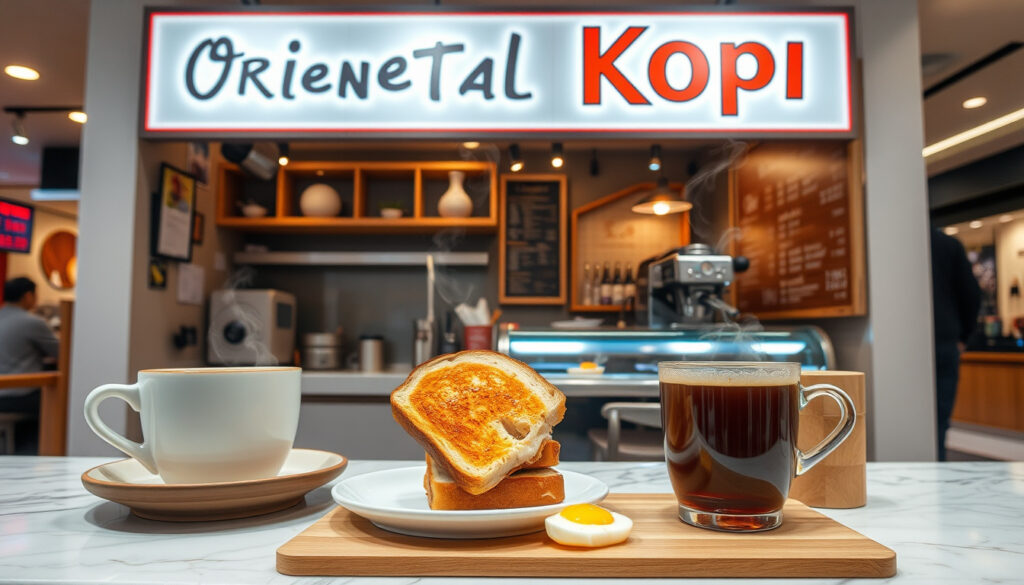
Oriental Kopi @ Bugis Junction: Photos, Menu & Reviews
Oriental Kopi’s Singapore debut at Bugis Junction drew crowds the moment it opened — the frothy iced coffees, the retro tiling, the egg tarts arranged just so — but reviews since have been mixed. Some found their new favourite neighbourhood kopitiam; others walked away scratching their heads about the wait and the bill.
Location: Bugis Junction #02-50 · Hours: Daily 8am–10pm · Instagram: @orientalkopi.sg (7.2K followers) · Tripadvisor: 4.0/5 · Malaysia outlets: 14
Quick snapshot
- Bugis Junction #02-50, Singapore 188021 (jiaksimi png)
- Operating 8am–10pm daily, walk-in only (Alexis Cheong)
- First Singapore outlet opened 2025 (jiaksimi png)
- Paradise Group collaboration (Paradise Group)
- 100-seater, nostalgic 1970s–80s decor (Eatbook.sg)
- Exact opening date (only year 2025 confirmed)
- Singapore egg tart price not published
- Tripadvisor has only 1 verified review
- NEX outlet timeline unconfirmed
- Full 73-item beverage list not publicly listed
- Signature Nasi Lemak (8-spice pandan rice) — $9.50 (Scribd Menu)
- Double Butter Kaya Toast — $2.60 (Traditional or Pandan) (Scribd Menu)
- Cold Kopi — $3.93 (frothy Nanyang style) (Alexis Cheong)
- Rendang Beef Nasi Lemak — $11.90 (Scribd Menu)
- Oriental Egg Tart (reported from Malaysian outlets: 2 pcs RM9.80) (jiaksimi png)
- Queues reported strong even months after opening (jiaksimi png)
- Non-peak weekday visits recommended ((jiaksimi png))
- Walk-in only — no reservations ((jiaksimi png))
- Service delays noted in reviews (Alexis Cheong)
The key facts below are sourced from official menu PDFs, Tripadvisor, and verified food blogger reviews.
| Detail | Value | Source |
|---|---|---|
| Address | 200 Victoria Street #02-50 Bugis Junction Singapore 188021 | jiaksimi png |
| Operating Hours | Daily 8am to 10pm | Alexis Cheong |
| First Singapore Outlet | Bugis Junction, 2025 | jiaksimi png |
| @orientalkopi.sg (7.2K followers) | Oriental Kopi Instagram | |
| Malaysia Outlets | 14 | Eatbook.sg |
| Tripadvisor Rating | 4.0/5 (1 review) | Tripadvisor |
| Seats | 100 | Eatbook.sg |
| Nasi Lemak Spice Count | 8 types in pandan rice | Paradise Group |
| Service Charge | 10% (dine-in) + GST | Paradise Group |
What is Oriental Kopi famous for?
Oriental Kopi built its reputation in Malaysia as the country’s most popular kopitiam chain, with 14 outlets across Kuala Lumpur, Petaling Jaya, Johor, and Penang (Paradise Group). The brand’s hook is Nanyang cuisine nostalgia — dishes and drinks that evoke 1970s–80s colonial-era coffee shop culture, from thick frothy kopi to sambal-laden nasi lemak.
Nanyang cuisine highlights
- Signature Nasi Lemak with pandan rice infused with 8 spices, ayam berempah chicken leg, peanuts, anchovies, and sous-vide egg
- Cold Kopi with the characteristic thick, sweet, frothy overflow that defines Nanyang iced coffee
- Double Butter Kaya Toast in Traditional Hainanese or Pandan Kaya variants
- Curry Laksa with broth simmered 4 hours using Grade A chillies, fresh santan, and curry leaves
The brand’s official menu lists signature items including Malay Rendang Chicken, Mee Siam, Chicken Hor Fun, Char Kuey Teow, and Hainanese Chicken Rice (Oriental Kopi).
Kopitiam heritage
What sets Oriental Kopi apart is its commitment to the kopitiam experience — wooden furniture, rattan elements, tiled mosaic flooring that replicates old-school colonial-era coffee shops (jiaksimi png). The Bugis Junction outlet carries this through, creating what one blogger described as a “decked in a way that replicates that of an old-school colonial-era coffeeshop” (jiaksimi png).
The implication: for Singaporeans who grew up with grandparents at neighbourhood kopitiams, this is pure comfort food territory. For younger visitors or those unfamiliar with the format, it’s a cultural immersion dressed up as a meal.
Where is Oriental Kopi in Bugis?
The Singapore outlet occupies unit #02-50 on the second floor of Bugis Junction, located at 200 Victoria Street, Singapore 188021 (jiaksimi png). The space formerly housed 88 K Town, previously Kongane Yama and Chir Chir (jiaksimi png).
Exact address and outlet details
The 100-seater restaurant features wooden accents and a cosy atmosphere with seating for about 100 guests (Eatbook.sg). Operating hours are daily from 8am to 10pm, with walk-in only entry — no reservations are accepted (Alexis Cheong).
A second Singapore outlet reportedly planned for NEX later in 2025 has not been officially confirmed (jiaksimi png).
Nearby landmarks
Bugis Junction sits within the Bugis heritage district, connected via the Bugis MRT station (East-West and Downtown lines). The mall connects to Bugis Street and is steps from the historic Kampong Glam neighbourhood.
What this means: the location is central and accessible, but Bugis weekend foot traffic is heavy. If you’re planning to visit, timing matters more than the location itself.
Who is the owner of Oriental Kopi in Singapore?
The Singapore operation is a collaboration between the Malaysian Oriental Kopi chain and Paradise Group, which operates the outlet locally (jiaksimi png). The brand’s founder, Dato’ Calvin Chan, maintains an active presence on social media under @calvin_chan63, with the brand account @orientalkopi.asia (Oriental Kopi).
Dato’ Calvin Chan profile
While public biographical details are limited, the founder’s Instagram presence shows active engagement with the brand’s expansion. Paradise Group, as the Singapore operating partner, brings experience with food hall and casual dining concepts across the region.
The pattern: this isn’t a standalone venture — it’s a structured franchise partnership. That means operational standards, menu consistency, and pricing frameworks are likely more stable than a typical independent restaurant opening.
Oriental Kopi Bugis Junction menu and prices
The Bugis Junction menu covers the full Nanyang kopitiam spectrum — from breakfast staples to full meal plates. Here’s what you’re looking at, based on available pricing data (Scribd Menu) (Paradise Group).
Egg tarts and polo bun
- Oriental Egg Tart — priced from RM9.80 for 2 pieces at Malaysian outlets; Singapore pricing not publicly confirmed
- Oriental Polo Bun — $5.02 (from official menu PDF, SGD equivalent)
- Peanut Butter Wholemeal Bun — $4.50
The egg tart situation is worth flagging: while the item appears on the menu and social media posts feature them prominently, Singapore-specific pricing hasn’t been published by the outlet. Malaysian reference pricing suggests roughly RM9.80 for a two-piece serve, which would translate to approximately $3–3.50 SGD before service charge and GST.
How much is an oriental kopi egg tart?
If you’re looking specifically for egg tart pricing, the honest answer is: it hasn’t been officially published for the Singapore outlet yet. Malaysian outlets (including Johor Baru locations) charge approximately RM9.80 for a two-piece serve of Oriental Egg Tarts. Until the Bugis Junction outlet releases its own pricing, visitors should budget conservatively — expect to pay around $3.50–$4.50 SGD per two-piece serve once the price is confirmed.
Main dishes and rice
- Nasi Lemak Rendang Chicken — $9.50
- Nasi Lemak Rendang Beef — $11.90
- Nanyang Curry Chicken — $9.50
- Oriental Curry Laksa Mee — $7.51 (medium confidence on pricing)
- Nanyang Curry Chicken Rice — $7.01
Toast and breakfast items
- Double Butter Kaya Toast (Traditional Hainanese or Pandan Kaya) — $2.60
- Curry Double Lava Egg Toast — $4.60
Drinks
- Cold Oriental Kopi — $3.93
- Full beverage menu reportedly offers 73 items via Foodpanda (Foodpanda)
All dine-in prices are subject to a 10% service charge and GST (Paradise Group). The menu also appears on Foodpanda with categorized sections: Popular (6 items), New Launch (2), Beverages (73), and Nasi Lemak (5 variants) (Foodpanda).
The catch: prices are mid-range for a kopitiam-style outlet, but the service charge and GST push the final bill higher than the menu price suggests. For a couple sharing nasi lemak, toast, and two coffees, expect to pay in the $35–45 range before extras.
The menu reads like a love letter to Nanyang comfort food, but the sticker price will test your nostalgia. At $9.50–$11.90 for rice dishes and $2.60 for a single kaya toast, this sits above typical hawker prices. For visitors from Malaysia, the Singapore premium may sting; for Singaporeans unfamiliar with Malaysian kopitiam pricing, it’s comparable to mid-tier café food.
Is Oriental Kopi usually crowded?
Queues at the Bugis Junction outlet have been reported as strong even months after the opening, with visitors noting wait times as a significant factor (jiaksimi png). The space seats 100, but popularity has consistently outpaced capacity during peak periods.
Visitor experiences
One reviewer described a “really quite a bad experience overall given the long wait time, the prices and the unsatisfactory quality of food” (Alexis Cheong). The same reviewer noted delayed service alongside the food quality concerns. However, another visitor observed that “queues do seem to be going strong at their Bugis Junction location even after having opened their doors here for quite a while by now” (jiaksimi png) — suggesting sustained interest despite mixed reviews.
Wait times and reviews
Tripadvisor currently shows a 4.0/5 rating from just 1 verified review, ranking the outlet at #5,885 of 11,678 Singapore restaurants (Tripadvisor). The limited review count makes it difficult to gauge whether early operational hiccups have been resolved or persist.
The trade-off: walk-in only with no reservation system means you’re competing for seats during peak hours. Early weekday visits (before 9:30am) or late afternoon (after 2pm) offer the best odds of avoiding a queue.
The gap between social media hype and actual review experiences is significant here. Instagram posts showcase beautifully plated dishes in an atmospheric setting; the reality includes wait times that some visitors find disappointing relative to food quality and pricing. This isn’t unusual for a newly opened destination restaurant, but the pattern warrants attention if you’re planning a visit around high expectations.
Upsides
- Authentic Nanyang kopitiam experience rare in Singapore
- 8-spice nasi lemak is genuinely distinctive
- 100-seater capacity is substantial for the format
- Central Bugis location with MRT access
- Consistent with established Malaysian brand (14 outlets)
Downsides
- Walk-in only — no reservations possible
- Reported long wait times during peak periods
- Service delays noted in reviews
- 10% service charge + GST on top of menu prices
- Only 1 Tripadvisor review — limited independent validation
- Singapore egg tart price not publicly confirmed
“This is really quite a bad experience overall given the long wait time, the prices and the unsatisfactory quality of food.”
— Alexis Cheong, Food Reviewer (March 2025)
“Queues do seem to be going strong at their Bugis Junction location even after having opened their doors here for quite a while by now.”
— jiaksimi, Food Blogger (May 2025)
The tension between these two experiences — one disappointing, one positive — captures the current reality of Oriental Kopi’s Singapore debut. The brand has strong fundamentals: authentic food, atmospheric decor, and proven Malaysian pedigree. What remains unclear is whether the operational inconsistencies flagged in early reviews represent startup challenges that have since been resolved, or systemic issues that persist.
Related reading: Oriental Kopi @ Bugis Junction Menu: Prices & Popular Items · Bugis BBQ and Hotpot: Menu, Prices & Reservations Guide
At Oriental Kopi in bustling Bugis Junction, pair your frothy iced kopi with things to do in Bugis like nearby street markets and historic temples for a fuller day out.
Frequently asked questions
Why is Oriental Kopi so famous?
Oriental Kopi is Malaysia’s most popular kopitiam chain, with 14 outlets across Kuala Lumpur, Petaling Jaya, Johor, and Penang. The brand’s fame rests on authentic Nanyang cuisine nostalgia — food and drinks evoking 1970s–80s colonial-era coffee shop culture.
What is so special about Oriental Kopi?
The combination of nostalgic 1970s–80s decor (wooden furniture, rattan elements, tiled mosaic flooring), authentic Nanyang dishes like the 8-spice nasi lemak, and the signature frothy cold kopi creates a distinctive experience that differentiates it from typical Singapore kopitiams.
What is Bugis Singapore known for?
Bugis is a heritage district in Singapore known for the Bugis Street market, Kampong Glam’s Arabic culture, and shopping complexes like Bugis Junction and Raffles City. It sits along the Bugis MRT interchange (East-West and Downtown lines).
What is the 2 hour coffee rule?
The “2 hour coffee rule” refers to the traditional Malay/Peranakan practice of lingering over kopi at a kopitiam — chatting, reading newspapers, watching the world go by. At Oriental Kopi, the nostalgic atmosphere encourages this unhurried pace, though it can mean queues during peak periods.
Does Oriental Kopi Bugis Junction take reservations?
No. The Bugis Junction outlet operates on walk-in only basis with no reservations accepted. Best strategy: arrive early (before 9:30am) or during off-peak afternoon hours (after 2pm) to improve your odds of getting a seat without a long wait.
What does Oriental Kopi menu include?
The menu covers Nanyang kopitiam staples: Signature Nasi Lemak (from $9.50), Double Butter Kaya Toast ($2.60), Egg Tarts, Chicken Rice, Laksa, Char Kuey Teow, Mee Siam, and a full drinks list of approximately 73 beverages including the signature cold kopi ($3.93).
How to get photos of Oriental Kopi Bugis Junction?
The outlet’s Instagram (@orientalkopi.sg, 7.2K followers) features regularly updated posts of dishes and interior shots. Food bloggers like Alexis Cheong and jiaksimi png have published photo-heavy reviews. For the most atmospheric shots, visit during opening hours when natural light through the windows complements the wooden interiors.
For food photographers, the retro tiles and rattan accents of Oriental Kopi’s interior make for strong compositions without much staging. The egg tarts and frothy kopi in their characteristic glasses are the most commonly featured items on social media — if you’re after the “influencer shot,” focus on the cold kopi’s overflow effect and the tiled floor’s reflection.
More related posts
 BBQ Box East Coast: Menu, Reviews, Opening Hours & More
 WhatsApp Hari Raya Greetings: Best Wishes & Messages
 How to Get Rid of Phlegm: Fast Home Remedies and Medical Treatments
 Kyoto Ramen Hachicken Reviews – Menu, Locations and Visitor Feedback
 19.34 Viral Video Original Link: How to Find It Safely
 Au tralia v England 1 t Te t corecard A he 2025-26
 S&P 500 Index Fund Investing: Returns and Buffett’s Pick
 Le Sserafim Singapore Tickets 2025: Prices, Dates & Buying Guide