What Is Kopi C? Ingredients, Meaning & Differences
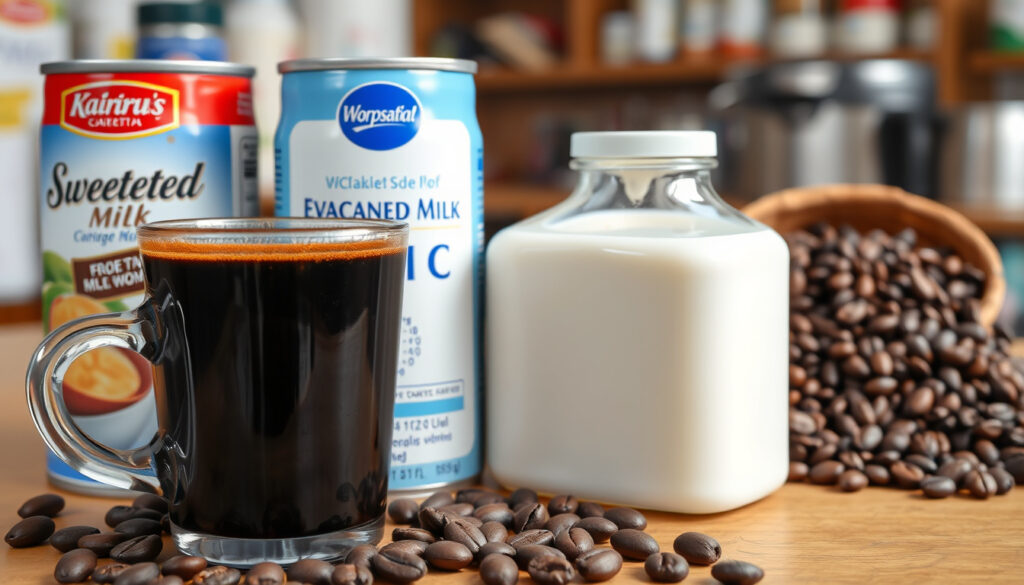
Walk into any kopitiam in Singapore and you’ll hear a rapid-fire litany of orders flying across the counter — Kopi, Kopi O, Kopi C. If you’ve ever wondered what makes Kopi C distinct, you’re not alone. The answer lies in a single switch: instead of thick, sugary condensed milk, Kopi C uses evaporated milk, a swap that dramatically changes the drink’s character.
Kopi C main ingredient: evaporated milk · Sweetness level: less sweet than Kopi · Milk type: canned evaporated milk · “C” stands for: Carnation brand · Kopi C kosong: no sugar
Quick snapshot
- Kopi C is black coffee with sugar and evaporated milk (Visit Singapore tourism guide)
- The “C” in Kopi C stands for Carnation brand evaporated milk (Mount Alvernia Hospital Singapore)
- Kopi (with condensed milk) is sweeter than Kopi C (Gardens by the Bay Singapore)
- Kopi C kosong means coffee with evaporated milk and no added sugar (Serious Eats food guide)
- Kopi uses condensed milk (sugar-sweetened); Kopi C uses evaporated milk (unsweetened) (Gardens by the Bay Singapore)
- Kopi C is less sweet and lighter in texture than standard Kopi (Generation Coffee)
- Kopi C kosong (no sugar) is a common variation (Mount Alvernia Hospital Singapore)
- Kopi C kosong means coffee with evaporated milk and no added sugar (Serious Eats food guide)
- It is a lower-sugar option compared to standard Kopi C (Gardens by the Bay Singapore)
- Kopi C siew dai peng: iced coffee with evaporated milk and less sugar (Gardens by the Bay Singapore)
- Kopi C gao: stronger coffee with evaporated milk (common in kopitiams) (Gardens by the Bay Singapore)
- NESCAFÉ markets a Kopi C Gao Siew Dai product (NESCAFÉ Singapore)
Is kopi c evaporated milk?
Yes. Kopi C is made with evaporated milk, not fresh milk or condensed milk. Evaporated milk has about 60% of its water removed, giving it a richer texture than fresh milk but without the added sugar found in condensed milk.
What type of milk is used in Kopi C?
Kopi C uses canned evaporated milk. This is distinct from regular Kopi, which uses condensed milk (sugar-sweetened), and Kopi O, which uses no milk at all. The Visit Singapore tourism guide describes Kopi C as “black coffee with sugar and evaporated milk.”
Does Kopi C use fresh milk or canned milk?
Canned evaporated milk. Traditional kopitiams do not use fresh milk for Kopi C. The canned milk is shelf-stable and provides a consistent flavor and texture. Alliance Coffee Singapore provides a recipe using “kopi concentrate, sugar, evaporated milk, and hot water.”
Is kopi C or kopi sweeter?
Kopi (with condensed milk) is sweeter than Kopi C. This is because condensed milk is sugar-sweetened — it consists of milk with about 40% added sugar. Evaporated milk, used in Kopi C, is unsweetened. However, Kopi C typically has 1-2 teaspoons of sugar added separately.
Why is Kopi sweeter than Kopi C?
Condensed milk itself is a sweetener. When a kopitiam makes a standard Kopi, the condensed milk provides both creaminess and sweetness. With Kopi C, the evaporated milk provides creaminess only — the sweetness comes from sugar added separately, which can be adjusted by the customer.
How much sugar is in a typical Kopi C?
A typical Kopi C contains about 1-2 teaspoons of sugar. This can be modified using terms like “siew dai” (less sugar) or “kosong” (no sugar at all). Gardens by the Bay Singapore notes Kopi C is “usually less sweet than standard kopi because it uses evaporated milk instead of condensed milk, though sugar is still typically added.”
| Coffee type | Milk type | Sweetness source | Relative sweetness |
|---|---|---|---|
| Kopi | Condensed milk | Condensed milk (40% sugar) | Highest |
| Kopi C | Evaporated milk + added sugar | 1-2 tsp added sugar | Medium |
| Kopi C kosong | Evaporated milk, no sugar | None added | Lowest |
| Kopi O | No milk | Optional sugar | Varies |
What this means: The sweetness hierarchy in kopitiam coffee is determined primarily by the milk choice, not by the coffee itself. Customers who want less sweetness should order Kopi C instead of Kopi, or add “siew dai” or “kosong” to any order.
What does C in kopi C stand for?
The “C” in Kopi C stands for Carnation, the brand of evaporated milk that became synonymous with the drink. Mount Alvernia Hospital Singapore states that the C is “for Carnation” in its kopi guide. Carnation evaporated milk has been widely available in Southeast Asia since the 1930s.
Is ‘C’ an abbreviation for Carnation?
Yes. Multiple Singapore sources, including the Mount Alvernia Hospital guide and the Gardens by the Bay Singapore food guide, confirm that “C” refers to Carnation brand evaporated milk. This is the most widely accepted explanation, though some sources note it is a “common explanation rather than a universally proven etymology.”
Are there other letters in kopi ordering?
Yes. The kopitiam ordering system uses letters and words to encode milk and sugar preferences:
- Kopi — coffee with condensed milk (the default)
- Kopi O — coffee with no milk (black coffee)
- Kopi C — coffee with evaporated milk
- Kopi peng — iced coffee (usually with condensed milk)
- Teh — tea with condensed milk
- Teh C — tea with evaporated milk
The pattern: The letter system extends beyond coffee to tea, creating a parallel menu for teh (tea) orders. This linguistic shorthand allows customers to customize drinks quickly in a busy kopitiam environment.
What is the difference between kopi cold and kopi c?
“Kopi cold” typically refers to Kopi (with condensed milk) served iced, often blended. Kopi C refers to the milk type (evaporated milk) regardless of temperature. Kopi C can be served hot or cold — when ordered iced, it is called “Kopi C peng.”
Is Kopi cold the same as iced Kopi?
Generally, yes. “Kopi cold” or “Kopi peng” means iced Kopi — coffee with condensed milk served over ice. This is a different drink from Kopi C, which uses evaporated milk. The confusion arises because both can be served cold, but the milk type differs.
Can Kopi C be served cold?
Yes. Kopi C peng is the iced version of Kopi C. Gardens by the Bay Singapore mentions “Kopi C siew dai peng” as iced coffee with evaporated milk and less sugar. The “peng” suffix indicates iced, regardless of the milk type.
What is the difference between kopi C and regular coffee?
Regular Western-style coffee typically uses fresh milk or creamer. Kopi C uses evaporated milk. Additionally, the coffee beans used in Kopi are different — robusta beans roasted with margarine and sugar, creating a strong, smoky flavor that is distinct from Western coffee.
How does Kopi C differ from Western-style coffee?
Kopi C uses evaporated milk rather than fresh milk or cream. The coffee itself is also different — Kopi is brewed from robusta beans roasted with margarine and sugar, producing a thick, caramelized flavor. Western coffee typically uses arabica beans roasted without additives.
What type of coffee bean is used for Kopi C?
Kopi C is made with robusta beans, the standard for traditional Singaporean kopitiam coffee. These beans are roasted with margarine and sugar, which gives the coffee its characteristic dark color and smoky, slightly sweet flavor. This roasting method is distinct from the dry roasting used in Western coffee.
“Kopi C is a Singaporean and Malaysian coffee drink that is notably different from a standard cup of Kopi. It’s made with coffee, sugar, and evaporated milk.” — Kopi.C guide author (nineteen95.sg)
“This unique variation swaps out regular milk for evaporated milk, creating a delightfully rich, creamy, and slightly sweet coffee experience.” — Fat Dough blog
The implication: Kopi C occupies a middle ground in the kopitiam coffee spectrum — not as heavy as Kopi (with condensed milk) but not as stark as Kopi O (black coffee). Its popularity comes from this balance: creamy but not cloying, sweet but adjustable.
Key facts table
| Attribute | Detail |
|---|---|
| C in Kopi C stands for | Carnation brand evaporated milk |
| Milk type | Evaporated milk (unsweetened, canned) |
| Sweetness level | Less sweet than regular Kopi (condensed milk) |
| Typical sugar added | 1-2 teaspoons |
| Coffee bean used | Usually robusta, roasted with margarine and sugar |
| Kopi C kosong | No added sugar |
| Kopi C siew dai | Less sugar |
| Kopi C peng | Iced Kopi C |
| Kopi C gao | Stronger coffee |
Comparison table: Kopi, Kopi O, Kopi C, Kopi Peng
| Kopi | Kopi O | Kopi C | Kopi Peng | |
|---|---|---|---|---|
| Milk | Condensed milk | None | Evaporated milk | Condensed milk |
| Sweetness | Very sweet | Varies (add sugar) | Less sweet than Kopi | Very sweet |
| Texture | Rich, thick | Thin (black coffee) | Creamy, not cloying | Rich, over ice |
| Typical serving | Hot | Hot or iced | Hot or iced | Iced |
The pattern: Each coffee type occupies a distinct position on the milk-sweetness matrix. Kopi C’s position — creamy but not overly sweet — makes it the most customizable option through additions like “kosong” or “siew dai.”
Timeline: How Kopi C became part of Singapore’s coffee culture
- 1930s: Carnation evaporated milk becomes widely available in Southeast Asia
- 1950s-1960s: Kopitiam culture formalizes; Kopi C emerges as a distinct order using evaporated milk instead of condensed
- 2000s: Modern coffee chains adopt “Kopi C” as a term, but traditional kopitiams remain the standard
The pattern: The timeline shows that Kopi C is a relatively modern addition to Singapore’s coffee vocabulary, emerging after condensed milk coffee was already established. The availability of Carnation brand milk in the 1930s created the conditions for a new order to develop.
Related reading: Kopi terms in Singapore · Know your kopi
alliancecoffee.sg, fatdough.sg, reddit.com, nineteen95.sg, reddit.com, youtube.com
Frequently Asked Questions
What is Kopi C made of?
Kopi C is made of robusta coffee, sugar, and evaporated milk. The coffee is brewed from beans roasted with margarine and sugar, then combined with Carnation brand evaporated milk and sugar to taste.
Is Kopi C healthy?
Compared to standard Kopi (with condensed milk), Kopi C is lower in sugar because evaporated milk contains no added sugar. However, it still typically contains 1-2 teaspoons of added sugar. For the lowest sugar option, order Kopi C kosong (no sugar).
How do I order Kopi C in a kopitiam?
Simply say “Kopi C” to the order-taker. For variations, add “siew dai” (less sugar), “kosong” (no sugar), “peng” (iced), or “gao” (stronger coffee). For example, “Kopi C peng siew dai” means iced coffee with evaporated milk and less sugar.
What is the difference between Kopi C and Kopi O?
Kopi C uses evaporated milk; Kopi O uses no milk at all (black coffee). Kopi C is creamy and slightly sweet; Kopi O is black and has the strongest coffee taste. Both can be served hot or iced.
Can I make Kopi C at home?
Yes. Alliance Coffee Singapore provides a recipe using kopi concentrate, sugar, evaporated milk, and hot water. You can also use strong brewed robusta coffee as a substitute for the concentrate. The key is using evaporated milk rather than fresh milk or cream.
What is Kopi C kosong?
Kopi C kosong is coffee with evaporated milk and no added sugar. Multiple sources, including Serious Eats and Mount Alvernia Hospital Singapore, confirm this meaning. It is the lowest-sugar version of Kopi C.
More related posts
 Singapore Dollar to Bangladeshi Taka Rate: SGD to BDT Today
 What Is a Will vs Trust – Key Differences, Costs and Advice
 Putien CNY Menu 2026: PDF, Prices, Singapore Takeaway
 50 SGD to INR: Convert Singapore Dollars to Indian Rupees (2025)
 The Larder Cafe Reviews: TripAdvisor Ballyvaughan Guide
 DBS Woman’s World Card Review: 4 Miles per S$1, S$196.20 Fee
 Pasir Ris East MRT: Location, Completion Date & Cross Island Line
 CPF Contribution Ceiling 2025: Ordinary Wage & Annual Cap