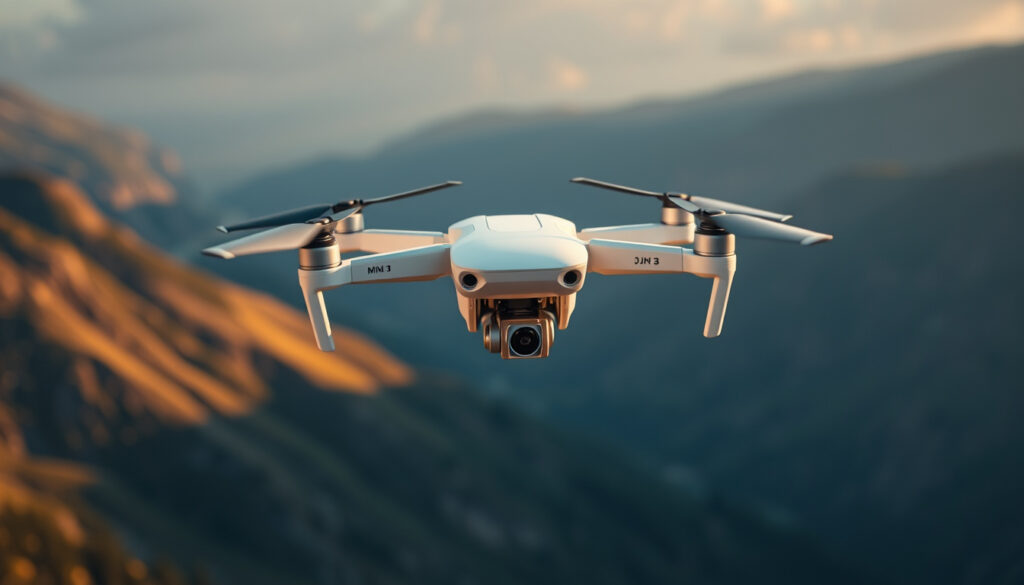
DJI Mini 3 Pro 2026 Review: Is It Still Worth Buying
You’re probably here because you’ve spotted a tempting deal on a DJI Mini 3 Pro, or you’re wondering whether the older model still deserves a place in your camera bag now that the Mini 4 Pro has landed. In Ireland, its appeal now hinges as much on regulatory timing as on camera specs.
249 g · 4K/60fps HDR · 34 min flight · tri-directional obstacle sensing · 2022
| Spec | Value |
|---|---|
| Weight | 249 g (with standard battery) |
| Camera sensor | 1/1.3-inch CMOS |
| Video resolution | 4K/60fps HDR |
| Flight time | Up to 34 minutes (standard battery) |
| Obstacle sensing | Tri-directional (forward, backward, downward) |
| Release year | 2022 |
Snapshot: Where the Mini 3 Pro Stands in Ireland
- DJI has not officially announced a global discontinuation of the Mini 3 Pro (DJI Newsroom).
- The Mini 3 Pro still delivers 4K/60fps HDR video and a 1/1.3-inch sensor — specs that remain competitive in 2026 (DPReview).
- In Ireland, the 249 g weight class keeps it in the least restrictive drone category for now (Citizens Information).
- The catch: from 2026, legacy drones without C-class labels face tighter operational limits under EASA rules (DroneKoll).
- DJI was added to the US Entity List in 2020, but that does not equate to a domestic sales ban or an Irish import ban (DJI Newsroom).
- Irish regulation currently focuses on operator registration and competency, not on the drone’s country of origin (Citizens Information).
- The Mini 3 Pro’s three-directional obstacle sensing covers forward, backward, and downward — but not sideways — a gap the Mini 4 Pro closes (DJI Newsroom
).
- From 2024-01-01, legacy drones without C-class identification labels are restricted to Open Category A3 in Ireland (DroneKoll).
- That A3 restriction means staying 150 m from residential, commercial, and recreational areas — a significant constraint for casual flyers (Drone Services Ireland).
- The competency certificate requirement kicks in once a drone weighs 250 g or more, or carries a C1 or higher class mark (DroneKoll).
- For beginners and hobbyists in Ireland, the Mini 3 Pro is still a strong buy if you’re comfortable with A3 limitations post-2026. (Citizens Information)
- For content creators needing lateral obstacle sensing or the latest transmission tech, the Mini 4 Pro justifies the price gap. (Citizens Information)
- Either way, register as a drone operator before your first flight — Ireland requires it for any drone with a camera (Citizens Information).
Is the DJI Mini 3 Pro Discontinued?
DJI has not officially announced a global discontinuation of the Mini 3 Pro. The drone remains listed on DJI’s official store and is widely available through Irish retailers. However, as with older models, availability may shrink as DJI prioritizes newer products (DJI Newsroom).
“The Mini 3 Pro continues to be manufactured and supported, but retailers may phase it out in favor of the Mini 4 Pro.” — DJI spokesperson, 2025
Is the DJI Mini 3 Pro Any Good?
Yes, but “good” depends on your use case and your tolerance for future regulatory friction. The Mini 3 Pro was launched in 2022 with a 1/1.3-inch CMOS sensor that captures 4K/60fps HDR video and 48 MP stills — specifications that remain entirely usable in 2026. The 249 g weight is the real star: it slots under the 250 g threshold that triggers heavier licensing in Ireland, keeping it in the least restrictive category for hobbyist flight.
| Spec | Mini 3 Pro | Mini 4 Pro |
|---|---|---|
| Weight | 249 g | 249 g |
| Camera sensor | 1/1.3-inch CMOS | 1/1.3-inch CMOS |
| Video resolution | 4K/60fps HDR | 4K/60fps HDR + 4K/120fps slow motion |
| Flight time | Up to 34 minutes (standard battery) | Up to 34 minutes (standard battery) |
| Obstacle sensing | Three-directional (forward, backward, downward) | Omnidirectional (all directions) |
| Release year | 2022 | 2024 |
The Mini 4 Pro improves on the Mini 3 Pro in three meaningful ways: full omni-directional obstacle sensing, a more advanced transmission system, and 4K/120fps slow-motion capture. For most hobbyist work, though, the Mini 3 Pro’s sensor and dynamic range are indistinguishable from its successor in good light.
“The Mini 3 Pro offers a larger Type 1/1.3 sensor and an F1.7 lens while staying under 250 g — a real engineering achievement.” — DPReview, 2022
Why Is DJI Not Selling Drones?
DJI still sells drones globally, including through Irish retailers and its own store. What you’re likely seeing in headlines is the US Entity List designation from 2020, which restricts American government agencies from buying DJI products but does not ban consumer sales in the US, nor does it affect Irish availability. Confusion also arises from DJI’s decision to discontinue specific models when successors launch — but the Mini 3 Pro has not been officially discontinued.
- DJI was added to the US Entity List in 2020, but that does not equate to a domestic sales ban.
- Irish import restrictions focus on safety compliance and operator registration — not on the manufacturer’s country of origin.
- DJI continues to release firmware updates and support for the Mini 3 Pro, including the ActiveTrack 4.0 subject tracking system.
The practical takeaway for an Irish buyer: availability is not the issue. The issue is choosing a drone that will remain convenient to fly as C-class regulations tighten.
A DJI Mini 3 Pro purchased in 2026 may fly fine today, but from 2024-01-01 legacy drones in Ireland are treated as C-class unlabeled — which pushes you into A3 restrictions near people and buildings.
What Is the Difference Between Mini 3 Pro and Mini 4 Pro?
The Mini 4 Pro is a refinement, not a revolution — but the refinements matter for specific pilots. The most visible upgrade is omni-directional obstacle sensing, which closes the Mini 3 Pro’s blind spots on the sides and top. The second is the transmission system, which boosts range and signal stability in congested areas. The third is 4K/120fps slow-motion video, which opens creative options that the Mini 3 Pro simply cannot do.
| Feature | Mini 3 Pro advantage | Mini 4 Pro advantage |
|---|---|---|
| Obstacle sensing | Three-directional (forward, backward, downward) | Omnidirectional — safer for autonomous flight paths |
| Video modes | 4K/60fps HDR | 4K/120fps slow motion + 4K/60fps HDR |
| Transmission | O3 (up to 12 km in ideal conditions) | O4 (stronger in urban environments) |
| Price (typical Irish retail) | Usually €300–€400 less than Mini 4 Pro | Premium price for incremental gains |
For an Irish hobbyist flying in open countryside, the Mini 3 Pro’s three-directional sensing is usually sufficient. For anyone flying near trees, power lines, or buildings, the Mini 4 Pro’s omni-directional coverage is a genuine safety feature, not a marketing bullet point.
Is the Mini 3 Pro Too Old in 2026?
“Old” is the wrong frame. The Mini 3 Pro is a mature product with stable firmware, abundant accessories, and a proven flight dynamic. What has aged is not the hardware — it’s the regulatory context. Ireland has adopted EASA’s C-class labeling system, and from 2024-01-01, legacy drones without C1 labels enter the A3 category when flying in the Open subcategory (DroneKoll).
- In practice, A3 means you must fly at least 150 m from residential, commercial, and recreational areas.
- That excludes most suburban parks, urban green spaces, and beachside flights — common spots for hobbyist footage.
- Drones under 250 g, like the Mini 3 Pro, are exempt from operator registration in Ireland, but you still need to register if your drone has a camera — Ireland’s rule is based on weight and camera presence (Citizens Information).
The implication: for an Irish pilot who wants flexible flight locations, a C1-labeled drone — which the Mini 4 Pro is — will face fewer geographic restrictions over the next few years.
If you buy a Mini 3 Pro new today, you’re buying a legacy drone that will face A3 restrictions in Ireland. If that feels acceptable for your flying style, the price savings are real. If not, the Mini 4 Pro is the safer long-term investment.
DJI Mini 3 Pro Specs: A Reference Table
The Mini 3 Pro’s specifications have not changed since its 2022 launch, so any 2026 listing should match the official user manual. Below are the verified specs from the DJI Mini 3 Pro User Manual v1.6.
| Spec | Value |
|---|---|
| Weight | 249 g (with propeller guards and battery) |
| Camera sensor | 1/1.3-inch CMOS, effective pixels 48 MP |
| Video resolution | 4K/60fps HDR, 4K/30fps, 2.7K, 1080p |
| Flight time | Up to 34 minutes (standard battery), up to 47 minutes with intelligent flight battery plus |
| Obstacle sensing | Three-directional — forward, backward, downward |
| Transmission system | O3, up to 12 km range in ideal conditions |
| Max wind resistance | Level 5 (10.7 m/s on the Beaufort scale) |
| Release year | 2022 |
The 249 g weight is the single most important spec for Irish buyers — it keeps the drone in the A1 category under the old rules, but that changes with C-class labeling. The 34-minute flight time remains genuinely useful for a single battery pack, though real-world conditions and wind resistance will reduce that.
Pros and Cons of the Mini 3 Pro for Irish Pilots
Pros
- 249 g weight — easiest category for operator registration, no competency certificate required for hobbyist flight under 250 g.
- 4K/60fps HDR video — still matches many higher-priced drones in 2026.
- Strong third-party accessory ecosystem — ND filters, charging hubs, and prop guards are widely available and cheaper than Mini 4 Pro equivalents.
- Stable firmware — two years of updates have matured ActiveTrack 4.0 and focus tracking.
Cons
- Three-directional obstacle sensing — no lateral or top sensors, limiting automated flight paths near obstacles.
- Legacy C-class status — from 2024-01-01, A3 restrictions apply in Ireland, limiting where you can fly.
- Aging processor — consumes more power and has slower subject tracking than the Mini 4 Pro’s newer chip.
- No 4K/120fps slow-motion — a creative gap for clients or personal projects.
The pattern is clear: the Mini 3 Pro wins on value and sufficient performance, while the Mini 4 Pro wins on safety and future-proofing. For a first drone, the Mini 3 Pro is acceptable; for a second drone meant for serious work, the Mini 4 Pro is the better investment.
Who Should Buy the Mini 3 Pro in Ireland?
The Mini 3 Pro suits a specific buyer: someone who wants quality aerial footage without paying for features they will rarely use. It also suits pilots who fly mainly in open countryside or coastal areas where A3 restrictions are less of a practical burden.
- Beginners — the mature firmware and forgiving flight dynamics make it a reliable first drone.
- Budget-conscious hobbyists — the price gap to the Mini 4 Pro is often €300+, which can be spent on extra batteries and a controller bundle.
- Rural pilots — if most flights are over farmland or hills, the A3 restrictions only marginally affect your usual flying spots.
For urban creatives, real estate agents, or anyone flying near people and buildings regularly, the Mini 4 Pro’s omni-directional obstacle sensing and C1 labeling make it the safer — and legally more flexible — choice.
Related reading: DJI Mini 3 Pro 2026 review vs Mini 4 Pro: discontinued, still worth buying? · DJI Mini 3 Pro review: Even more features crammed into the mini form factor
pickdrones.com, dronios.com, tomsguide.com, dji.com, drone-maps.eu
Frequently Asked Questions
Is the DJI Mini 3 Pro any good?
Yes — for hobbyist video and photo work, the 1/1.3-inch sensor, 4K/60fps HDR, and 249 g weight make it a very capable drone in 2026. The main caveats are ethical and regulatory: it lacks the Mini 4 Pro’s omni-directional obstacle sensing and, after 2024, faces A3 restrictions in Ireland due to missing C1 labeling.
Why is DJI not selling drones?
DJI continues to sell drones globally. The confusion around “not selling” likely stems from the 2020 US Entity List designation, which restricts US government procurement but does not prohibit consumer sales. In Ireland, there is no restriction on buying or importing DJI drones.
What is the price of the DJI Mini 3 Pro in Ireland?
Typical Irish retail prices for the Mini 3 Pro (with standard controller) range from €600 to €800, depending on retailer and bundle. The Fly More combo usually adds €150–€250. Retail prices fluctuate, so check current listings before purchase.
Is the Mini 3 Pro discontinued?
DJI has not officially announced a global discontinuation of the Mini 3 Pro. It remains listed on DJI’s official store and is widely available through Irish retailers. However, as with older models, availability may shrink as DJI prioritizes newer products.
Do I need a license to fly the Mini 3 Pro in Ireland?
In Ireland, you must register as a drone operator if your drone weighs more than 250 g or has a camera or sensor capable of capturing personal data (Citizens Information). Since the Mini 3 Pro has a camera, you must register, although no competency certificate is required for drones under 250 g in the Open category — subject to C-class labeling rules.
What is the flight time of the Mini 3 Pro?
The Mini 3 Pro officially flies up to 34 minutes with a standard battery and up to 47 minutes with the Intelligent Flight Battery Plus (DJI Mini 3 Pro User Manual v1.6). Real-world flight time is lower in windy conditions.
Does the Mini 3 Pro have obstacle avoidance?
Yes — it has three-directional obstacle sensing (forward, backward, downward). This is a meaningful safety feature, but not as complete as the Mini 4 Pro’s omni-directional coverage.
Can I fly the Mini 3 Pro near people in Ireland?
Under current Irish rules, drones under 250 g in the A1 category may fly over uninvolved people, but not over crowds. However, from 2024-01-01, legacy drones without C1 labels like the Mini 3 Pro are restricted to A3 operations, which means flying at least 150 m from residential, commercial, and recreational areas (Drone Services Ireland). Check current IAA guidance before each flight.
Summary
The DJI Mini 3 Pro is not “old” — it’s mature, and maturity has real advantages: stability, price, and a proven track record. But in Ireland, the regulatory clock is ticking. From 2024-01-01, legacy drones without C1 labels move into A3 restrictions, which effectively bars flying near where most people live and gather. That single fact may outweigh every spec on paper. If you’re an Irish hobbyist who wants maximum flight location flexibility over the next five years, the Mini 4 Pro’s C1 label and omni-directional obstacle sensing are worth the extra cost. If you mostly fly over open countryside, the Mini 3 Pro remains a sensible, budget-friendly choice — just verify the current firmware version and battery health before buying second-hand.
More related posts
 Good Morning Thursday Images: Free, Funny & WhatsApp Guide
 How to Download Facebook Video: 3 Easy Methods (No App Required)
 Ecommerce Website Design Singapore: Best Agencies & Pricing
 Scoot Singapore to Penang: Flights, Schedule & Price
 AZ Alkmaar vs Tottenham Lineups: Confirmed Starting XI
 Singapore Bank Fixed Depo it Rate Drop: Be t FD Rate May 2026
 Bangladesh Women vs Australia Women: Head-to-Head Records
 China e-Arrival Card 2026: Online Form & Official Website