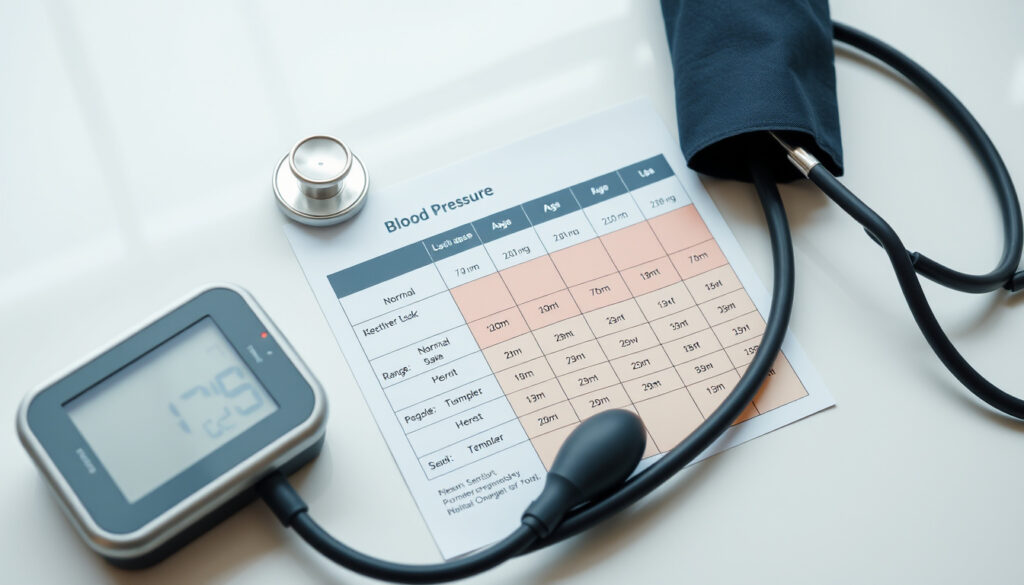
Blood Pressure Normal Range: A Guide by Age and Gender
Those two numbers on the pharmacy cuff look simple, yet they decide whether a routine checkup turns into a conversation about medication. For most adults, the healthy target is below 120/80 mmHg, according to the American Heart Association, and when one number drifts outside that range, the pattern of your readings tells you which one matters and what to do next.
Optimal blood pressure: below 120/80 mmHg · Normal range: 90/60 to 120/80 mmHg · Elevated: 120–129 / under 80 mmHg · High (stage 2): 140/90 mmHg or higher · Low blood pressure: below 90/60 mmHg
Quick snapshot
- Normal for most adults: below 120/80 mmHg (American Heart Association)
- Low is commonly defined as below 90/60 mmHg (NHS, UK public health guidance)
- Dehydration can lower pressure by reducing circulating blood volume (National Heart, Lung, and Blood Institute)
- Optimal targets vary slightly between health bodies, so one borderline reading rarely settles the question
- Genetic links to low blood pressure are complex and not fully mapped
- The ideal immediate dietary fix for a low episode depends on the underlying cause
- Blood pressure usually dips overnight and climbs again in the morning hours (American Heart Association)
- Postprandial hypotension appears one to two hours after eating, and orthostatic hypotension happens in the first moments after standing (Mayo Clinic, clinical reference)
- Recheck a surprising reading after five quiet, seated minutes
- Track readings at the same time every day to spot the pattern
- See a clinician if low numbers come with dizziness, fainting, or confusion
Five numbers carry most of the conversation; each one maps to a different clinical decision.
| Category | Value | Why it matters |
|---|---|---|
| Optimal BP | Less than 120/80 mmHg | Target for most adults; no intervention needed when readings sit below this line (American Heart Association) |
| Normal range | Around 90/60 to 120/80 mmHg | Wide healthy band; readings drift within it through the day |
| Elevated | 120–129 mmHg systolic, diastolic under 80 | Warning zone; lifestyle changes are usually the first step (American Heart Association) |
| High blood pressure | 140/90 mmHg or higher | Stage 2 range; usually prompts a medication conversation |
| Low blood pressure | Below 90/60 mmHg | A problem mainly when symptoms like dizziness or fainting appear (NHS) |
| Main low BP cause | Dehydration or nutrient deficiency | Both reduce effective blood volume or red-cell capacity (National Heart, Lung, and Blood Institute) |
What is a true blood pressure reading?
Digestion, stress, caffeine, and even the way you sit can move the needle by 10 to 20 points. A true reading is one taken when your body is quiet: feet flat, back supported, arm at heart level, and at least five minutes of calm before the cuff goes on.
What is a normal blood pressure range?
- Normal: systolic under 120 and diastolic under 80 (American Heart Association)
- Elevated: 120–129 systolic with diastolic under 80 (American Heart Association)
- Stage 2 high: 140/90 or higher
- Low: under 90/60 (NHS)
The systolic number measures the pressure when your heart pumps; the diastolic number measures the pressure between beats. Most doctors watch the systolic number more closely as you age, because it tends to climb first.
The pattern across readings is the real signal. A single 132/84 reading in a waiting room is not a diagnosis — it is a cue to check again at home.
The implication: a normal blood pressure range is a band, not a single number. One high or low reading tells you less than three consistent readings do.
Readings are clues, not verdicts; a single outlier is a reason to recheck, not to panic.
What is a normal blood pressure for a man
Men and women share the same overall target — below 120/80 — but the way age and hormones shift readings is not identical. Men often run slightly higher average pressures in midlife; women’s numbers tend to climb after menopause.
Woman normal blood pressure by age
- Under 65: below 120/80 is the same goal for women and men.
- 65 and older: the target is clinically driven — avoiding symptoms and organ strain matters more than matching a younger chart.
- Pregnancy: blood pressure often drops in early and mid-pregnancy before returning to baseline (Mayo Clinic).
What this means: age changes what your doctor looks at, but the healthy ceiling — under 120/80 — stays remarkably stable.
What is normal blood pressure for a 70 year old
- Healthy baseline: below 120/80 remains the reference (American Heart Association)
- Around 60 to 79 years, many people run higher averages; the goal is to stay under 140/90 and avoid symptoms
- Clinical decisions for a 70-year-old focus on holistic risk — blood sugar, cholesterol, smoking history — not only the cuff number
NHS blood pressure chart by age and gender
- The NHS standard chart uses below 90/60 for low and repeated readings of 140/90 or higher for high (NHS guidance)
- Age and sex influence which readings deserve closer attention, but they do not reset the basic boundaries
- A 70-year-old woman’s normal is more about avoiding symptoms and organ strain than matching a younger number
The pattern: the same adult ranges apply across age and gender; what changes is the level of caution attached to them.
What condition is called the silent killer?
Hypertension — chronically high blood pressure — earned the nickname silent killer because it usually produces no symptoms while quietly stressing the heart, brain blood vessels, and kidneys (American Heart Association).
What time of day is blood pressure lowest?
- For most people, blood pressure dips lowest during deep sleep and rises sharply on waking
- After meals, some older adults experience a drop one to two hours later — postprandial hypotension (Mayo Clinic)
- Standing up from a chair or bed can cause an orthostatic drop in seconds, especially in older adults (Mayo Clinic)
The practical takeaway for home monitoring: measure at the same time each day, and do not chase the lowest moment in the 24-hour cycle.
High blood pressure’s quiet nature is exactly what makes it dangerous: by the time headaches, chest tightness, or vision changes appear, the damage has usually been building for years. The only reliable detection is measuring it.
Why this matters: you cannot feel your way toward a normal blood pressure range; you have to look at it.
What is the main cause of low blood pressure?
Low blood pressure is technically any reading below 90/60 mmHg, but it becomes clinically meaningful when symptoms join it (NHS).
Is low blood pressure genetic?
- Genetic factors can influence blood volume regulation and the nervous system’s ability to adjust to standing
- Autonomic disorders with a heritable component can make orthostatic hypotension more likely (Mayo Clinic)
- Family history alone is rarely the whole explanation; environment, hydration, and medication weigh heavily
The honest answer: genetics can play a role, but the more immediate causes are the ones you can see and modify today.
What are you lacking if your blood pressure is low?
- Vitamin B12, folate, or iron deficiency can cause anemia, and anemia can be linked with low blood pressure (Mayo Clinic)
- Dehydration from low fluid intake or illness reduces blood volume and can pull readings down (National Heart, Lung, and Blood Institute)
- Medications — diuretics, beta blockers, some antidepressants, and erectile-dysfunction drugs — are common, reversible contributors (American Heart Association)
If you are constantly dizzy and your diet is thin on B12, iron, or folate, fixing the deficiency will not automatically fix the pressure — but it removes a common, treatable weight.
What are the 10 signs of low blood pressure?
- Dizziness or lightheadedness
- Fainting
- Blurred vision
- Confusion
- Weakness
These are the symptoms doctors take seriously, and the same symptom list appears across Mayo Clinic’s low blood pressure guidance (Mayo Clinic).
The pattern: a low number by itself is geography; a low number with symptoms is a signal.
The practical signal: a low number with symptoms is a reason to act; a low number alone is a reason to recheck.
How is low blood pressure treated?
What should we eat immediately when BP is low?
- Reach for a glass of water quickly; dehydration is the most reversible cause (National Heart, Lung, and Blood Institute)
- Small, frequent meals are better than three large plates, especially if symptoms hit after eating (NHS)
- Add a little more salt to food only if your doctor agrees; the effect is quick but not for everyone
What not to eat when BP is low?
- Avoid alcohol on an empty stomach; it can widen blood vessels and drop pressure further (Mayo Clinic)
- Limit large, carb-heavy meals, which can trigger postprandial hypotension (Mayo Clinic)
- Skip the potassium tactic if you are already low: potassium-heavy foods like bananas are designed for high blood pressure, not the low side
Should I eat bananas if I have low blood pressure?
Bananas are famous as the blood-pressure-friendly fruit for people who are high, not for people who are low. If your readings are already below 90/60 and you feel dizzy, potassium is usually the wrong direction.
That does not make bananas dangerous; it just makes them the wrong tool for this particular problem. The immediate fix for a low episode is fluids and sodium, not a potassium-rich snack.
When to worry if your blood pressure is too low?
- Systolic below 90 plus fainting, chest pain, or shortness of breath: seek urgent care (American Heart Association)
- Low BP after heavy bleeding, severe infection, or an allergic reaction: emergency (American Heart Association)
- Low BP that keeps coming back with dizziness is enough for a same-week doctor’s appointment
The trade-off: treating low BP is usually low-tech — fluid, food timing, and medication review — but the moment symptoms turn severe, it is a medical emergency.
Four bands, one pattern: the earlier you identify your band, the more reversible the situation tends to be.
| Category | Systolic | Diastolic | What it usually means |
|---|---|---|---|
| Normal | Below 120 | Below 80 | Healthy range; keep living the routine (American Heart Association) |
| Elevated | 120–129 | Below 80 | Above normal, not yet hypertension; time to watch diet and movement (American Heart Association) |
| High (stage 2) | 140 or higher | 90 or higher | Clinically high; medication is usually on the table |
| Low (hypotension) | Below 90 | Below 60 | Often harmless; a problem when symptoms join it (NHS) |
A full blood pressure normal range conversation needs the exact numbers, because slightly high and slightly low are only one digit apart from normal.
| Label | Systolic (mmHg) | Diastolic (mmHg) | Source |
|---|---|---|---|
| Optimal | Under 120 | Under 80 | American Heart Association |
| Elevated | 120–129 | Under 80 | American Heart Association |
| Stage 1 hypertension | 130–139 | 80–89 | American Heart Association |
| Stage 2 hypertension | 140+ | 90+ | American Heart Association |
| Low blood pressure | Below 90 | Below 60 | NHS |
| Symptomatic concern | Usually below 90 | Usually below 60 | Mayo Clinic |
| Emergency | Any severe drop with symptoms | Any severe drop with symptoms | American Heart Association |
A practical four-step reassessment plan
- Sit quietly for five minutes with feet flat, then recheck the reading.
- If the number is low, drink a glass of water and eat a small, balanced snack; wait 30 minutes.
- If the number is high, check again at the same time tomorrow before changing anything.
- If symptoms — fainting, chest pain, weakness — accompany either extreme, call a clinician immediately.
Confirmed facts vs what we don’t know yet
Confirmed facts
- Normal adult BP is below 120/80 mmHg (NHS high blood pressure guidance)
- Below 90/60 is the standard low threshold (Blood Pressure UK charity guidance)
- Dehydration, blood loss, infection, and anaphylaxis can all cause dangerous drops (American Heart Association)
- B12, folate, and iron deficiencies can contribute to anemia-linked low BP (Mayo Clinic)
- High BP is usually symptom-free (World Health Organization)
What’s unclear
- Whether a 128/82 reading needs intervention depends on overall risk, not just the number
- Exact genetic pathways for low BP are still being untangled
- The best immediate food for a low episode varies from person to person
- Potassium-heavy foods like bananas help high BP but may work against some people with low BP
What the experts say
- American Heart Association
- NHS
- Mayo Clinic
- World Health Organization
“For most adults, a normal blood pressure is less than 120/80 mmHg.”
American Heart Association
“Low blood pressure is generally considered to be a reading below 90/60 mmHg; it becomes a concern when symptoms such as dizziness and fainting appear.”
NHS guidance
“Hypotension is more concerning when it causes dizziness, fainting, confusion, weakness, or blurred vision.”
Mayo Clinic
“Hypertension is a serious medical condition that significantly increases the risk of heart, brain, kidney, and other diseases.”
World Health Organization, global health body
Between the silent stress of high readings and the fainting risk of low ones, the healthy middle is both narrower and more forgiving than people think. For the person checking their own numbers at home, the decision is clear: measure calmly at the same time daily, watch the pattern rather than the panic, and let symptoms — not a single outlier — decide when to call a doctor.
Related reading
- Types of Stomach Pain in Females: Causes & Relief
- How to Get Rid of a Cold Sore in 24 Hours: Fast Remedies
These guides follow the same early-warning logic: identify the pattern early, treat the cause, and know when to escalate.
mayoclinic.org, health.clevelandclinic.org, my.clevelandclinic.org, heart.org
Frequently asked questions
What is the difference between systolic and diastolic pressure?
Systolic is the pressure in your arteries when your heart contracts; diastolic is the pressure between beats. A reading of 120/80 means a systolic pressure of 120 mmHg and a diastolic pressure of 80 mmHg (American Heart Association).
Is 130/80 considered high blood pressure?
Under the American Heart Association’s updated guidelines, 130–139/80–89 is stage 1 hypertension; 140/90 or higher is stage 2. That means 130/80 is high, not merely elevated (American Heart Association).
What lifestyle changes help prevent high blood pressure?
Cutting back on sodium, moving your body most days, limiting alcohol, and keeping stress from becoming chronic are the core moves; the American Heart Association places them ahead of any single supplement (American Heart Association).
Does age affect blood pressure equally in men and women?
Not exactly. Older adults generally drift upward, and women’s risk tends to climb after menopause, while men often see higher readings in midlife; the target, however, stays below 120/80.
What medications are commonly used for high blood pressure?
Diuretics, ACE inhibitors, ARBs, and calcium channel blockers are common first-line options — but the choice depends on your age, kidney function, and other conditions, so it should always be individual.
Can low blood pressure be a sign of a serious medical condition?
Yes. Heart problems, bleeding, severe infection, allergic reactions, and endocrine disorders can all present with low blood pressure; it is especially serious when symptoms like fainting or confusion appear (American Heart Association, Mayo Clinic).
What is the best way to measure blood pressure at home?
Sit quietly for five minutes, feet on the floor, back supported, and place the cuff on a bare arm at heart level; take two readings one minute apart and record both.
How does pregnancy affect blood pressure?
Pregnancy often lowers blood pressure in the first two trimesters because hormonal changes expand blood vessels; readings typically return toward baseline later or after delivery (Mayo Clinic).
The same thread runs through every answer: track the pattern over any single reading, and let symptoms — not the monitor alone — decide when to call a doctor.
More related posts
 Man City vs Tottenham: Head-to-Head Record & Controversies
 Lee Byung-hun – Career Films Awards Family Overview
 Adelaide United vs Sydney FC: Prediction, Results, Lineups & Live
 Redmi Pad SE 8.7 Review: Is It Any Good? Specs, Price, and More
 Langkawi Airport Christmas Tree: A Viral Beach-Themed Display
 Today’s Football Results | Live Scores & Yesterday’s Matches
 Venture Global Share Price: Forecast and Analysis
 Is SG60 Voucher Cash? Rules, Spending & FAQ