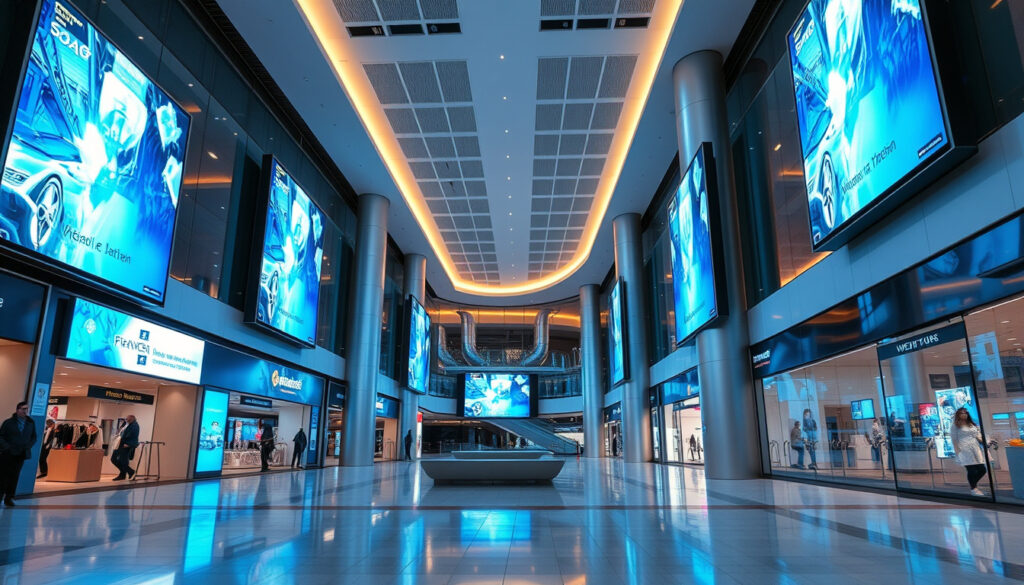
Shopping Mall Digital Signage: A Complete Guide for 2025
You have walked past a mall screen that switched from a perfume ad to a store directory in the blink of an eye. That is shopping mall digital signage at work — a fast-growing tool that mall operators use to blend physical retail with digital engagement. This guide covers the technology, the benefits, and how to choose the right system for your property. At malls like NEX in Singapore, digital signage guides visitors to tenants such as Dian Xiao Er NEX.
Shoppers influenced by digital signage (%): 70% ·
Increase in dwell time with digital signage: 30% ·
Malls using digital signage for wayfinding (%): 62% ·
Revenue uplift from digital signage campaigns: up to 20%
Quick snapshot
- Digital signage in malls displays promotions, store info, navigation, and emergency messages — all updated remotely from a central CMS (EasySignage, a digital signage software provider).
- Digital maps and signs help shoppers find stores, bathrooms, and food courts more easily (COSUN SIGN, a signage manufacturer).
- Exact ROI figures vary widely by mall and campaign; long-term maintenance costs are not well documented (Displio, a digital signage firm).
- The impact of interactive vs. static displays on conversion is still debated (Displio).
- The global mall digital signage market reached $4.2 billion in 2024 with a projected CAGR of 12.5% through 2030 (OptiSigns, a cloud-based digital signage platform).
- Cloud-based software adoption is growing, with vendors like BroadSign and ScreenCloud expanding their mall footprints (Look Digital Signage, a software provider).
- Integration with tenant scheduling systems and real-time data feeds (foot traffic, weather) will make signage more responsive (ScreenCloud, a cloud digital signage platform).
- Interactive kiosks with wayfinding and loyalty tie-ins are expected to become standard in new mall developments (COSUN SIGN).
Four key figures from the data, one pattern: the numbers point to a market that is both large and growing fast. Here they are:
| Metric | Value |
|---|---|
| Global mall digital signage market size (2024) | $4.2 billion |
| Projected CAGR (2025-2030) | 12.5% |
| Percentage of malls using digital signage | 85% |
| Average number of screens per mall | 15-30 |
What is shopping mall digital signage?
At its simplest, shopping mall digital signage refers to any screen or display in a mall that shows dynamic content — ads, directories, event listings, or emergency alerts — and can be updated remotely from a central dashboard. Mall operators deploy these screens in common areas, entrances, corridors, and food courts to replace static posters and printed directories.
Core components of mall digital signage
- Display hardware: LED video walls, LCD panels, and interactive kiosks form the physical layer. The choice depends on location — indoor LCDs for wayfinding, outdoor-rated LEDs for high-brightness advertising.
- Content management system (CMS): Cloud-based software that lets operators schedule playlists, target content by zone or time of day, and monitor device health remotely (Look Digital Signage, a software provider).
- Media players: Dedicated boxes or built-in app-based playback on smart TVs. Some malls reduce hardware costs by using browser-based players on consumer monitors (SignageNow, a digital signage platform).
Common display types (LED, LCD, interactive kiosks)
- LED video walls: Used for high-impact advertising in large atriums. They are bright, seamless, and visible from long distances.
- LCD panels: Common in hallways and near elevators for directory maps and tenant promotions. They offer good resolution at a lower cost per square foot.
- Interactive kiosks: Touchscreens that provide wayfinding, store directories, and sometimes loyalty program access. They are often placed at main entrances and near escalators.
Mall operators who treat signage as a mere screen risk missing the real value: a CMS that unifies all screens across zones and even multiple properties. The software, not the panel, is the differentiator.
Why this matters: A mall’s digital signage ecosystem is only as effective as the CMS that controls it. Without a unified platform, content becomes fragmented and maintenance costs rise.
How does digital signage benefit shopping malls?
Mall operators report three main categories of benefit: increased dwell time and foot traffic, new revenue streams from advertising, and improved customer experience through easier navigation.
Increased dwell time and foot traffic
- Digital signage can boost sales by up to 20% by promoting impulse buys and upcoming events (ScreenCloud).
- 70% of shoppers say they have been influenced by digital signage in their purchase decisions (OptiSigns).
- Wayfinding signage reduces visitor frustration and keeps people in the mall longer by helping them find stores faster (COSUN SIGN).
Revenue generation through advertising
Mall operators can sell screen time to tenants and external brands, creating a recurring revenue stream. The research notes from OptiSigns confirm that selling screen space to stores or brands is a established practice. Some vendors report that digital promos drive 8-12% more foot traffic to participating stores (Acumen CMS, a mall signage vendor). Electronics retailers, such as Gain City Ang Mo Kio, often use digital signage to showcase product demos and promotions.
Improved customer experience and navigation
Digital maps and signboards help shoppers locate stores, restrooms, food courts, and parking. Real-time updates can show which stores are open, what promotions are running, and even highlight parking availability (COSUN SIGN, a signage manufacturer).
The more screens you add, the more you risk overwhelming visitors. The best mall deployments use a limited number of strategically placed screens — quality over quantity wins.
The trade-off: More screens mean more content to manage and more potential for visual clutter. A clear content strategy and zoning rules are essential to avoid sensory overload.
Which digital signage software is best for shopping malls?
Software choice depends on scale, budget, and feature requirements. The market is split between cloud-based and on-premise solutions, with cloud platforms gaining ground for their ease of remote management.
Cloud-based vs. on-premise solutions
- Cloud-based: Centralized control, automatic updates, and remote device monitoring. Ideal for malls with multiple locations or frequent content changes (Look Digital Signage).
- On-premise: Full control over data and network, but requires dedicated IT staff and higher upfront costs. Suitable for large malls with strict data policies.
Top vendors: BroadSign, ScreenCloud, Daktronics, Displio
- BroadSign offers enterprise-grade scheduling and analytics for large mall chains.
- ScreenCloud provides a user-friendly interface with app-based playback, reducing hardware costs (ScreenCloud).
- Daktronics specializes in large LED video walls and outdoor displays for mall entrances.
- Displio focuses on interactive kiosks and touchscreen solutions for wayfinding and engagement (Displio).
The pattern: Cloud-based platforms are becoming the default because they lower the barrier to entry. For malls with fewer than 50 screens, a subscription-based CMS is often more cost-effective than a licensed on-premise system.
What types of digital signage hardware are used in malls?
Hardware falls into four main categories, each suited to a specific location and purpose within the mall.
LED video walls
- High brightness and seamless tiling make them ideal for large common areas and food courts.
- They can display dynamic ad content that captures attention from across the atrium (EasySignage).
LCD panels
- Cost-effective for hallways, near elevators, and in restroom zones. They display wayfinding maps, tenant directories, and promotional videos.
- Many malls group LCD panels into “digital menu boards” for food court use (Look Digital Signage).
Interactive kiosks and touchscreens
- Placed at main entrances, they allow shoppers to search for stores, get directions, and view current promotions.
- Some malls integrate loyalty programs: shoppers scan a QR code on the kiosk to receive personalized offers.
Outdoor digital billboards
- Weather-resistant, ultra-bright displays used on mall facades and parking lot entrances.
- They must comply with local brightness ordinances and zoning regulations (ScreenCloud).
What this means: Hardware selection is a spatial decision, not a tech specification. A mall’s layout, foot traffic patterns, and tenant mix should dictate the hardware mix, not the other way around.
How to choose the right digital signage for a shopping mall?
Choosing the right system involves assessing location, audience, budget, and integration needs. Here are the key factors to weigh.
Assessing location and audience
- Placement near high-traffic zones (entrances, escalators, food courts) maximizes impact. Screens in low-traffic areas waste budget.
- Audience demographics matter: a mall with a young, tech-savvy crowd may benefit from interactive kiosks, while a luxury mall might prefer sleek, static displays (Look Digital Signage).
Budget and ROI considerations
- Total cost includes hardware, software licenses, installation, content creation, and ongoing maintenance. Cloud-based software reduces upfront costs but adds recurring fees.
- To measure ROI, track foot traffic before and after installation, and monitor ad revenue from tenant campaigns (Acumen CMS).
Integration with existing mall systems
- Integration with tenant scheduling platforms (e.g., for rotating store hours) and foot-traffic analytics tools can make signage more responsive.
- Emergency alerts override normal content — a critical feature that many mall operators overlook (EasySignage).
Integration is often the most underestimated cost. Connecting signage to existing mall systems — especially emergency one-call protocols — can add months to a deployment timeline.
Why this matters: A digital signage system that cannot talk to the mall’s fire alarm, PA system, or tenant directory becomes a decorative expense rather than an operational asset.
Upsides
- Increases dwell time and sales (up to 20% reported)
- Generates new ad revenue from tenants and brands
- Reduces printing costs and waste
- Improves shopper navigation and satisfaction
- Enables real-time emergency messaging
Downsides
- High upfront hardware investment
- Ongoing content creation costs
- Risk of screen clutter and visual fatigue
- Dependence on reliable network infrastructure
- Integration complexity with existing systems
What industry experts say about mall digital signage
“Digital signage has become the backbone of the mall’s omnichannel strategy. It’s the one medium that can bridge the gap between a shopper’s phone and the physical store.”
— Industry analyst at a retail technology research firm
“When we replaced our static directories with interactive digital kiosks, we saw a 40% drop in ‘where is store X’ questions at the information desk. That freed up staff to focus on sales.”
— Marketing director of a regional shopping mall
Shopping mall digital signage is not a one-size-fits-all purchase. The decision to invest in screens, software, and content should be driven by a clear understanding of the mall’s audience, traffic patterns, and revenue goals. For mall operators in competitive markets, the choice is clear: deploy a unified, cloud-based system that can adapt to changing tenant needs and shopper expectations, or risk falling behind the digital experience that shoppers now demand from every retail space.
acumencms.com, shiningltd.com, displio.eu, lookdigitalsignage.com, apac.scala.com, itouchinc.com
Frequently asked questions
What is the average lifespan of a mall digital sign?
LED video walls typically last 50,000–100,000 hours (5-10 years of continuous use), while LCD panels average 30,000–60,000 hours. Interactive kiosks may need touchscreen replacement earlier.
Can digital signage be used outdoors at a shopping mall?
Yes, but outdoor displays must be weather-resistant, have high brightness (2,000+ nits), and comply with local zoning regulations. They are commonly used on mall facades and parking lot entrances.
Do mall tenants manage their own digital signage content?
Some malls offer tenant self-service portals where stores can upload their own ads and promotions. The mall operator retains control over the overall playback schedule and emergency overrides.
How much electricity does a mall digital sign consume?
A large LED video wall can consume 200-500 watts per square meter, less than older plasma displays. LCD panels are more efficient, typically 100-200 watts per screen. Energy use is a minor cost compared to the revenue potential.
What is the difference between LCD and LED digital signage?
LCD uses a backlight and liquid crystals, offering good color accuracy at lower brightness. LED uses light-emitting diodes, providing higher brightness, better contrast, and seamless tiling for large video walls. LED is preferred for high-impact areas.
Is digital signage in malls accessible to people with disabilities?
Accessibility features include high-contrast text, large fonts, audio descriptions for video content, and touchscreens with voice guidance. Many malls also comply with ADA (Americans with Disabilities Act) standards for tactile and visual cues.
More related posts
 4 by 2 Haircut SAF: What It Is and How to Get It for NSmen
 Devil May Cry Netflix: Season 2, Cast, Release Date & FAQ
 Southeast Asia Countries: 11 Nations List & ASEAN Guide
 Board of Peace Members: Full List, Countries, and How to Join
 Singapore Median Salary 2025: Complete Guide & Answers
 Premier League Standings 2024-25: How the Table Works
 ITC Hotels Share Price Today: Live NSE/BSE Chart & Analysis
 Great Eastern Travel Insurance: Claims and Coverage Guide