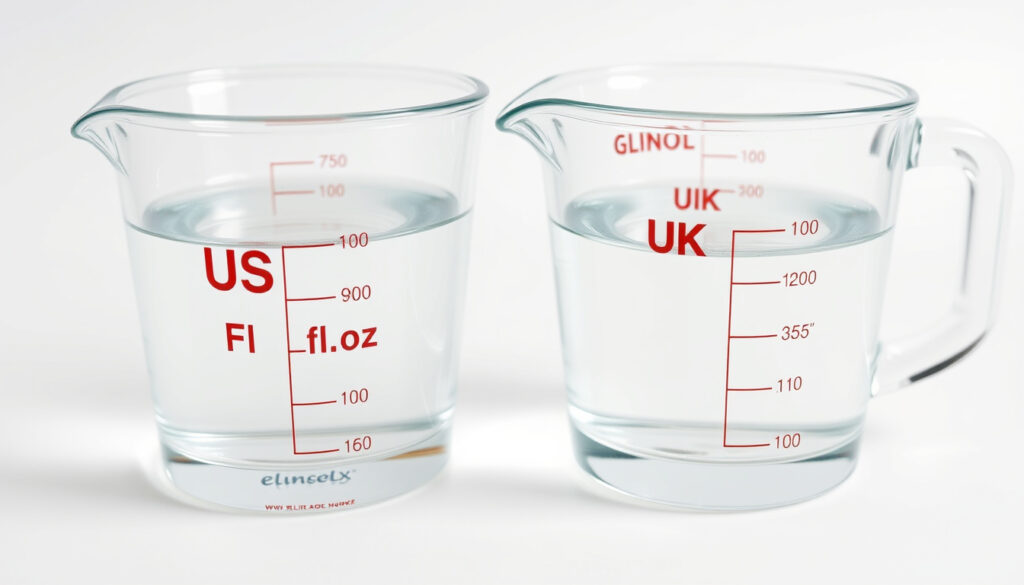
1 Ounce to ml: US Fluid Ounce vs UK Conversion Guide
Anyone who’s tried to follow a recipe from across the Atlantic has run into the same head-scratcher: is an ounce the same as 30 ml? The short answer is no — it depends on whether you’re using the US or Imperial system. This guide breaks down the exact numbers, explains why the confusion exists, and gives you a clear conversion table you can trust in the kitchen, pharmacy, or ba
oz to ml (US): 29.574 ml ·
oz to ml (UK): 28.413 ml ·
Common kitchen rounding: 30 ml ·
Precision for medicine: 1 oz = 29.574 ml
Quick snapshot
- 1 US fluid ounce = 29.5735295625 ml (Open Text BC – Canadian culinary education resource)
- 1 Imperial fluid ounce = 28.4130625 ml (Cooking Conversions – UK recipe site)
- 30 ml is a common rounding used in most consumer products (Wikipedia measurement history)
- Which system (US or UK) a recipe expects when it says “oz” — most cookbooks don’t specify
- The US and Imperial systems have coexisted since the 19th century; no change expected soon (Wikipedia – measurement history)
class=”n24-card-body”>
- More countries are moving to metric; recipe authors increasingly list ml alongside oz
The precise definitions from authority sources:
| Measurement | Exact value (ml) | ||
|---|---|---|---|
| US fluid ounce | 29.5735295625 | Open BC | |
| UK (Imperial) fluid ounce | 28.4130625 | ||
| Common rounding (kitchen) | 30 | Wikipedia | |
| Error using 30 ml (US) | ~1.4% over | Calculated from US definition |
How many milliliters are in an ounce?
The answer depends entirely on which “ounce” you mean. The US fluid ounce and the Imperial fluid ounce are different volumes, and confusing them can throw off a recipe by nearly 4%.
The exact US fluid ounce
- 1 US fluid ounce = 1/128 of a US gallon = 29.5735295625 ml (Open BC – basic kitchen management)
- This definition comes from the U.S. customary system, formally adopted in the century.
The exact Imperial fluid ounce
- 1 Imperial fluid ounce = 1/160 of an Imperial gallon = 28.4130625 (Metric Conversions – UK volume converter)
- The Imperial system is used in the United Kingdom, Canada (for measurements), and a few other Commonwealth countries.
Is 1 ounce exactly 30 mL?
Not exactly, but it’s extremely common to see “1 oz = 30 ml” on product labels and conversion apps. Here’s why.
Why is a common rounding
- Food and beverage manufacturers often round 29.57 ml to 30 ml for simplicity
- In the U.S., the FDA allows a tolerance of ±5% on net quantity statements, so 30 ml is legally acceptable as “1 fl” ()
The error margin of using 30ml
Using 30 ml a substitute for 1 US fluid ounce introduces an error of about 1.44% above the true volume.
For most cooking (flour, sugar, liquids) this is negligible. For baking with precise hydration ratios or for medical dosing, use the exact value.Why this mattersA home baker making 4 cups of flour (32 oz) who uses 30 ml per ounce will add 46 muco turn a bread dough into batter.
US fluid ounce versus Imperial fluid ounce — what’s the difference?
These two systems measure volume differently because they define their gallon differently. Let’s compare.Four key differences, one clear pattern: the Imperial ounce is always smaller.
Property>PropertyUS fluid ounceImperial fluid ounce
Exact ml.573529562528.4130625
Gallon base1/128 of US gallon (231 cu in)Pint116 fl oz = 473.18 ml20 fl ml = 568.26 mlRelative size~4% larger than tr>~4% smaller US
Common usersUSA, some Latin American countriesCanada, Ireland, former coloniesWikipedia Imperial and US systems”noopener nofollow”>Metric Conversions confirms 1 UK fl oz = 1.04 US fl
What to watchIf you’re working with a Canadian or UK recipe says “1 oz of water,” you need to know which system the author used. The difference of 1.16 ml per ounce adds up fast.
Common ounce to ml conversions: from 1/2 oz to 8 oz
Here’s a quick reference table for the most requested conversions, using US fluid ounces unless marked Imperial.
Five common values, one rule of thumb: multiply US oz by 29.57.
>il> Ounces US (US (ml) Imperial (ml) Kitchen rounding (ml) 1/2 oz 14.787 14.207 15 1 oz 29.574 28.413 <30
4 oz 118.294 113.652 120 8 oz (1 cup) 236.588 <227.304
240 16 oz (US pint) 454.609 480 Conversions based on Open Text BC – US/Imperial pint definitions and Holland P.T. – metric/imperial conversion table
When precision matters: syringes, water, syrup
Not all measurements are created equal. In some contexts, using 30 ml instead of 29.57 mlfine; in others, it’s a mistake.
- Fluid ounce measures volume, not weight. A fluid ounce of water and a fluid ounce of syrup are the same volume (29.57 ml US), but different weights because syrup is denser.
- When a recipe says “1 oz of honey,” it usually means volume (fluid ounce) in the US, but may mean weight (avoirdupois ounce = 28.35 g) in some contexts. Check the format.
Using syringes for medical dosing
- The FDA requires exact ml amounts on prescription labels; never round to 30 ml for medication.
Calculators and tools
- Online converters (Metric Conversions) let you toggle
- Most smartphone unit converter apps default to US fluid ounces — double-check if you’re outside the US.
Confirmed facts vs. what remains unclear
- 1 US fluid ounce = fluid ounce = 29.5735295625 ml (Open BC)
- 1 Imperial fluid ounce = 28.4130625 ml (Cooking Conversions)
- Imperial fluid ounce is 3.924% smaller than US (Wikipedia)
- 30 ml is a legal rounding for US (Open BC – regulatory reference)
What’s unclear
-
system
- Whether older Canadian or UK cookbooks use Imperial or US fluid ounces (Canada uses metric but recipes vary)
“The US fluid ounce is defined as 1/128 of a US gallon= 29.5735295625 milliliters.”
Imperial fluid ounce is 1/160 of an Imperial gallon, equal to28.4130625 milliliters, making it about 4% smaller than its US counterpart.”
Wikipedia – Comparison of Imperial and US Customary SystemsFor the home cook, the clear: when the recipe says “1 oz,” assume US fluid ounce if it’s an American source, and Imperial if it’s from the UK. When in doubt, measure in milliliters — and if you’re bakingalways exact numbers.
1/4 US fluid ounce = 7.393 ml (using 29.5735 ÷ 4). 1/4 Imperial7.103 ml.
Is 1 ounce 29 or 30 ml?
Exactly, 1 US fl oz 29.5735 ml. Many products round to 30 ml for simplicity, but the true value is 29.57.
What is 1 fluid ounce vs ounce weight?
A fluid ounce measures volume (29.57 ml). An weight>28.35 g). They are not interchangeable.
Why do some bottles say 1 oz 30 ml?
Manufacturers round to 30 ml for consumer convenience and because the FDA allowsallowance.
Can I use 30 ml for a US recipe if I live in the UK?
Yes, if you’re using US fluid ounces. If your measuring cup is Imperial, 1 Imperial oz =28.4 ml, so you’ll need about 4% more volume. Always check which system your measuring tools use.
50 ml ÷ 29.5735 = 1.69 US fl oz. 50 ml ÷ 28.4131 =1.76 Imperial fl oz.
Is 1 oz larger than 30 ml?
No, 1 US fl oz = 29.57 ml, so 30 ml is actually slightly larger (about 1.4% more).
8 US fl oz =236.588 ml 8 Imperial fl oz = 227.304 ml. rounded equivalentml for US.
Related reading: **3/4 Inch to mm – Exact 19.05 mm Conversion Guide**
Additional sources
More related posts
 How to Add Printer to Mac: 4 Ways + Fixes
 Listen to Music Online: Best Apps & Thai Radio 24/7
 American International School Singapore: Top Options, Fees & Guide
 Crystal Palace vs Burnley: Final Score and Comeback
 Hari Raya Puasa 2025: Muhammadiyah vs Government & Sidang Isbat
 สล็อต VIP pglucky88.blog – Verified Facts on Luck88 VIP Slot
 Far East Square Food – Dining Guide to Chinatown Singapore
 Lee Min Ho and Song Hye Kyo: Rumors vs. Facts