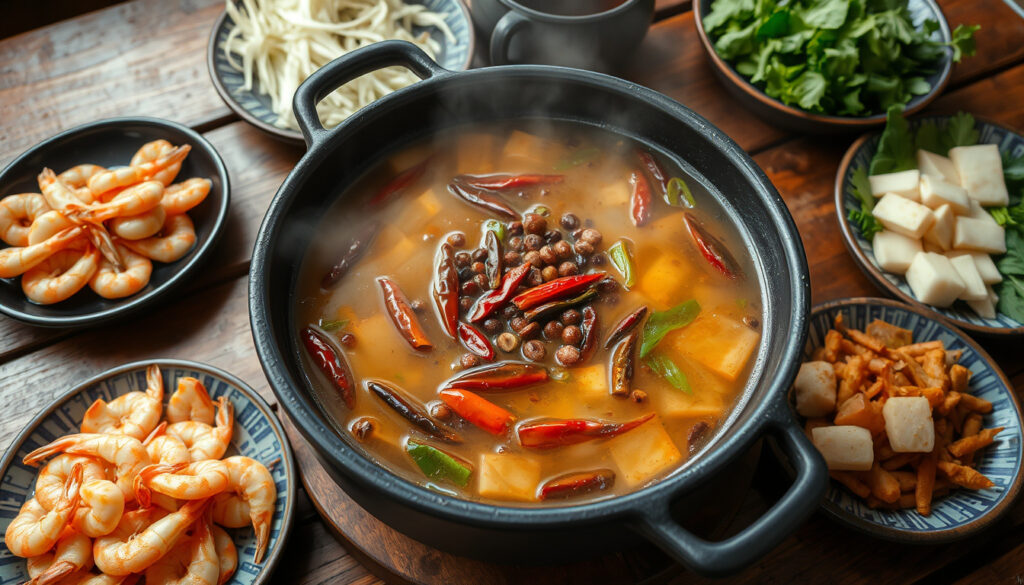
Ma La Xiang Guo: Complete Guide to Recipe, Ingredients, and Tips
Most home cooks stop at the heat—but the real secret to Ma La Xiang Guo lies in the balance of numbing and spicy. This guide delivers a practical, research-backed approach to mastering the Sichuan dry pot, with adaptable substitutions and precise wok heat management across multiple recipe traditions.
Origin
- Sichuan, China
Flavor
- Mala (numbing and spicy)
Typical Ingredients
- Meat, vegetables, tofu, Sichuan peppercorns, chili
Preparation Time
- 30-45 minutes
Origin: Sichuan, China | Main flavor: Mala (numbing and spicy) | Typical ingredients: Meat, vegetables, tofu, Sichuan peppercorns, chili | Preparation time: 30-45 minutes | Common serving: Dry pot, no broth | Heat level: Adjustable, usually high
| Origin | Sichuan, China |
| Type | Stir-fried dish, dry pot |
| Flavor | Mala (numbing and spicy) |
| Main ingredients | Meat, vegetables, tofu, Sichuan peppercorns, chili |
| Calories per serving | Approx. 500-800 kcal depending on ingredients |
| Preparation time | 30-45 minutes |
What is Ma La Xiang Guo?
Ma La Xiang Guo is a Chinese dish from Sichuan, prepared by stir-frying. It features a medley of meat, vegetables, and tofu in a spicy, numbing sauce. It is served dry, without broth, unlike hot pot.
What does ‘Ma La Xiang Guo’ literally mean?
The name breaks down into “ma” (numbing), “la” (spicy), “xiang” (fragrant), and “guo” (pot). It directly translates to “numbing and spicy fragrant pot.”
How is Ma La Xiang Guo different from hot pot?
Unlike hot pot, where ingredients are simmered in a bubbling broth at the table, Ma La Xiang Guo is a dry stir-fry. All components are cooked in a wok with the mala sauce and served without liquid.
“Ma la xiang guo is commonly presented as a Sichuan-style dry pot or spicy numbing stir-fry dish.”
What does Ma La Xiang Guo taste like?
It has a strong mala flavor: numbing ( ) from Sichuan peppercorns and spicy ( ) from chilies. It is salty and savory, with a rich umami base. The numbing sensation is a signature characteristic.
What is the flavor profile?
The dominant notes are the tingle of Sichuan peppercorn, the heat of dried chilies, and the savory depth of fermented bean paste. Aromatics like garlic, ginger, and shallot add layers of fragrance.
How spicy is it usually?
Spice levels vary widely. Traditional versions are quite hot, but home cooks can adjust by reducing dried chilies or using a milder chili bean paste. FutureDish suggests using only half a packet of ready-made mala stir-fry sauce if you are unfamiliar with the spice level.
“One common method is to blanch vegetables before stir-frying them in the wok.”
What are the essential ingredients for Ma La Xiang Guo?
Common ingredients include meat (e.g., pork, beef, chicken), seafood, vegetables, tofu, and mushrooms. The sauce uses Sichuan peppercorns, dried chilies, ginger, garlic, and shallots. Soy sauce, doubanjiang, and sometimes chili crisp are used for flavor.
What are the typical proteins and vegetables?
A typical ingredient set can include lotus root, broccoli, mushrooms, tofu, celery, bamboo shoots, and pork belly. Some versions use meat and seafood, while others rely mainly on vegetables and processed soy products. A Singapore-based recipe from Spring Tomorrow adds potatoes, carrots, lotus root, frankfurters, long beans, mushrooms, tofu sheets, black fungus, corn, cucumber, and beancurd sheets in a staged order.
What is the base sauce made of?
The sauce typically combines doubanjiang (chili bean paste), fermented black beans, soy sauce, Shaoxing wine, and sugar. Sichuan peppercorns and dried chilies are fried in oil to release their flavor. SBS instructs cooks to stir-fry the chili bean paste until the oil turns dark red before adding garlic, ginger, and chili.
“A published home recipe from SBS describes ma la xiang guo as a spicy stir-fry hot pot and serves it on a sizzling platter.”
How to cook Ma La Xiang Guo?
Blanch or fry ingredients separately before stir-frying together. Prepare the aromatics: garlic, ginger, shallots, and the mala sauce base. Stir-fry the main ingredients with the sauce, ensuring even coating. Store-bought packets (like Haidilao) are a convenient shortcut.
What is the step-by-step process?
- Prepare Ingredients: Slice meat, cut vegetables into bite-sized pieces, and soak dried chilies if using. SBS recommends blanching marinated fish fillets for about 1 minute, until they firm up and curl slightly.
- Blanch Vegetables: SBS recommends blanching vegetables for 1 minute before stir-frying them. The Hutong recipe blanches lotus root, stem lettuce, and broccoli for 2 minutes, then dips them into cold water to stop cooking. Omnivore’s Cookbook instructs cooks to blanch ingredients in groups or one at a time, then transfer them to a strainer.
- Cook Proteins: Quickly fry or sear meat and seafood separately. The Hutong recipe browns sliced pork belly until it renders fat before adding garlic and ginger.
- Build the Sauce Base: Start at medium heat, add oil and aromatics, then raise to medium-high for the bulk stir-fry. The Hutong recipe uses 100 ml of oil and fries whole spices including bay leaves, star anise, fennel, cinnamon, dried chili, and Sichuan peppercorn.
- Combine and Finish: The Woks of Life recipe finishes by adding fish balls, blanched vegetables, Shaoxing rice wine, and sugar, then stir-frying for about two minutes. Add a splash of reserved cooking liquid if the pan becomes too dry.
Can I use a store-bought mala sauce packet?
Yes. Ready-made sauces from brands like Haidilao simplify the process. FutureDish suggests using only half a packet if you are unfamiliar with the spice level.
“A common heat-control approach is to start at medium heat, add aromatics, then raise to medium-high for the bulk stir-fry.”
Upsides of Homemade Sauce
- Complete control over spice and numbing levels
- No additives or preservatives
- Can adjust salt and oil content
Downsides of Homemade Sauce
- Requires sourcing multiple specialty ingredients
- Time-consuming to prepare
- Inconsistent results for beginners
Is Ma La Xiang Guo healthy?
It can be high in oil and sodium due to the sauce and frying. Nutrition depends on ingredient choices; more vegetables and lean proteins improve healthiness. Portion control and oil reduction can make it more balanced.
Is it high in calories or sodium?
Calories per serving range from approximately 500-800 kcal depending on ingredients. The sauce, particularly doubanjiang and soy sauce, is high in sodium.
Can it be made healthier?
Yes. Reduce oil by dry-frying or using an air fryer for some ingredients. Load up on vegetables like broccoli, lotus root, and mushrooms. Choose lean proteins like chicken breast or tofu.
Can I keep Mala Xiang Guo overnight?
Leftovers should be refrigerated in an airtight container within 2 hours. It can be kept for up to 3-4 days in the fridge. Reheat thoroughly before eating.
How should I store leftovers?
Transfer to an airtight container and refrigerate promptly. Avoid leaving it at room temperature for more than 2 hours.
How long does it stay fresh?
The dish maintains best quality for 3-4 days when stored properly. The flavors often meld and deepen overnight.
Why does mala make my stomach hurt?
Mala’s heat and oil can irritate the gastrointestinal tract. Some people are sensitive to capsaicin or Sichuan peppercorns. Eating in moderation and pairing with rice can help.
Is it the spiciness or the oil?
Both factors contribute. Capsaicin from chilies can irritate the stomach lining, and the high oil content can be difficult to digest for some people.
What can I do to avoid discomfort?
Eat smaller portions. Pair the dish with plain rice to buffer the spices. Avoid eating it on an empty stomach. If you have a known sensitivity, reduce the amount of chili and oil.
Comparison: Ma La Xiang Guo vs. Other Sichuan Dishes
| Feature | Ma La Xiang Guo | Hot Pot | Mapo Tofu |
|---|---|---|---|
| Format | Dry stir-fry | Broth-based simmering | Soft tofu in sauce |
| Main flavor | Mala (numbing + spicy) | Varies by broth | Spicy and numbing |
| Key technique | Blanching + wok frying | Tabletop simmering | Stewing and thickening |
| Typical protein | Meat, seafood, tofu | Sliced meat, fish, veggies | Ground pork or beef |
Related reading: Ma La Xiang Guo (Sichuan Spicy Stir-Fry) · Fragrant Spicy Pot (Ma La Xiang Guo)
whattocooktoday.com, asianfoodsdaily.com, springtomorrow.com, mekhalaliving.com, sethlui.com, youtube.com, chinesefoodwiki.org
Frequently Asked Questions
What does ‘Xiang Guo’ mean?
“Xiang” means fragrant, and “guo” means pot. Together, “fragrant pot” refers to the dish being served in a heated pot or wok that releases aromatic steam.
What is the best meat for Ma La Xiang Guo?
Pork belly is a classic choice for its rendered fat and richness. Chicken, beef, and lamb are also common. For seafood, shrimp and fish fillets work well.
Can I make Ma La Xiang Guo vegetarian?
Yes. Replace meat with extra tofu, mushrooms (shiitake, enoki, king oyster), lotus root, bamboo shoots, and mock meat products. The sauce remains the same.
How do I tone down the spiciness?
Reduce the number of dried chilies. Use less doubanjiang or a milder brand. Adding a pinch of sugar can also balance heat without diluting flavor.
What can I use instead of Sichuan peppercorns?
Sichuan peppercorns are unique in their numbing quality. A substitute of black pepper and a touch of lemon zest can mimic some citrus notes, but the numbing effect will be absent.
What is the difference between Ma La Xiang Guo and dry pot?
They are essentially the same dish. “Ma La Xiang Guo” emphasizes the numbing-spicy flavor profile, while “dry pot” describes the cooking method—stir-fried without broth.
More related posts
 How to Add Printer to Mac: 4 Ways + Fixes
 Bugis BBQ and Hotpot: Menu, Prices & Reservations Guide
 DBS Bank Near Me: Find Branches, Hours & Open Account Online
 CDC Voucher 2026 Payout Date: S$500 Disbursed June 2026
 Adelaide United vs Sydney FC: Prediction, Results, Lineups & Live
 A&W Menu Guide: Prices, Burgers, and What to Order
 Lord of the Rings Musical Singapore: Cast, Story & Tickets
 Singapore Median Salary 2025: Complete Guide & Answers