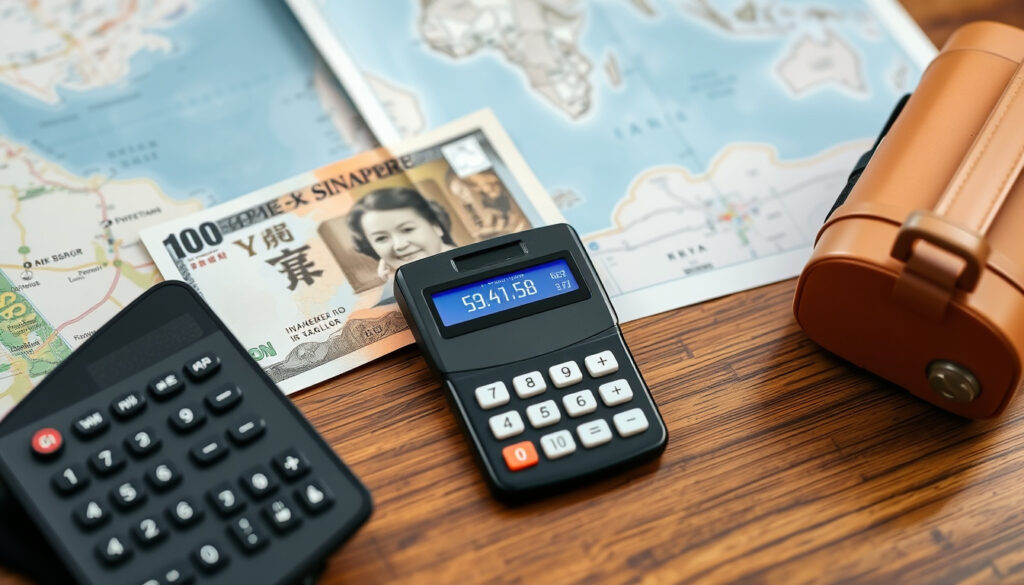
200000 Yen to SGD: Rate, Value & Travel Budget Guide
Converting ¥200,000 to SGD gives you roughly S$1,600 at current exchange rates, but what that sum actually buys you in Japan varies wildly by travel style and destination. This guide breaks down the real purchasing power of 200,000 yen for Singaporean travelers planning a budget trip.
Budget Traveler
- Hostel accommodation
- Street food meals
- Local transport only
- Daily cost ~¥10,000
- Japan Atlas confirms ¥6,000–¥10,000 per day for budget travelers
Mid-Range Traveler
- Budget hotels/Airbnb
- Mix of local and restaurant meals
- Some paid attractions
- Daily cost ~¥15,000–¥20,000
- Reddit traveler insights suggest ¥10,000–¥20,000 per person per day for comfortable travel
Luxury Traveler
- 4-star hotels
- Fine dining
- Taxis and private tours
- Daily cost ~¥30,000+
- Japan Atlas notes luxury category costs diverge sharply from budget
Key Insight
- ¥200,000 stretches 10–14 days for budget travelers
- Mid-range travelers may need ¥280,000–¥300,000 for 2 weeks
- ¥200,000 is below the ¥225,000 estimate for a 4-week budget trip per S Money
1 JPY = 0.00796 SGD | ¥200,000 = S$1,592 | Avg. daily budget cost ¥10,000–¥15,000 | Typical 2-week budget ¥200,000–¥300,000 | Monthly rent in Tokyo (1-bedroom) ¥100,000–¥150,000
| Metric | Value | Source |
|---|---|---|
| Current exchange rate (JPY to SGD) | 1 JPY = 0.00796 SGD | Exiap and Xe |
| ¥200,000 in SGD | ~S$1,592 | Calculated from mid-market rate |
| ¥200,000 in USD | ~$1,370 | Cross-rate calculation |
| Average daily cost (budget) | ¥10,000–¥15,000 | Japan Atlas |
| 2-week budget estimate | ¥200,000–¥300,000 | Compilation from multiple guides |
| Monthly budget (simple lifestyle) | ¥100,000–¥150,000 | General cost-of-living data |
How much is 1 yen to 1 SGD?
Mid-market exchange rates in early 2026 show 1 Japanese yen trading between 0.00796 and 0.0080 Singapore dollars. Multiple converters cluster around this band: Exiap reports 1 JPY ≈ 0.0080 SGD, OANDA lists about 0.00798 JPY/SGD, and Xe shows consistent figures near 0.0080. A Wise snapshot recorded a slightly higher rate of 0.0090, implying ¥200,000 ≈ S$1,804 at that specific moment.
What is the current exchange rate for 200,000 yen to SGD?
At the prevailing mid-market rate of 0.00796–0.0080 SGD per JPY, ¥200,000 converts to roughly S$1,592–S$1,600. The exact figure fluctuates throughout the trading day due to currency market movements, interest rate differentials between the Bank of Japan and the Monetary Authority of Singapore, and broader economic factors including trade balances and investor sentiment.
Live rates from multiple aggregators consistently place ¥200,000 near the S$1,600 mark, but for travelers the effective rate after transfer fees and margins will be slightly lower. Wise data shows institutional margins can narrow the gap to as little as 0.5% with mid-market rates.
The implication: the conversion number matters less than what you can actually buy with that sum on the ground in Japan, which depends on travel style and season.
Is 200,000 yen a lot of money?
Context determines whether ¥200,000 feels like a lot. For a budget traveler in Japan, it covers about 10–14 days of modest living. For context, the average monthly salary in Japan hovers around ¥350,000–¥400,000, meaning ¥200,000 represents roughly two weeks of take-home pay for a typical worker. Against Singapore dollars, S$1,592 is a meaningful but not extravagant travel budget — roughly equivalent to 10–14 days of mid-range spending in Singapore.
How much is 100,000 yen worth in Japan?
¥100,000 covers about one week of budget travel (¥10,000/day) or roughly two-thirds of a monthly rent payment for a small Tokyo apartment. It buys approximately 100 bowls of ramen, 50 train rides across Tokyo, or 10 nights in a budget hostel.
What is 1 million yen in Japan?
One million yen — roughly S$7,960 at current rates — represents nearly three months of average salary and could fund a comfortable three-month backpacking trip through Japan, or serve as a significant down payment on a used car.
The pattern: ¥200,000 sits in a middle zone — enough for a solid short-term travel budget but insufficient for long-term living or major purchases in Japan.
How much is $200,000 yen in dollars?
At the current cross-rate of approximately 1 USD = 146 JPY (derived from the JPY/SGD rate via the USD/SGD base), ¥200,000 converts to about $1,370 USD. This is roughly S$210 less than the SGD equivalent due to the Singapore dollar’s stronger position against the yen. Travelers comparing budgets across currencies should note that a ¥200,000 allowance stretches further for Singaporeans (converting to ~S$1,592) than for Americans (converting to ~$1,370).
Is 200,000 yen enough for 2 weeks in Japan?
For strict budget travelers living on ¥8,000–¥10,000 per day, ¥200,000 covers 20–25 days — well beyond two weeks. S Money’s budget guide suggests ¥8,000 per day is feasible, putting ¥200,000 at 25 days of minimal spending. However, most mid-range travelers spending ¥15,000–¥20,000 daily will exhaust the budget in 10–13 days. A detailed 14-day itinerary from Japan Atlas estimates accommodation alone at ¥140,000–¥200,000 when mixing business hotels with occasional ryokan stays, leaving little for food, transport, and activities.
Is 100k yen enough for a month in Japan?
¥100,000 (S$796) falls short for a full month unless you’re in extremely cheap shared accommodation and eating primarily convenience store food. At ¥3,300 per day — roughly one hostel bed and one meal — survival is technically possible but not enjoyable for most travelers.
Travel-money experts consistently advise carrying sufficient cash despite Japan’s improving card acceptance. Many smaller establishments, temple entry fees, and local buses remain cash-only operations.
What this means: ¥200,000 works well for 14 days if you stick to budget hostels, convenience store meals, and free attractions. Upgrade to mid-range hotels and restaurant dining, and you’ll need to supplement with additional funds.
Sample 2-week budget using 200,000 yen
| Category | Item/Example | ¥ Cost |
|---|---|---|
| Accommodation | 14 nights @ ¥4,000 (hostel/budget capsule) | ¥56,000 |
| Food | 3 meals daily @ ¥1,200 (conbini + ramen + street food) | ¥50,400 |
| Local transport | 14 days @ ¥800 (subway/bus + day passes) | ¥11,200 |
| Intercity transport | Round-trip Shinkansen Tokyo–Kyoto | ¥28,000 |
| Attractions/activities | Temple entry, museum, one paid activity | ¥20,000 |
| Miscellaneous | Souvenirs, snacks, emergency fund | ¥34,400 |
| Total | ¥200,000 |
This sample budget is tight but realistic for a disciplined budget traveler.
Budget travelers can make ¥200,000 last 14 days in Japan with strict discipline. Mid-range travelers should expect to spend ¥280,000–¥300,000 for the same period. The budget covers accommodation, food, transport, and basic attractions — but leaves little room for shopping, drinking out, or unplanned spending.
How much is 3 million yen in SGD?
Three million yen converts to approximately S$23,880 at the current 0.00796 rate. This sum represents a significant long-term travel budget — enough for a comfortable six-month backpacking trip or a three-month mid-range journey including nicer accommodation and domestic flights. For Singaporeans, ¥3 million is comparable to the cost of a small car or a year’s rent on a suburban HDB flat room.
The catch: sums above ¥1 million attract attention from money transfer services regarding anti-money laundering checks, so plan transfers in advance if handling large amounts.
Related reading: Convert SGD to Yen: Live Exchange Rate & Guide for 2026 · 20000 Won to SGD: Live Rate, Fees & Best Provider
Frequently Asked Questions
What is the best way to convert yen to SGD?
Mid-market providers like Wise and Revolut offer the lowest fees for electronic transfers, typically 0.5%–1% above the interbank rate. Airport exchange counters charge 3%–8% margins and should be avoided for amounts above ¥50,000.
Should I exchange money in Japan or Singapore?
Exchanging SGD to JPY in Singapore before departure generally yields better rates, especially at The Arcade or People’s Park Centre money changers. ATMs in Japan (7-Eleven, Japan Post) offer competitive rates but charge ¥200–¥400 per withdrawal fees.
What factors influence the JPY to SGD exchange rate?
Bank of Japan monetary policy, Singapore’s trade-dependent economy, interest rate differentials, and global risk sentiment all affect the JPY/SGD pair. The yen tends to weaken during periods of global economic expansion and strengthen during market stress.
Can I use credit cards in Japan?
Major hotels, department stores, and chain restaurants accept Visa and Mastercard. However, many small restaurants, temples, local shops, and rural businesses remain cash-only. Travel advisors recommend carrying ¥10,000–¥20,000 in cash daily for small purchases and emergencies.
What is the cost of a typical meal in Japan?
Convenience store meals (onigiri, sandwiches, bento) cost ¥300–¥600. A bowl of ramen runs ¥800–¥1,200. Mid-range restaurant meals average ¥1,500–¥3,000 per person. Budget travelers can eat well for ¥1,500–¥2,000 per day through conbini and street food.
How much does train travel cost in Japan?
A Tokyo subway ride costs ¥180–¥260. Day passes run around ¥600. The Shinkansen from Tokyo to Kyoto costs ¥14,000 one-way. Local buses cost ¥220–¥260 per ride according to Holafly’s Japan guide.
Is it better to carry cash or card in Japan?
Carry a mix: ¥20,000–¥30,000 cash for daily expenses, plus a Visa/Mastercard for larger purchases. Japan’s card acceptance is improving but still lags behind Singapore. S Money warns that tourists should not rely solely on cards.
More related posts
 Love on the Spectrum Couples, Season 4, & Controversy Explained
 Lad and Co Menu – No Verified Details in 2024
 I Am Married…But! Review: Is It Worth Watching? (2025 Netflix)
 SG to HK Flight Time: Duration, Airlines & Cheap Months
 Types of Stomach Pain in Females: Causes & Relief
 Parcels Jurong West Void Deck: Resident Emails PMO 9 Times
 Wholesale Butterfly Valve Flowork: Factory Supplier
 Fantastic Beasts and Where to Find Them – Book and Movies Guide