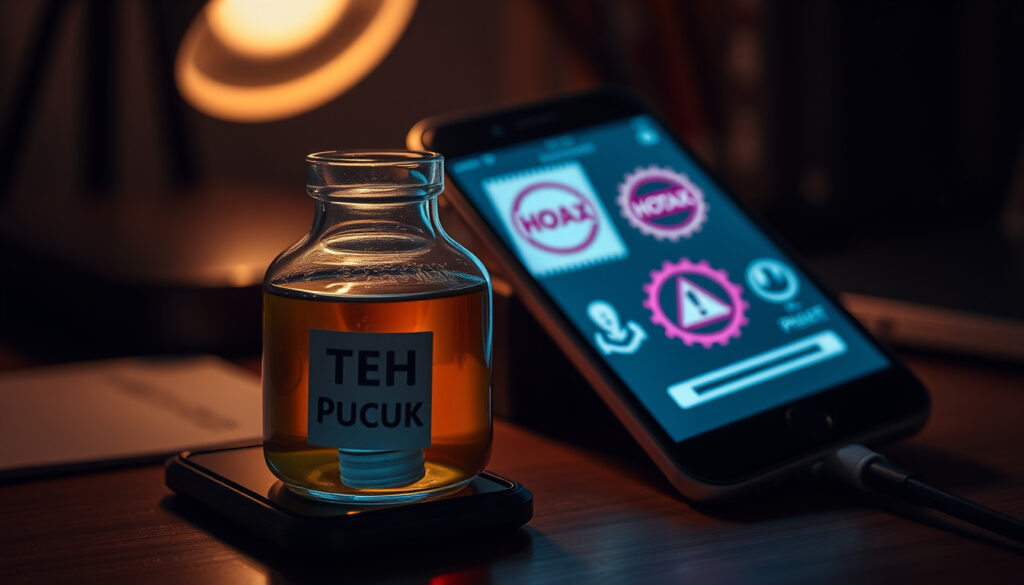
Bokep Viral Teh Pucuk – Hoax Facts, Phishing Risks
Since early February 2026, a viral rumor has swept across Indonesian social media platforms, claiming the existence of an explicit 17-minute video allegedly linked to Teh Pucuk, a popular bottled tea brand. The hoax, which surfaced primarily on TikTok, Instagram, Facebook, X, and Telegram, fabricated connections to university students and brand advertising models. Multiple Indonesian news outlets have since investigated these claims and found no evidence of an authentic video. Authorities warn that links promoted alongside the rumor lead to phishing websites designed to steal personal information and install malware on users’ devices.
The phenomenon, peaking around February 13, 2026, demonstrates how viral misinformation exploits curiosity and brand recognition to spread malicious content. Teh Pucuk’s parent company has not issued a public statement regarding the rumors. Legal experts note that distributing or accessing such material may violate Indonesia’s Electronic Information and Transactions Law, potentially exposing offenders to criminal penalties. This explainer consolidates verified information from news sources and cybersecurity advisories to clarify what actually happened.
What Is the “Bokep Viral Teh Pucuk” Rumor?
The claim centers on supposed footage allegedly showing intimate acts between a man and woman, initially rumored to be Lombok Timur KKN (Community Service Program) students. Proponents asserted the video ran for 17 minutes without censorship and included recognizable faces. Additional variations described “shorter cuts” lasting 1 minute and 50 seconds, along with references to Teh Pucuk bottle imagery and celebrity involvement. However, investigative searches across major platforms and archives have yielded zero proof of any authentic footage matching these descriptions.
Indonesian news outlets including Tribunnews Medan and Jawapos conducted thorough investigations and found no verifiable video. The widespread sharing of clips showing faces has not led to confirmed identities, and claims of arrests remain unproven rumors without official documentation.
Multiple semantic variations of the rumor circulated, including “video botol Teh Pucuk” (Teh Pucuk bottle video), “artis bokep Teh Pucuk” (celebrity porn), and “teh pucuk ad model scandal.” None of these terms connect to documented evidence or official brand responses, suggesting they were manufactured to attract search traffic and maximize viral reach.
Key Findings at a Glance
- The claimed 17-minute video has not been located or verified by any credible source
- Shorter versions circulating online lack authentication and proper sourcing
- No Teh Pucuk advertising model has been publicly identified or confirmed
- Brand representatives have not issued statements addressing the rumors
- All promoted download links direct users to phishing or malware distribution sites
Snapshot of Core Facts
| Fact | Details | Verification Status |
|---|---|---|
| Video Length Claimed | 17 minutes (uncensored); shorter versions at 1 minute 50 seconds also reported | Not verified; no footage found |
| Platform Origins | TikTok, Instagram, Facebook, X (Twitter), Telegram | Confirmed spread pattern |
| Brand Connection | Fabricated links to Teh Pucuk advertising models | No evidence of brand involvement |
| Identity Claims | Lombok Timur KKN students mentioned; no arrests or verified identities | Unproven rumors |
| Confirmation Status | Classified as hoax by multiple Indonesian news organizations | Strong consensus |
| Public Reaction | High engagement driven by FOMO; declining after warning publications | Documented in media reports |
How the Hoax Spread Across Platforms
The rumor gained traction through coordinated sharing patterns that exploited trending social media mechanics. Users posted teaser clips that supposedly showed faces from the alleged video, creating a perception of authenticity despite lacking verifiable sources. Hashtags combining the brand name with explicit keywords dominated discovery feeds on multiple platforms simultaneously.
The technique mirrored previous viral misinformation campaigns in Indonesia, where sensational claims about celebrity involvement or student scandals generate rapid engagement. According to cybersecurity reporting, the hoax relied heavily on fear of missing out (FOMO), prompting users to click shared links before verifying their legitimacy. Bot accounts amplified early posts, creating an illusion of widespread interest that encouraged organic sharing.
Why Brands Become Targets
Well-known consumer brands offer attractive targets for misinformation campaigns because their names carry built-in search volume and recognition. Associating a scandal with a familiar product generates clicks from users who might otherwise ignore the topic. The Teh Pucuk brand, widely consumed across Indonesia, provided fertile ground for this exploitation.
Multiple accounts posting the content exhibited typical bot signatures: new account age, high posting frequency, and identical caption formatting. Security researchers noted this pattern suggests organized distribution rather than organic viral spread.
Cross-platform syndication amplified reach, with identical claims appearing within hours across TikTok, Instagram, Facebook, X, and Telegram groups. This synchronized spread pattern differs from typical organic virality, where content typically gains traction on one platform before migrating to others.
The Dangers Behind the Shared Links
Beyond spreading false information, the campaign served a more sinister purpose: distributing malicious software and harvesting user credentials. Security analysts examining the shared links discovered they directed users to phishing pages designed to mimic login interfaces for social media platforms and banking applications. Some sites automatically initiated malware downloads disguised as video players.
According to cybersecurity advisories published by Indonesian news outlets, visitors encountered requests for passwords, one-time codes, or app installations before any content supposedly loaded. These requests align with standard phishing and malware distribution tactics, where victims unknowingly provide access to their accounts or install surveillance tools on their devices.
Legitimate video content does not require social media logins, banking details, or software downloads to view. Any site making such requests should be treated as suspicious and closed immediately.
Additional risks included redirects to online gambling platforms and subscription services that charged users without clear consent. The monetization layer suggests financial motivation beyond mere misinformation, with operators profiting from each victim who entered payment information or installed problematic applications.
Legal Consequences for Participants
Indonesian authorities have reminded citizens that sharing or accessing explicit content under false pretenses may violate the Electronic Information and Transactions Law (UU ITE), specifically Article 27(1), which addresses pornographic material distribution. Penalties can include imprisonment for up to six years and fines reaching one billion rupiah.
Law enforcement agencies indicated they monitor channels and accounts actively distributing prohibited material, regardless of whether the content itself is authentic. The act of sharing—rather than merely viewing—carries significant legal exposure under current regulations.
Timeline of the Viral Rumor
Understanding when key events occurred helps contextualize the scope and duration of the misinformation campaign.
- Early February 2026: Initial claims of a 17-minute Teh Pucuk-linked explicit video begin appearing on Indonesian social media platforms
- Mid-February 2026: Multiple variations emerge, including references to Lombok Timur KKN students and shorter video cuts
- February 13, 2026: Peak engagement period, with widespread sharing across TikTok, Instagram, Facebook, X, and Telegram
- Following days: Indonesian news outlets publish fact-check articles identifying links as phishing mechanisms
- Late February 2026: Declining engagement as warnings spread; hoax persists at lower levels as search optimization content
What Is Confirmed Versus What Remains Unclear
| Established Information | Unverified or False Claims |
|---|---|
| Rumor spread across major Indonesian social platforms in February 2026 | Existence of an authentic 17-minute video |
| Shared links lead to phishing sites and malware distribution | Identity of any individuals depicted (if footage existed) |
| Multiple news organizations found no evidence of real footage | Any connection to Teh Pucuk advertising models or brand employees |
| No official brand response or statement from Teh Pucuk | Claims of arrests or police involvement |
| Sharing such content may violate UU ITE | Existence of shortened versions (1:50 claims) |
| Coordinated bot activity amplified early posts | Celebrity or public figure involvement |
The Broader Context: Misinformation Tactics in Indonesia
This incident reflects broader patterns in Indonesian digital culture, where viral scandals frequently leverage recognizable brands, celebrity associations, and student identities to generate clicks. The technique exploits social hierarchies and professional reputations, creating urgency through implicit threats to personal standing.
Consumer brands face particular vulnerability in these scenarios because reputational damage spreads quickly even when claims prove false. The association between Teh Pucuk and explicit content could influence brand perception among segments of the Indonesian market, regardless of the hoax’s ultimate debunking.
Similar past incidents involving other Indonesian brands demonstrate this pattern recurs, with each campaign refining techniques for maximum engagement. The infrastructure supporting these operations—phishing templates, bot networks, and content syndication—appears increasingly organized, suggesting professional operation rather than amateur experimentation.
Expert Commentary and Source Verification
Indonesian cybersecurity experts interviewed by local news outlets emphasized the technical sophistication behind the campaign’s distribution layer, even if the core content claim was baseless. The combination of misinformation with credential theft represents an evolution beyond simple scams toward hybrid operations that maximize both psychological and financial exploitation.
“The video itself may not exist, but the damage from clicking those links is very real. We’re seeing a new breed of campaign that uses sensational rumors as bait for cybercrime.”
— Indonesian cybersecurity analyst, as quoted by local news outlet
Fact-checking organizations noted the difficulty in countering misinformation once viral momentum builds, as debunking content often reaches smaller audiences than the original claims. The structural incentives of social media platforms continue to favor engagement over accuracy, creating environments where hoaxes thrive.
Summary: What You Need to Know
The “Bokep Viral Teh Pucuk” phenomenon represents a coordinated misinformation campaign that surfaced in Indonesian social media during February 2026. No authentic video has been located or verified by credible sources. The claims served primarily as phishing bait, directing users to malicious websites designed to steal personal information and install malware. Teh Pucuk’s parent company has not responded publicly to the rumors. Legal experts warn that sharing such content, regardless of its authenticity, may carry criminal penalties under Indonesian law. Users encountering similar claims should verify information through established news sources before clicking any links or sharing content. Understanding these dynamics helps protect both personal security and brand reputations from exploitation.
For readers interested in related topics, our guide on What Is a Will vs Trust – Key Differences, Costs and Advice covers estate planning fundamentals that become relevant when personal information is compromised through scams.
Frequently Asked Questions
Is the Teh Pucuk viral video real?
No credible evidence confirms the existence of any authentic video. Multiple Indonesian news outlets investigated the claims and found no verifiable footage matching the descriptions circulating online.
Who is the actress mentioned in the Teh Pucuk rumor?
No confirmed identity exists. Claims about specific individuals, including Lombok Timur KKN students or advertising models, remain unverified rumors without supporting documentation.
Are the download links safe to click?
No. Security analyses confirmed that links shared alongside the rumor direct users to phishing sites and malware distribution pages. Users should avoid clicking any suspicious links.
What legal risks exist for sharing this content?
Under Indonesia’s Electronic Information and Transactions Law (UU ITE), distributing or accessing explicit content may result in imprisonment up to six years and fines of one billion rupiah, regardless of whether the content itself is authentic.
Has Teh Pucuk responded to the rumors?
As of the available reporting, Teh Pucuk’s parent company has not issued public statements addressing the misinformation campaign.
When did the rumor first appear?
The phenomenon surfaced in early February 2026, with peak activity occurring around February 13, 2026, across Indonesian social media platforms.
How can I protect myself from similar hoaxes?
Use updated antivirus software, verify domains before entering credentials, ignore unsolicited direct messages promoting sensational content, and confirm information through established news organizations before sharing.
What should I do if I already clicked a suspicious link?
Change affected passwords immediately, monitor accounts for unauthorized access, run comprehensive malware scans, and consider reporting the incident to relevant Indonesian authorities if financial information was compromised.
More related posts
 How to Waive DBS Annual Fee: Step-by-Step Guide (2025)
 Jung So-min Movies and TV Shows: Complete Filmography
 Helen’s Orchard Central Menu: Prices, Drinks & Reviews (2025)
 Tasha Low and Tyler Ten Reunite: Are They Together in Real Life
 How to Fix Instagram Not Loading: 10 Proven Fixes in 2025
 Novotel Bangkok Platinum Pratunam: Reviews & Prices
 The Good Beer Company: Ownership, Locations, and Menu Guide
 Hari Raya Puasa 2025: Muhammadiyah vs Government & Sidang Isbat