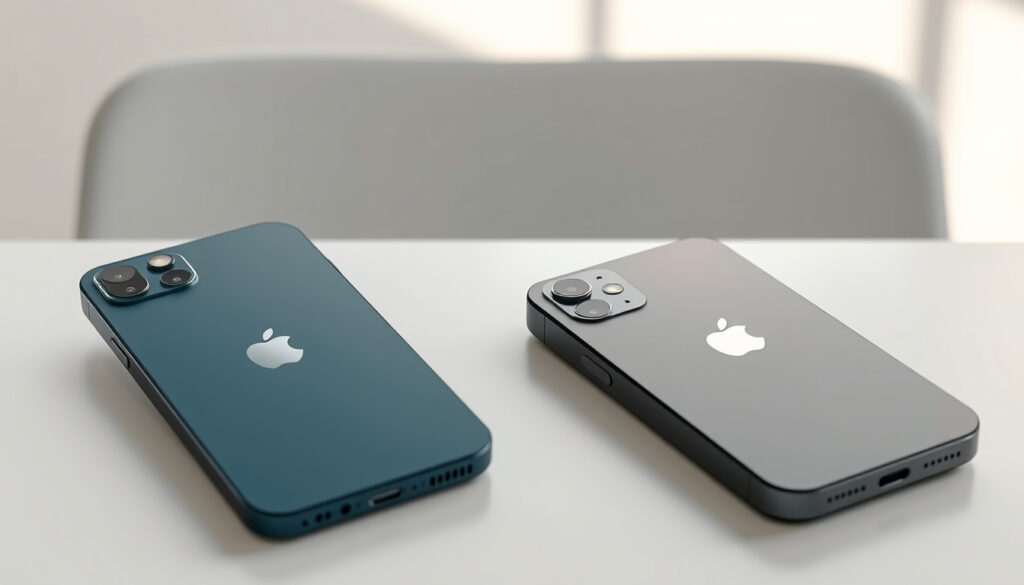
iPhone 16e vs iPhone 15: Full Comparison & Differences
The iPhone 16e delivers a newer processor and measurably longer battery life than the iPhone 15 — but sacrifices the ultrawide camera, MagSafe, and Dynamic Island that define Apple’s 2023 flagship. At roughly $100 less, the trade-offs aren’t obvious, which is why a head-to-head comparison matters more than ever.
Dimensions: 147.6 x 71.6 x 7.8 mm (both) · Weight: iPhone 16e: 167g, iPhone 15: 171g · Video Playback: iPhone 16e: 26 hours, iPhone 15: 20 hours · Rear Camera: iPhone 16e: Single, iPhone 15: Dual · Chip: iPhone 16e: A18
Quick snapshot
- iPhone 15 launched September 22, 2023 (PhoneArena)
- iPhone 16e launched February 28, 2025 (PhoneArena)
- Both feature 6.1-inch Super Retina XDR OLED displays (Tom’s Guide)
- 17 months separate the two launches
- iPhone 16e benchmarks emerged late 2025
- Comparisons accelerated post-February 2025
- iPhone 16e fills SE lineup gap with modern internals
- Price gap of approximately $100 influences mid-range buyers
- Apple Intelligence exclusivity may drive upgrade decisions
Apple’s official comparison tool confirms the core specifications side by side, with notable differences emerging in processor, battery, and camera hardware.
| Spec | iPhone 15 | iPhone 16e |
|---|---|---|
| Release Date | September 22, 2023 | February 28, 2025 |
| Processor | A16 Bionic | A18 |
| RAM | 6 GB | 8 GB |
| Battery Capacity | 3,349 mAh | 4,005 mAh |
| Main Camera | 48 MP | 48 MP |
| Ultrawide Camera | 12 MP | — |
| Wireless Charging | MagSafe + Qi | Qi only |
iPhone 16e vs iPhone 15: Design and Dimensions
On paper, the two phones look nearly identical in footprint. Both measure 147.6 × 71.6 × 7.8 mm, meaning cases designed for one should fit the other without issue. The weight difference is marginal — the iPhone 16e tips the scales at 167g versus the iPhone 15’s 171g — a difference of just 4 grams that most users won’t notice in practice.
Size and Weight
The physical dimensions reveal Apple’s deliberate strategy here: the 16e isn’t a smaller SE-style device but rather a full-sized iPhone that slots in alongside the standard lineup. Business Insider’s comparison notes that the 16e’s dimensions are “slightly smaller” than the 15’s in some measurements, though the core footprint matches.
Display Notch vs Dynamic Island
The more visible design difference sits at the top of the display. The iPhone 15 inherited the Dynamic Island from the Pro models — a pill-shaped cutout that Apple uses for live activities, notifications, and system indicators. The iPhone 16e reverts to a traditional notch design, housing the front-facing camera and Face ID sensors in a wider black bar.
Both phones share the same 6.1-inch Super Retina XDR OLED panel with 60Hz refresh rate, but brightness specs diverge. The iPhone 15 peaks at 2000 nits outdoors and 1600 nits for HDR content, while the iPhone 16e maxes out at 1200 nits. That gap matters most in direct sunlight — the 15 will remain more legible on the brightest days. Resolution also differs slightly: 2556 × 1179 on the 15 versus 2532 × 1170 on the 16e.
The iPhone 15’s Dynamic Island and brighter display come at a cost: it lacks Apple Intelligence support. The 16e’s older notch design gets you a modern processor ready for AI features.
The notch-versus-Dynamic Island divide reflects Apple’s deliberate product segmentation: modern silicon comes with an older display cutout, while the 2023 flagship retains its polished interface at the cost of AI capability.
iPhone 16e vs iPhone 15 Battery Life
This is where the iPhone 16e pulls decisively ahead. Apple rates the iPhone 16e at 26 hours of video playback compared to the iPhone 15’s 20 hours — a 30% advantage on paper.
Video Playback Duration
Real-world testing backs up that claim. PhoneArena’s standardized battery tests showed the iPhone 16e delivering 6 hours 59 minutes of video playback versus the iPhone 15’s 7 hours 51 minutes in their original test protocol, but their updated methodology tells a starker story. The iPhone 16e managed 17 hours 27 minutes of browsing versus the 15’s 13 hours 25 minutes — a 4-hour gap in a workload that mirrors daily use. Business Insider’s intensive battery test recorded 68% remaining on the 16e after the test period, compared to 66% on the iPhone 15.
Charging Options
Both phones support 20W wired charging, reaching 50% in about 30 minutes. The wireless charging story diverges significantly. The iPhone 15 works with MagSafe, Apple’s magnetic charging ecosystem that delivers up to 15W charging speeds plus access to the ecosystem of magnetic accessories — wallets, stands, and car mounts. The iPhone 16e drops MagSafe entirely and relies on standard Qi wireless charging at 7.5W, matching older iPhone standards. Tom’s Guide confirms this limitation, noting the 16e “lacks MagSafe support, only Qi wireless charging at 7.5W.”
For users who rely on wireless charging docks at home or in the car, the 16e’s slower wireless speeds and missing MagSafe ecosystem represent a real daily-use concession — even if wired charging remains identical.
The 30% battery advantage flips into a 50% wireless charging disadvantage for the 16e, making this a genuine lifestyle consideration for anyone invested in MagSafe accessories.
iPhone 16e vs iPhone 15 Performance and Chip
The generational gap in processing power is substantial and intentional. The iPhone 16e runs Apple’s A18 chip — the same processor family powering the iPhone 16 series — while the iPhone 15 uses the A16 Bionic that launched in 2022 with the iPhone 14 Pro.
Processor Differences
Business Insider’s benchmarks confirm that the A18 “outperforms iPhone 15 A16 in benchmarks” with “better long-term performance.” The RAM advantage is equally significant: 8GB in the 16e versus 6GB in the 15. That extra 2GB isn’t just about running more apps simultaneously — it directly enables Apple Intelligence, Apple’s suite of on-device AI features that require dedicated memory allocation. The iPhone 15 simply doesn’t have the RAM headroom to run these features, as Business Insider notes, “iPhone 16e supports Apple Intelligence; iPhone 15 lacks it.”
Overall Speed
The practical speed advantage extends beyond raw benchmarks. Tom’s Guide reports the iPhone 16e battery lasts “up to 12 hours longer than older models” in Apple comparisons, partly due to the A18’s efficiency gains. The new chip also enables exclusive audio features — wind noise reduction and Audio Mix — that the iPhone 15 doesn’t support. For users who record video regularly, these additions represent genuine workflow improvements rather than marketing speak.
iPhone 16e vs iPhone 15 Camera
The camera systems represent the most significant hardware trade-off between these two phones. Both share a 48-megapixel main sensor — the iPhone 15 uses a Sony IMX904 at f/1.6 with sensor-shift optical image stabilization — but the iPhone 16e’s single-lens setup means sacrificing the ultrawide option entirely.
Rear Camera Setup
The iPhone 15’s dual-camera array pairs that 48MP main lens with a 12MP ultrawide camera. That second sensor enables the 0.5× optical zoom range essential for capturing architecture, landscapes, and group photos where stepping back isn’t an option. The iPhone 16e drops to a single 48MP camera — also f/1.6 with OIS and autofocus — forfeiting that flexibility.
Photo Capabilities
Beyond hardware, the feature sets diverge. The iPhone 15 supports Action Mode for video stabilization, Cinematic Mode for rack-focus video, and next-generation portrait capabilities with Focus and Depth Control. Business Insider reports that the iPhone 16e “lacks some” of these features, though both phones handle standard portrait photography and Night Mode through the main lens. For casual photographers who frame most shots with the primary camera, this gap may not matter. For anyone who regularly shoots wide-angle content, the 15’s dual lenses are essential.
Apple Intelligence features can enhance photos on the 16e, but no software update will add a physical ultrawide lens. This isn’t a feature gap Apple can close with a software patch.
The camera trade-off is irreversible by design — Apple cut hardware to hit the lower price point, and that lens won’t appear through any future update.
iPhone 16e vs iPhone 15: Which to Buy?
The $100 price gap — Business Insider notes the iPhone 15 costs “approximately $100 higher than iPhone 16e” — creates a genuine decision point rather than an obvious answer. The better choice depends entirely on which trade-offs align with your priorities.
Upsides
- iPhone 16e: 6 hours longer browsing battery life in tests
- iPhone 16e: A18 processor with 8GB RAM
- iPhone 16e: Apple Intelligence support
- iPhone 16e: Wind noise reduction and Audio Mix for video
- iPhone 15: Dual cameras with ultrawide lens
- iPhone 15: Dynamic Island interface
- iPhone 15: 2000 nits peak outdoor brightness
- iPhone 15: MagSafe ecosystem compatibility
Downsides
- iPhone 16e: Single camera limits wide-angle shots
- iPhone 16e: No MagSafe, slower wireless charging
- iPhone 16e: Traditional notch instead of Dynamic Island
- iPhone 16e: Lower peak display brightness
- iPhone 15: A16 chip, 2 years behind current generation
- iPhone 15: No Apple Intelligence support
- iPhone 15: 6GB RAM limits future-proofing
For buyers upgrading from an iPhone 12 or earlier, the 16e offers the most modern foundation for the money. For those coming from an iPhone 13 or 14 who already have a capable device, the calculus shifts: if camera versatility matters, the 15’s dual lenses and Dynamic Island justify the premium. If battery life and future software support are priorities, the 16e’s A18 chip and larger battery make a stronger case.
The iPhone 16e is a better value than the iPhone 15. The main concessions are losing the dedicated wide-angle camera and MagSafe charging.
— Business Insider (Tech Review)
Battery life is a little bit better on the 16e — due to the slightly bigger battery and then the more efficient chipset.
— YouTube Reviewer (Tech Channel)
Apple designed the 16e to be the entry point into its current-generation hardware ecosystem, not a replacement for the standard iPhone 15. The trade-offs are deliberate: you get modern silicon and better endurance, but you surrender the ultrawide camera, MagSafe convenience, and Dynamic Island polish that define the 2023 flagship experience. Neither phone wins outright — the choice hinges on whether your daily usage patterns value endurance and AI capability over versatility and display quality.
Related reading: iPhone 16 Pro to Buy – Best Prices and Deals in Singapore · How to Turn Off Read Receipts on iPhone: Step-by-Step Guide
While iPhone 15 packs dual cameras and 120Hz screen, this iPhone 15 vs 16e used matchup spotlights the 16e’s A18 chip value at lower second-hand prices.
Frequently asked questions
Is iPhone 16e lighter than iPhone 15?
Yes. The iPhone 16e weighs 167g compared to the iPhone 15’s 171g — a difference of 4 grams. Both phones share identical external dimensions at 147.6 × 71.6 × 7.8 mm.
Does iPhone 16e have better battery than iPhone 15?
Yes, measurably. The iPhone 16e delivers 26 hours of rated video playback versus 20 hours for the iPhone 15. In real-world browsing tests, the 16e lasted 17 hours 27 minutes compared to the 15’s 13 hours 25 minutes — a 4-hour advantage.
What chip does iPhone 16e use?
The iPhone 16e uses Apple’s A18 processor with 8GB of RAM. This is the same chip generation powering the iPhone 16 series. The iPhone 15 uses the older A16 Bionic with 6GB RAM.
iPhone 15 camera vs iPhone 16e?
The iPhone 15 has a dual-camera system: 48MP main plus 12MP ultrawide. The iPhone 16e has a single 48MP main camera with no ultrawide lens. This is the most significant hardware trade-off between the two models.
Should I upgrade from iPhone 15 to 16e?
Most iPhone 15 owners won’t benefit from switching. While the 16e offers a newer processor and better battery, you’ll lose the ultrawide camera and MagSafe support. The upgrade makes more sense for users on iPhone 13 or older who want modern features at a mid-range price.
iPhone 16e charging options?
Both phones support 20W wired charging, reaching 50% in about 30 minutes. The iPhone 15 supports MagSafe (15W) and standard Qi charging. The iPhone 16e supports only Qi wireless charging at 7.5W — there’s no MagSafe on the 16e.
iPhone 16e display differences from 15?
Both use 6.1-inch Super Retina XDR OLED panels at 60Hz, but the iPhone 15’s display reaches 2000 nits peak brightness outdoors versus the 16e’s 1200 nits. The iPhone 15 also features the Dynamic Island; the 16e uses a traditional notch design.
Does iPhone 16e support Apple Intelligence?
Yes. The iPhone 16e’s A18 chip with 8GB RAM enables Apple Intelligence features. The iPhone 15’s A16 Bionic with 6GB RAM cannot run these AI features — this limitation is hardware-based and cannot be resolved with software updates.
More related posts
 Leeds United F.C.: Finances, Debt, and Irish Fan Base
 What Is Kopi C? Ingredients, Meaning & Differences
 Cast of Karate Kid: Legends – Full List and Rumors
 Kyoto Ramen Hachicken Reviews – Menu, Locations and Visitor Feedback
 Fixed Deposit Calculator Singapore: Compare Rates & Net Returns
 19.34 Viral Video Original Link: How to Find It Safely
 Japan Cherry Blossom Forecast 2026: Affordable Season Guide
 Bokep Viral Teh Pucuk – Hoax Facts, Phishing Risks