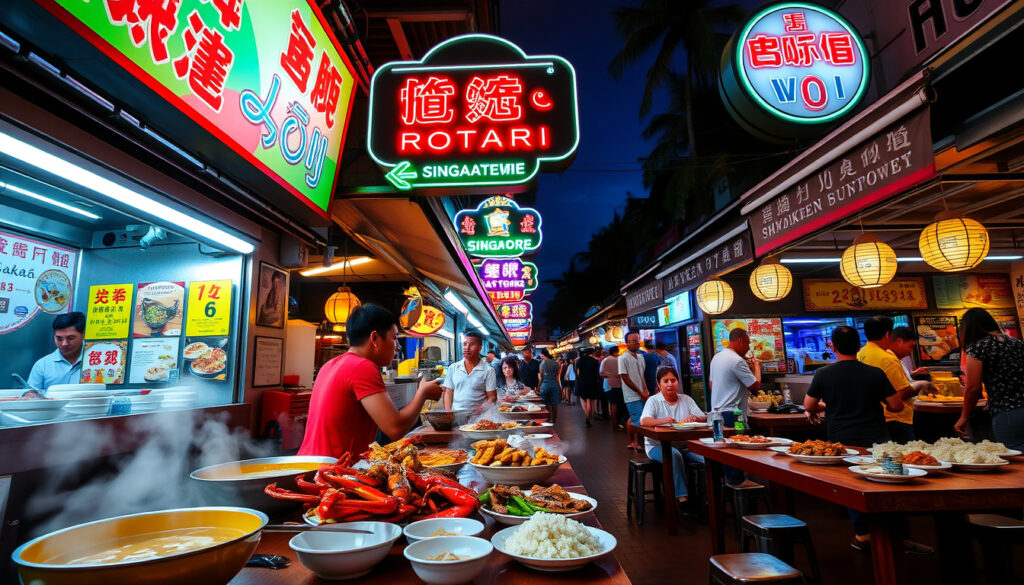
What to Eat in Singapore: Must-Try Dishes & Hawker Spots
Skip the Instagram hotspots Singapore tourists swarm — Redditors who’ve spent years hunting for the real stuff have mapped a parallel universe of hawker stalls where queues stay short, prices stay honest, and the food hits differently. This guide compiles their top picks across breakfast, lunch, dinner, and everything in between, from UNESCO-listed hawker centres to neighbourhood gems most visitors never find.
Signature dish: Chilli crab · Must-try count: 25 dishes · Top breakfast: Kaya toast · Hawker centres: UNESCO-listed · Popular local: Hainanese chicken rice
Quick snapshot
- Chilli crab is Singapore’s signature dish (Visit Singapore)
- 47 Michelin Bib Gourmand hawkers across the city (Michelin Guide)
- 128 hawker centres operate across Singapore (NEA Singapore)
- Exact top-3 rankings vary by Reddit thread
- Halal certification status for Malay/Indian stalls
- Peak wait times at hidden gems
- 85°F Bak Kut Teh opened in 1987 (Michelin Guide)
- Old Airport Road Food Centre established in 1979 (National Heritage Board)
- NEA Hygiene Grading launched in 2021 (NEA Singapore)
- Hawker culture stays vibrant as locals champion hidden stalls
- East-side seafood spots gaining traction among foodies
- Reddit threads continue to surface new hidden gems
| Category | Details |
|---|---|
| Cuisine fusion | Malay-Chinese-Indian |
| Hawker heritage | UNESCO 2020 |
| Michelin Bib Gourmand | 47 hawkers citywide |
| Daily meals | Hawker centres |
| Average cost | $3-5 SGD per dish |
| Total centres | 128 across Singapore |
What is the signature dish of Singapore?
Chilli crab sits at the heart of Singapore’s food identity. The dish pairs mud crabs fried in a tangy, mildly spicy tomato-based sauce with steamed mantou buns for mopping up every last drop. Every major hawker centre and seafood restaurant has its own version, but the essentials stay consistent: whole crabs crack with sweet flesh, coated in a glossy sauce flecked with egg.
Chilli crab details
The sauce defines the dish. Chefs build it from chilli paste, tomato ketchup, and beaten egg, creating a balance between tang and mild heat. According to Visit Singapore (official tourism guide), the dish emerged in the 1950s at long-running seafood stalls and has since become synonymous with Singapore’s culinary reputation globally.
Where to try it
- Maxwell Food Centre — Several stalls serve chilli crab near Tian Tian, drawing both locals and tourists
- Newton Food Centre — Features multiple seafood vendors; arrive before 7 PM to beat crowds
- Jumbo Seafood — Chain with consistent quality across locations
For tourists prioritising one meal, chilli crab delivers the full Singapore experience — messy, social, and unmistakably local. Split an order with mantou, and you have a complete dinner under $30 SGD per person.
The implication: skipping chilli crab means missing the dish that put Singapore on the global food map. Every visitor who wants to understand what “Singapore food” actually tastes like needs to try it once.
What are 5 traditional foods in Singapore?
Singapore’s food traditions blend Malay, Chinese, and Indian influences — a result of colonial-era migration patterns. These five dishes represent the core of what locals eat daily, rooted in hawker culture that dates back generations.
Laksa
Coconut curry broth meets rice noodles in this Peranakan classic. Katong laksa is the standout variant, served in a shallow bowl where the noodles are cut short and eaten with a spoon — no chopsticks needed. The broth carries lemongrass, galangal, and dried shrimp, finished with prawn paste. According to SethLui (local food specialist), the best versions use fresh coconut milk rather than canned.
Hainanese chicken rice
Poached chicken over fragrant rice cooked in chicken stock defines this dish. Tian Tian Chicken Rice at Maxwell Food Centre holds a Michelin Bib Gourmand nod for its version. But Redditors argue Tian Ji Chicken Rice, just steps away, delivers juicier rice with shorter queues, according to r/singapore community.
Char kway teow
Wok-fried flat rice noodles with prawns, cockles, bean sprouts, and Chinese sausage. High heat and lard are non-negotiable ingredients — the smoky “wok hei” flavour is the mark of a skilled cook. Outram Park stalls near Hong Lim Market are Reddit-recommended spots for the authentic version.
Bak kut teh
Pork ribs simmered in a peppery herbal broth until tender. 85°F Bak Kut Teh at Ghim Moh Market opened in 1987 and remains family-run, per the Michelin Guide (official award body). The broth at family-run stalls tends to be richer than tourist-oriented versions.
Satay
Marinated meat skewers grilled over charcoal, served with cucumber, onion, and a peanut sauce dip. Kwong Satay at Newton Food Centre is lauded for its sauce, though Time Out Singapore (curated editorial) notes locals often prefer hidden stalls for shorter waits.
Most traditional dishes pack significant sodium and fat. Visitors with dietary restrictions should ask stalls to adjust seasoning — hawker chefs typically accommodate mild or no spice on request.
The pattern: the best versions of these five dishes share a common thread — they come from stalls with decades of history, run by families who perfected one recipe. Chasing the Michelin name often means longer queues; the real insider move is asking locals which sibling or cousin runs the second stall nearby.
What do locals eat in Singapore?
Locals skip the tourist traps and head to hawker centres for meals that cost $3-5 SGD per dish. The average hawker meal runs about $3-5 SGD according to Visit Singapore (official tourism authority). That price point buys a complete plate — protein, carbs, and vegetables — at any of the 128 hawker centres across the city.
Daily hawker meals
Most locals eat hawker food twice a day, rotating through stalls based on mood and location. Nasi lemak — coconut rice with fried anchovies, egg, and sambal — dominates breakfast menus. Mee pok tah (flat noodles in broth) and economy rice (rice with multiple dishes) anchor lunch and dinner options.
Nasi lemak
- Geylang Serai Market — Stalls like 928 Laksa serve authentic Malay versions, per SethLui (local food specialist)
- East side spots — Reddit users report fresher seafood than central hawkers, according to r/askSingapore community
Roti prata
Indian-style flatbread pulled and flipped at the griddle, served with curry or condensed milk. Boon Lay in the west draws locals who say the prata beats anything in Little India’s tourist-heavy stalls, according to SethLui (local food specialist). Tekka Centre in Little India has Prata Paradise for crispy prata with fewer crowds than main stalls.
East hawkers (Bedok, Changi) offer fresher seafood but require travel beyond central tourist zones. For visitors based downtown, Tiong Bahru Market delivers local crowds without the hassle — Ah Tai Chicken Rice has operated since 1965, per Miss Tam Chiak (food blog specialist).
What this means: locals treat hawker centres like a casual restaurant district — they pick stalls based on the day’s craving, not prestige. Following their lead means eating well and saving money, typically $10-15 SGD covers two satisfying meals.
What is typical breakfast in Singapore?
Singaporeans start the day at kopitiam — coffee shops serving kaya toast, soft-boiled eggs, and thick toast alongside kopi (coffee with sweetened condensed milk). The ritual feels quintessentially local even as chains expand.
Kaya toast
Coconut jam (kaya) spread between slices of toasted white bread, buttered generously. Ya Kun Kaya Toast is the most recognised chain, but Soon Wah Coffee at Old Airport Road Food Centre — established in 1979 per the National Heritage Board (official historical record) — is the hidden pick locals swear by.
Classic kopitiam
- Old Airport Road Food Centre — Soon Wah Coffee serves kopi and kaya toast to locals who avoid tourist spots
- Tiong Bahru Market — Multiple kopitiam stalls with shorter lines than downtown chains
- Breakfast hours — Peak time is 7-9 AM; arrive by 6:30 AM for a seat
Porridge options
Congee with salted egg, century egg, and fried dough sticks (youtiao) appeals to those wanting something lighter. Claypot porridge stalls at markets like Jurong West draw loyal morning crowds.
For first-time visitors, a kopi and kaya toast breakfast costs under $5 SGD — less than a specialty coffee in most Western cities. The experience matters as much as the food: you’re eating where Singaporeans have gathered for morning conversation for decades. For those planning a trip, consider looking into Flights to Sabah from Singapore to start your adventure.
The implication: skipping a kopitiam breakfast means missing the social ritual that anchors Singapore’s morning culture. Every neighbourhood has at least one, and the best ones have no English signage.
Where to eat street food in Singapore?
Singapore’s hawker centres are the street food infrastructure — covered, regulated, and cleaner than most outdoor markets in Asia. The NEA Singapore (government regulatory body) certifies hygiene standards across all 128 centres, with grading scores posted publicly since 2021.
Maxwell Food Centre
- Location: CBD fringe, Near Telok Ayer MRT
- Must-try: Tian Tian Chicken Rice (Michelin Bib Gourmand)
- Hidden gem: Lor mee at Chinatown Complex stall #02-19, per r/singaporefood community
- Hours: Most stalls open 8 AM-10 PM
Hidden gems beyond the tourist trail
Several Reddit-vetted stalls consistently rank above headline names:
- Golden Mile Food Centre, #01-31 — Hokkien mee with Michelin Bib Gourmand quality but minimal hype, per the Michelin Guide (official award body)
- Bedok Interchange Food Centre — Rojak Mama has operated since the 1980s, per Singapore Hawker Stalls (hawker directory)
- Amoy Street Food Centre — Hong Kee Beef Noodle is a beef specialist praised by I Eat I Shoot I Post (food photography blog)
- Toa Payoh West Market — Xing Yun Hainanese Curry Rice tops Reddit ratings, per r/singaporefood community
Cheap eats under $5
Budget-conscious visitors should target economy rice stalls, where three dishes plus rice run $4-5 SGD. People’s Park Complex Food Centre and Redhill Food Centre both offer fresh, no-frills versions that beat nearby mall food courts, according to r/askSingapore community.
Malay and Indian stalls often use fresh chilli in sauces. Visitors unaccustomed to Singapore’s spice levels should request “mild” — hawker chefs are accustomed to adjusting for newcomers.
The pattern: the hidden gems cluster around neighbourhood markets away from the CBD. Maxwell and Newton draw tourists; Jurong West, Bedok, and Boon Lay reward those willing to travel 20-30 minutes from central areas.
“‘Tian Ji is the real deal next to Tian Tian – same family, better rice!’”
“‘Avoid Newton if touristy, Kwong Satay sauce is unmatched hidden gem.’”
Related reading: Far East Square Food – Dining Guide to Chinatown Singapore · Bugis BBQ and Hotpot: Menu, Prices & Reservations Guide
Beyond chilli crab and laksa, char kway teow shines at Singapore’s best char kway teow stalls, where wok hei magic elevates flat rice noodles in smoky perfection.
Frequently asked questions
Is Singapore food spicy?
Most dishes offer mild heat by default, but Malay and Peranakan staples (laksa, satay sauce, sambal) can be significantly hotter. Ask for “mild” or ” ” (shao la) and hawker chefs adjust. Chilli crab is mildly spiced for mainstream palates.
How much to budget for hawker meals?
Expect $3-5 SGD per dish at hawker centres, per Visit Singapore (official tourism guide). Two meals daily typically cost $8-15 SGD. Michelin Bib Gourmand stalls may charge $8-12 per dish but still represent excellent value.
Best time for street food?
Lunch peaks at 12-1:30 PM; dinner runs 6-8 PM. Weekday mornings (before 9 AM) offer the shortest queues for breakfast stalls. Sunday afternoons tend to be busiest across all hawker centres.
Vegetarian options in Singapore?
Indian vegetarian stalls at Tekka Centre and Maxwell offer dosai and idli. Economy rice stalls typically have vegetable dishes. Chinese Buddhist vegetarian stalls appear at larger markets but require research ahead.
Differences between laksa types?
Katong laksa uses short-cut noodles and coconut broth without coconut milk. Sarawak laksa features a prawn-based broth with different spices. Singapore-style curry laksa adds coconut milk and is served with thick rice noodles or bee hoon.
Are hawker centres safe?
The NEA certifies all 128 hawker centres under its hygiene grading scheme, launched in 2021, per the NEA Singapore (government oversight body). Grades A/B/C are posted at each stall — look for A-rated vendors.
What drinks pair with local food?
Teh-o (tea with condensed milk) and bandung (rose syrup with milk) are standard. Fresh sugarcane juice, lime water, and coconut water appear at drink stalls. Milo dinosaur (Milo with extra powder) is a Singaporean comfort drink.
For visitors who want to eat like a local, the choice is clear: skip the Instagram hotspots and follow the crowds to Maxwell’s lesser-known corners, Bedok’s seaside stalls, and Boon Lay’s prata griddles. The queues are shorter, the prices are honest, and the food tastes like Singapore — not a tourist’s version of it.
More related posts
 High Tea 1-for-1 – Best Singapore Hotel Deals 2025
 Scoot Singapore to Penang: Flights, Schedule & Price
 Fraser Place Central Seoul: Location, Noise & Transfer Guide
 ITE Work-Study Diploma: Is It Good? Requirements, Salary & More
 MS Dhoni Biography: Career, Records, Awards & Legacy
 Fixed Deposit Calculator Singapore: Compare Rates & Net Returns
 Best Virtual Museum Tours: Free, 360, & Top Picks for 2025
 Hong Ling Twin Sister: Casiline Ang Is Not a Twin