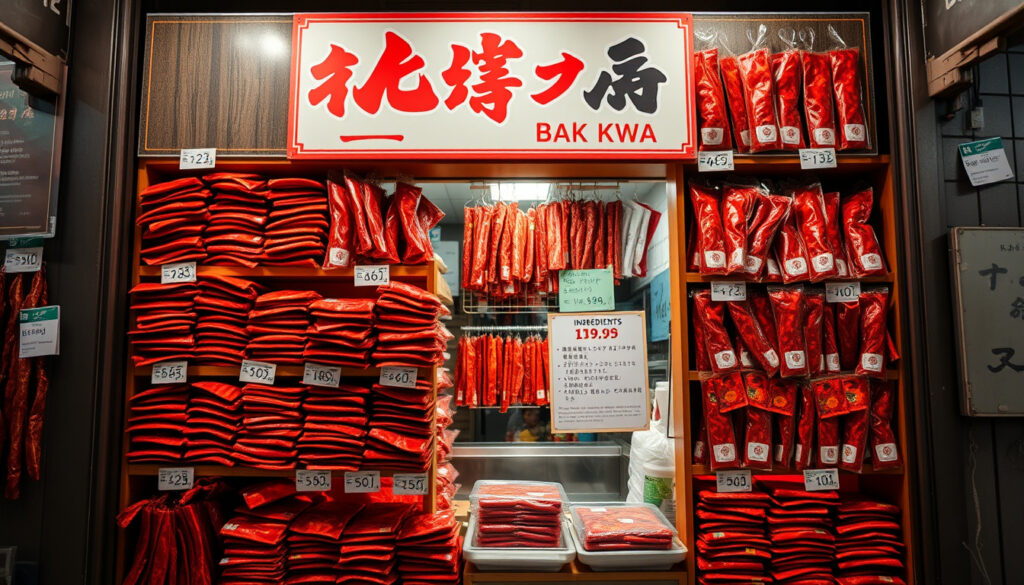
Bee Cheng Hiang Singapore: History, Pricing, Health
Few things say Chinese New Year in Singapore quite like the smell of bakkwa grilling over an open fire — and no brand has been doing it longer than Bee Cheng Hiang. What started as a humble market stall in 1933 has grown into an international brand with over 80 outlets across the island. But as the queues grow longer every January, so do the questions about what’s actually in that sweet, smoky meat, and whether tradition and health can coexist on the same grill.
Founded in Singapore: 1933 · Number of outlets in Singapore: 80+ · Brand age: 90+ years · Main product: Bakkwa (grilled meat jerky) · Price range per kg: SGD 50–70
Quick snapshot
- Founded in 1933 as a market stall in Singapore (Wikipedia)
- 80+ outlets island-wide as of 2025 (HomeTeamNS)
- Uses 100% natural ingredients with no artificial preservatives (Official website)
- Exact carcinogenic risk per serving of bakkwa
- Whether Bee Cheng Hiang’s product is healthier than competitor brands
- Long-term health impact of moderate consumption
- Exact number of outlets as of 2026 (some sources list 47, others 80+)
- 1933: Founded as a market stall
- 1990s: Regional expansion across Asia
- 2019: Carcinogenic compounds reported in bakkwa
- Growing demand for transparent nutritional labelling
- Potential product reformulation for health-conscious buyers
- Expansion of online ordering and delivery options
Six key facts, one pattern: Bee Cheng Hiang is a rare case where deep tradition meets premium pricing, but the health questions around grilled meat are impossible to ignore.
| Label | Value |
|---|---|
| Founded | 1933 by Teo Lian Thiam and Teo Lian Teck |
| Headquarters | Singapore |
| Number of outlets (Singapore) | 80+ |
| Main product | Bakkwa (grilled meat jerky) |
| International presence | Over 10 countries including China, Japan, Malaysia |
| Price range per kg | SGD 50–70 |
Is Bee Cheng Hiang from Singapore?
History of Bee Cheng Hiang
- Founded in 1933 by Teo Lian Thiam and Teo Lian Teck as a roadside stall in Singapore (Wikipedia)
- The name “Bee Cheng Hiang” is a Hokkien transcription of the Chinese characters , which translates to “beautiful precious fragrance” (Wikipedia)
- What began as a single stall selling traditional bakkwa has since grown into one of Asia’s most recognised meat jerky brands
The implication: the brand’s origin story is deeply Singaporean, rooted in the street-food culture of early 20th-century Singapore, not imported from elsewhere.
Country of origin and brand status
- Bee Cheng Hiang is a registered Singaporean company with headquarters in Singapore (Official website)
- It is classified as a Singaporean brand specialising in Chinese-style foodstuffs, particularly bakkwa (Wikipedia)
- The brand operates in over 10 countries including China, Japan, Malaysia, and Indonesia
What this means: when shoppers pick up a pack of Bee Cheng Hiang bakkwa at Changi Airport, they are buying a product that is authentically Singaporean in origin, not a foreign brand with a local licence.
Being a 90-year-old Singaporean institution gives Bee Cheng Hiang unmatched cultural cachet during CNY — but it also means the brand carries the weight of every health question directed at traditional grilled meat, with no foreign parent company to deflect scrutiny.
The implication: the brand’s heritage and health concerns are inextricably linked.
Why is Bee Cheng Hiang so expensive?
Ingredients and production process
- Bee Cheng Hiang uses 100% natural ingredients with no added meat tenderizer, preservatives, artificial flavouring, or colouring (Official website)
- The bakkwa is made from premium cuts of pork and chicken, marinated in a traditional recipe that includes sugar, soy sauce, and spices
- Each batch is grilled over charcoal or gas-fired grills, a labour-intensive process that limits production volume
The catch: natural ingredients and traditional methods cost more to source and produce, and that cost is passed directly to the consumer.
No preservatives or artificial additives
- The official website states that Bee Cheng Hiang bakkwa contains no artificial preservatives, flavourings, or colourings (Official website)
- This means the product has a shorter shelf life than mass-produced jerky, which affects logistics and retail markups
- Without preservatives, the bakkwa must be stored chilled or consumed quickly, adding to the cost structure
Premium pricing strategy
- AsiaOne’s CNY 2022 price list showed Bee Cheng Hiang minced pork bak kwa at SGD 58 per kg and sliced pork bak kwa at SGD 78 per kg (AsiaOne)
- Golden coin bak kwa was listed at SGD 60 per kg, sliced chicken bak kwa at SGD 78 per kg, and chilli pork at SGD 82 per kg (AsiaOne)
- A CNA Lifestyle article from January 2021 reported regular bak kwa at SGD 16.80 for 300g, which works out to approximately SGD 56 per kg (CNA Lifestyle)
The pattern: across multiple price points, the premium over supermarket alternatives is consistent — roughly 1.5× to 2× the cost of generic bakkwa, justified by ingredient quality and brand heritage.
The pattern: premium pricing is justified by ingredient quality and brand heritage.
What is sold at Bee Cheng Hiang?
Main product: bakkwa
- Bakkwa — also spelled bak kwa — is a Chinese-style grilled meat jerky, typically made from pork or chicken (Wikipedia)
- Bee Cheng Hiang offers several varieties: minced pork, sliced pork, golden coin (coin-shaped), sliced chicken, and chilli pork (AsiaOne)
- The brand’s Mini EZ Pork is a diced, snackable format sold in resealable bags for convenient eating
Other food items
- Beyond bakkwa, Bee Cheng Hiang sells mooncakes during the Mid-Autumn Festival, a seasonal offering that includes traditional and modern flavours
- The product range includes snacks such as pork floss, dried shrimp rolls, and various meat-based tidbits
- Gift sets combining multiple products are popular during Chinese New Year and other festive periods
Swag and gift sets
- Bee Cheng Hiang offers branded gift boxes and hampers, often with festive packaging designed for corporate gifting and personal presents
- The official website lists gift sets that combine bakkwa with other snacks, priced from SGD 30 to SGD 150 depending on size and contents
- These gift sets are a major revenue driver during the CNY period, accounting for a significant share of annual sales
The takeaway: bakkwa is the core product, but the brand has successfully diversified into seasonal items and gift sets that drive repeat purchases beyond the Chinese New Year spike.
Is Bee Cheng Hiang healthy?
Nutritional profile of bakkwa
- Bakkwa is high in sugar and sodium — a typical 100g serving contains approximately 30–40g of sugar and 800–1000mg of sodium, depending on the recipe (Official website)
- Bee Cheng Hiang’s bakkwa contains no added MSG, artificial flavourings, or colourings, which sets it apart from some mass-market alternatives
- The product is a source of protein (roughly 20–25g per 100g) but the high sugar content means it is calorically dense
Carcinogenic compounds in grilled meat
- In 2019, a report detected carcinogenic compounds — specifically polycyclic aromatic hydrocarbons (PAHs) and heterocyclic amines (HCAs) — in Bee Cheng Hiang bakkwa (The Straits Times)
- These compounds form when meat is grilled at high temperatures, especially over an open flame or charcoal, which is how bakkwa is traditionally cooked
- The International Agency for Research on Cancer (IARC) classifies processed meat as Group 1 carcinogen and red meat as Group 2A (probably carcinogenic) (IARC)
Moderation and dietary considerations
- Health experts recommend limiting consumption of grilled and processed meats, including bakkwa, to occasional treats rather than daily staples
- Bee Cheng Hiang’s natural ingredient profile is a positive differentiator, but it does not eliminate the carcinogenic risk from the grilling process itself
- The Singapore Health Promotion Board advises consumers to eat bakkwa in moderation, especially during festive periods when consumption tends to spike
Natural ingredients don’t equal healthy when the cooking method creates carcinogens. For the health-conscious shopper, the choice is not between Bee Cheng Hiang and a competitor — it’s between bakkwa and any food that isn’t grilled at high temperatures.
The implication: the health-conscious shopper must weigh taste against known risks.
What does Bee Cheng Hiang mean in English?
Translation of the brand name
- Bee Cheng Hiang is a Hokkien transcription of the Chinese characters (Wikipedia)
- The literal translation is “beautiful precious fragrance” — a poetic name that evokes the aroma of grilled meat
- The name is pronounced in the Hokkien dialect, which is commonly spoken by the Chinese diaspora in Singapore and Southeast Asia
Meaning of
- Each character carries meaning: (měi) = beautiful, (zhēn) = precious/rare, (xiāng) = fragrance/aroma
- Together, the characters convey a sense of something rare and beautiful that smells wonderful — a fitting description for premium grilled meat
- The brand name is deliberately evocative, designed to appeal to the senses of smell and taste, which are central to the bakkwa experience
What this means: the name is not just a label — it’s a marketing statement that has worked for 90 years, positioning the product as something special and aromatic.
Where to buy Bee Cheng Hiang in Singapore?
Changi Airport outlets
- Bee Cheng Hiang operates multiple outlets at Changi Airport, including terminals 1, 2, 3, and 4, making it a popular last-minute gift stop for travellers
- The airport locations are particularly busy during the Chinese New Year period, when travellers buy bakkwa as gifts for friends and family overseas
- Changi Airport’s official store directory lists Bee Cheng Hiang as a featured brand in the “Singapore Souvenirs” category
Shopping mall locations
- HomeTeamNS lists Bee Cheng Hiang outlets at Ang Mo Kio, Bedok, Clementi Central, Geylang, Pagoda Street, Serangoon Road, Sims Avenue, and Toa Payoh Central (HomeTeamNS)
- SHOPSinSG documented a 47-outlet network in Singapore as of January 2026, including locations at Raffles City, 1359 Serangoon Road, 189 New Bridge Road, and 301 Geylang Road (SHOPSinSG)
- Operating hours vary by outlet: Ang Mo Kio opens 9am–10pm, Bedok 9:30am–10pm, Geylang 10am–10pm, and Pagoda Street 9am–9pm (HomeTeamNS)
Online ordering
- The official Bee Cheng Hiang website (beechenghiang.com.sg) offers online ordering with delivery to Singapore addresses
- Delivery options include standard courier and express delivery, with fees depending on order value and speed
- International shipping is available to select countries, though availability varies by destination and product type
The pattern: with 80+ outlets and a robust online store, Bee Cheng Hiang has made itself accessible to almost every Singaporean — but the physical queues during CNY suggest that convenience alone doesn’t override the tradition of buying in person.
Timeline of Bee Cheng Hiang
- 1933 — Bee Cheng Hiang founded as a market stall in Singapore by Teo Lian Thiam and Teo Lian Teck (Wikipedia)
- 1990s — Expansion to multiple countries in Asia, including Malaysia, Indonesia, and China (Wikipedia)
- 2000s — International recognition as one of Asia’s most famous bakkwa brands, with outlets in Japan and beyond (Wikipedia)
- 2019 — Report of carcinogenic compounds found in Bee Cheng Hiang bakkwa, sparking health discussions (The Straits Times)
- 2021 — Launch of applewood-smoked bak kwa, available at all outlets while stocks last (CNA Lifestyle)
- 2022 — CNY pricing reaches SGD 58–82 per kg depending on variety, reflecting inflationary pressure on ingredients and labour (AsiaOne)
The timeline shows the brand’s evolution from a single stall to a global player, with health concerns emerging in recent years.
What we know and what remains unclear
Confirmed facts
- Bee Cheng Hiang is a Singaporean company founded in 1933 (Wikipedia)
- Bakkwa contains carcinogenic compounds when grilled at high temperatures (The Straits Times)
- The brand uses 100% natural ingredients with no artificial preservatives (Official website)
- 80+ outlets operate across Singapore with hours varying by location (HomeTeamNS)
- Prices range from SGD 50 to SGD 82 per kg depending on product and season (AsiaOne)
What remains unclear
- Exact level of carcinogenic risk per serving of bakkwa
- Whether Bee Cheng Hiang’s bakkwa is healthier than competitor brands given the similar cooking methods
- Long-term health impact of moderate consumption (e.g., 2–3 times per year during festive periods)
- Whether the company has plans to reformulate products to reduce PAH/HCA formation during grilling
- Exact number of outlets as of 2026 (some sources list 47, others 80+)
The balance of known facts and uncertainties underscores the need for more research.
Perspectives on Bee Cheng Hiang
Bee Cheng Hiang is a Singaporean brand of Chinese-style foodstuffs, best known for its bakkwa, a grilled meat jerky. The company was founded in 1933 in Singapore by Teo Lian Thiam and Teo Lian Teck.
— Wikipedia entry on Bee Cheng Hiang
Our products are made with 100% natural ingredients, with no added meat tenderizer, preservatives, artificial flavouring or colouring. We are committed to preserving the traditional taste of bakkwa that our customers have loved for generations.
— Official Bee Cheng Hiang website
Some bak kwa samples tested were found to contain carcinogenic compounds such as polycyclic aromatic hydrocarbons (PAHs) and heterocyclic amines (HCAs), which are formed when meat is grilled at high temperatures.
— The Straits Times report on bakkwa and carcinogens
These perspectives from Wikipedia, the brand, and the media highlight the range of opinions on the product.
What this means for bakkwa lovers
Bee Cheng Hiang is not just a snack brand — it is a 90-year-old Singaporean institution that has successfully navigated the transition from street stall to international retailer. Its premium pricing is backed by a genuine commitment to natural ingredients, but the health questions around grilled meat are not going away. For the average Singaporean shopper, the choice is clear: enjoy Bee Cheng Hiang bakkwa as a festive treat, understand that the grilling process carries inherent risks, and make peace with the fact that tradition and perfect health rarely share the same plate. For the brand, the challenge is equally clear: innovate on the grilling process to reduce carcinogenic compounds, or risk losing a generation of health-conscious consumers to alternatives that can offer both taste and transparency.
blog.moneysmart.sg, shopee.sg, fairprice.com.sg, shopee.sg, hougangmall.com.sg, shopee.sg, divedeals.sg, blog.seedly.sg
Frequently asked questions
Does Bee Cheng Hiang deliver to other countries?
Yes, Bee Cheng Hiang offers international shipping to select countries through its official website. Availability varies by destination, and customers should check the website for current shipping policies and restrictions.
How long does Bee Cheng Hiang bakkwa last?
Due to the absence of artificial preservatives, Bee Cheng Hiang bakkwa has a shorter shelf life than mass-produced jerky. Typically, unopened packs last 2–3 months when stored in a cool, dry place. Once opened, it should be consumed within 1–2 weeks or stored in the refrigerator.
Is Bee Cheng Hiang bakkwa halal?
Bee Cheng Hiang’s bakkwa is not certified halal. The company’s official website does not list halal certification for its products, and customers seeking halal-certified meat products should check with individual outlets or the brand directly for the most current information.
Can I buy Bee Cheng Hiang online?
Yes, the official Bee Cheng Hiang website offers online ordering with delivery to Singapore addresses. The website features the full product range, including gift sets and seasonal items, with standard and express delivery options.
What is the best-selling product at Bee Cheng Hiang?
The best-selling product is the traditional minced pork bakkwa, especially during the Chinese New Year period when demand spikes significantly. The Mini EZ Pork format is also popular for everyday snacking.
Does Bee Cheng Hiang have vegetarian options?
Bee Cheng Hiang does not currently offer vegetarian or plant-based bakkwa alternatives. The product range is focused on traditional meat-based items, and the company has not announced any plans to introduce vegetarian options.
How is Bee Cheng Hiang bakkwa made?
The production process involves marinating premium cuts of pork or chicken in a traditional recipe of sugar, soy sauce, and spices, then grilling the meat over charcoal or gas-fired grills at high temperatures. The result is a sweet, smoky jerky with a characteristic chewy texture.
These FAQs address common queries about the brand’s products, availability, and health considerations.
More related posts
 Best Moisturizer for Dry Skin: Derm & Editor Picks (2025)
 Gardens by the Bay Singapore: Tickets, Light Show, Tips & Prices
 Leeds United F.C.: Finances, Debt, and Irish Fan Base
 Translate English to Malay: Free Tools, Apps & Voice Guide
 Niat Puasa Ramadhan Sebulan: Bacaan, Hukum, dan Tata Cara
 Singapore Prayer Times 2025: Schedule & Key Deadlines
 How to Find Your IP Address: The Complete 2024 Guide
 Paris to London Train: €44 Tickets | 2h17m Eurostar Guide