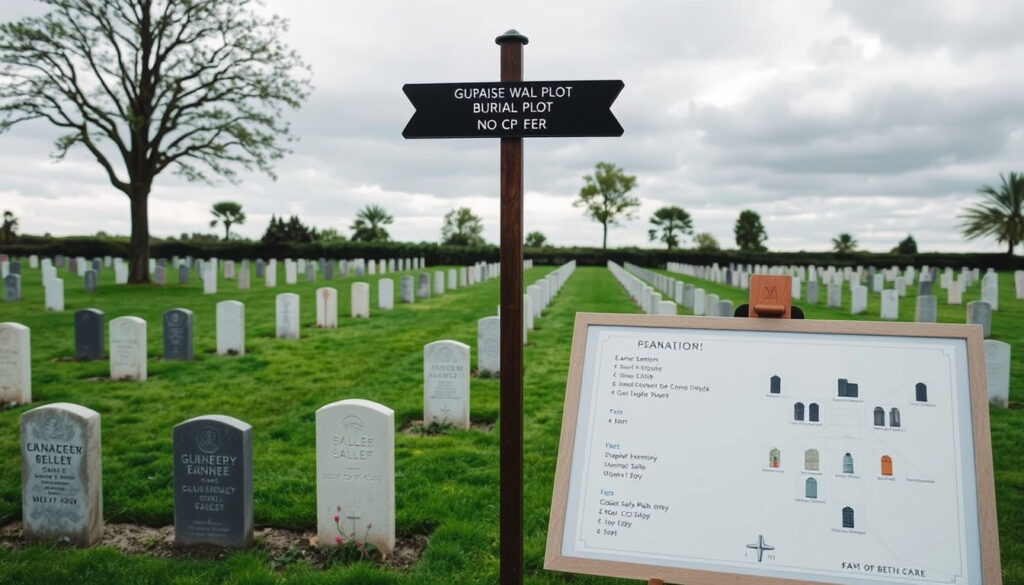
Choa Chu Kang Cemetery: Burial Tenure, Costs & Finding a Grave
For anyone who has ever had to arrange a burial in Singapore, one name keeps coming up: Choa Chu Kang Cemetery. It’s the country’s last active burial ground, and understanding how it works — from tenure limits to finding a grave — can save families a lot of stress.
Opened: 1946 ·
Size: 318 acres ·
Status: Only active burial cemetery in Singapore ·
Burial plots: Approx. 35,000 (Chinese section alone) ·
Burial tenure (non-Muslim): 15 years, renewable ·
Burial tenure (Muslim): 15 years, renewable
Quick snapshot
- Choa Chu Kang is the only active cemetery for human burials in Singapore (NEA – Singapore’s environment agency).
- Burial tenure is 15 years for all faiths, introduced on 1 November 1998 (NEA – Burial, Cremation and Ash Management).
- Exhumation is required after the tenure expires unless renewed (NEA – Burial, Cremation and Ash Management).
- Exact number of total burials across all sections remains unpublished.
- Future plans for the cemetery after land is fully used are not yet detailed.
- Specific burial plot fees require direct contact with NEA.
- Phase 9 exhumation hoarding starts 1 August 2026 (NEA – Choa Chu Kang Exhumation Programme).
- Muslim graves in Phase 9 physical exhumation begins June 2026 (Pusara.sg – MUIS exhumation notice).
- Claimants for Phase 9 graves should prepare to submit registration before hoarding begins. (NEA – Notice of Exhumation for CCK Phase 9)
- NEA will bear costs of exhumation, cremation, and niche allocation for affected graves (NEA – Notice of Exhumation for CCK Phase 9).
Eight key facts about the cemetery, drawn from official sources, give a quick orientation.
| Label | Value |
|---|---|
| Full Name | Choa Chu Kang Cemetery |
| Location | Old Choa Chu Kang Road, Singapore |
| Opened | 1946 |
| Size | 318 acres |
| Status | Active |
| Sections | Chinese, Christian, Muslim, Hindu, Jewish, and others |
| Cemetery Office | 940 Old Choa Chu Kang Road |
| Office Hours | 8:00 AM – 5:00 PM (Mon-Fri); 8:00 AM – 1:00 PM (Sat) |
How long can you be buried in Singapore?
Since 1 November 1998, Singapore has enforced a 15-year burial tenure for all new graves. This applies to every faith, including Muslim plots. The policy, set by Singapore’s National Environment Agency (NEA) – the government body managing burial and cremation services, is designed to manage land scarcity.
Burial tenure for non-Muslims
- Non-Muslim graves are granted a 15-year lease.
- At the end of the 15-year period, the grave is exhumed unless the family renews the tenure for a fee.
- Renewal is possible, but the process must be initiated before the tenure expires.
Burial tenure for Muslims
- Muslim graves are also subject to the same 15-year rule.
- The Islamic Religious Council of Singapore (MUIS) – the authority for Muslim burial matters oversees the exhumation of Muslim graves, with each grave exhumed individually under closed supervision.
- If no remains are found, a token amount of grave soil is collected for reinterment.
Process for renewal of burial tenure
- Families must contact NEA’s Choa Chu Kang Cemetery office to apply for renewal.
- Fees apply and vary depending on the plot type.
- If tenure is not renewed, exhumation proceeds automatically.
The implication: Families must be proactive about tenure renewal or prepare for exhumation.
How to find where a deceased person is buried in Singapore?
Locating a grave at Choa Chu Kang Cemetery can feel overwhelming, but several official and community tools exist.
Using the NEA online portal
- The After Death Information System (ADIS) – a government-run database for burial and cremation records – is the primary tool for locating graves.
- ADIS allows searches by name, date of death, and other identifiers.
Contacting the Choa Chu Kang Cemetery office
- The cemetery office at 940 Old Choa Chu Kang Road can assist with burial records.
- Office hours are 8:00 AM – 5:00 PM on weekdays and 8:00 AM – 1:00 PM on Saturdays.
Searching on Find a Grave or similar databases
- Find a Grave – a crowdsourced burial database includes records for Choa Chu Kang Cemetery, though entries may be incomplete.
- Wikipedia also provides a historical overview of the cemetery (Wikipedia – the community encyclopedia).
Official NEA tools are the most reliable, but they require accurate personal data. Crowdsourced databases like Find a Grave can fill gaps, especially for older burials, but may contain errors.
The pattern: Official databases are the most reliable, but cross-referencing with community sources can help fill gaps.
How much does it cost to be buried in Singapore?
Burial costs in Singapore are regulated by NEA, but the exact figures depend on plot type, size, and tenure renewal needs.
Burial plot fees
- NEA sets burial plot fees, which vary by plot size and section. Specific current rates are not published online; families must contact the cemetery office directly.
- For Muslim graves, a Pusara.sg FAQ – the official portal for Muslim cemetery management states that there is no fee for exhumation of affected principal graves in specific blocks.
- Registration of each supplementary grave costs a non-refundable $80 before GST.
Exhumation and re-interment costs
- The written permission fee to exhume a corpse is $14.00, applicable only to closed cemeteries (NEA – Facilities and Services).
- Under the Choa Chu Kang Exhumation Programme, NEA bears the costs of exhumation, cremation, allocated standard niche, standard urn, and standard niche plaque with the deceased’s name on notices for affected graves.
Cremation vs burial cost comparison
- Cremation is generally cheaper than burial because it avoids plot fees and exhumation costs.
- Cremation ashes can be stored in a columbarium niche or scattered at sea, with NEA managing the fees.
The catch: Without contacting NEA directly, families cannot get firm pricing upfront.
What to do when a person dies in Singapore?
The steps after a death are time-sensitive. Here’s the sequence.
- Register death within 24 hours at the Registry of Births and Deaths.
- Engage a licensed funeral director to handle logistics.
- Choose between burial and cremation.
- Apply for a burial plot at Choa Chu Kang Cemetery through NEA.
Immediate steps: registration of death
- Death must be registered within 24 hours at the Registry of Births and Deaths.
- The attending doctor or hospital will issue a medical certificate of cause of death.
- After registration, the family receives a death certificate and a burial or cremation permit.
Engaging a funeral director
- Most families engage a licensed funeral director to handle logistics: transport, embalming, coffin, and arrangements with the cemetery.
- Funeral directors liaise with NEA for burial plot applications.
Choosing between burial and cremation
- Burial is only allowed at Choa Chu Kang Cemetery, the last active burial ground.
- Muslim burials follow specific religious rites overseen by MUIS.
Applying for a burial plot at Choa Chu Kang
- Apply through NEA’s online portal or at the cemetery office.
- Provide the death certificate and burial permit.
- Plot allocation depends on availability and religious section.
The 24-hour registration window is a legal requirement, not a suggestion. Missing it can delay burial and incur penalties. Engaging a funeral director on day one is the safest route.
For information on nearby medical facilities, see our guide to Nearest Polyclinic Singapore.
How to check if a person has passed away in Singapore?
Sometimes you need to confirm a death without direct family contact. Official records are accessible.
Using the Immigration & Checkpoints Authority (ICA) portal
- ICA’s Death Report Search is a public tool that allows anyone to check if a death has been reported.
- The search requires the person’s full name and NRIC or passport number.
Searching the NEA’s After Death Information System
- ADIS includes burial records for Choa Chu Kang Cemetery and other past burial grounds.
- Accessible online through NEA’s website.
Contacting the Registry of Births and Deaths
- The Registry holds official records of all deaths in Singapore.
- Requests can be made in person or by mail with appropriate identification.
Alternatively, contact the Registry of Births and Deaths. For general government service contacts, see our guide to HDB Hotline 24 Hours.
What is the Choa Chu Kang Cemetery exhumation programme?
The exhumation programme is a phased, government-managed process to clear graves whose 15-year tenure has expired.
Why exhumation is necessary
- Land scarcity in Singapore drives the need to reuse burial plots after the tenure period.
- Exhumation makes room for new burials or other land use.
Exhumation schedule and process
- NEA manages the exhumation programme in phases. Phase 7A ended in May 2021 (NEA – Phase 7A page).
- Phase 9 hoarding begins 1 August 2026.
- For Muslim graves, physical exhumation commences in June 2026.
Options for remains after exhumation
- Remains can be cremated and placed in a columbarium niche, or re-interred in a smaller plot.
- NEA covers the cost of cremation and a standard niche for affected graves under the programme.
The pattern: Proactive action is required; inaction leads to automatic state-managed exhumation.
Can human ashes be kept at home in Singapore?
A common question after cremation is whether ashes can stay at home. The legal answer is nuanced.
Legal status of keeping ashes at home
- There is no specific law in Singapore that bans keeping human ashes at home.
- However, NEA recommends placing ashes in a columbarium or scattering them at sea to avoid legal complications in future property transactions.
Alternatives: columbarium niches and scattering
- NEA manages columbarium niches at Choa Chu Kang and other locations.
- Scattering at sea is permitted with a permit from NEA.
Religious and cultural considerations
- Some religious groups have specific guidelines for ash storage. For example, Catholic and Buddhist traditions may prefer columbarium placement.
- Muslims generally do not cremate, but if cremation occurs, MUIS provides guidance.
Keeping ashes at home is not illegal, but it can create complications when selling your home – buyers may object. A columbarium niche is a worry-free alternative.
The implication: While not illegal, home storage of ashes carries practical risks that families should consider.
Timeline: Choa Chu Kang Cemetery through the years
Five key milestones trace the cemetery’s evolution from a new burial ground to Singapore’s last active cemetery.
| Year | Event |
|---|---|
| 1946 | Choa Chu Kang Cemetery opened. |
| 1970s | Government policy shifts to cremation; Choa Chu Kang becomes the only active burial ground. |
| 1998 | 15-year burial tenure introduced for all new burials. |
| 2020s | Exhumation programmes for older plots continue; remains are cremated or re-interred. |
| 2025 | NEA continues to manage the cemetery as the last active burial site in Singapore. |
The pattern: The cemetery’s role is shifting from permanent burial ground to a managed lifecycle site.
What we know and what remains unclear
Confirmed facts
- Choa Chu Kang is the only active cemetery for human burials in Singapore (NEA).
- Burial tenure is 15 years for all faiths (NEA).
- Exhumation is required after the tenure expires unless renewed (NEA).
- NEA manages all burial and exhumation processes (NEA – After Death Services).
What’s unclear
- Exact number of total burials across all sections.
- Future plans for the cemetery after land is fully used.
- Specific costs for burial plots without contacting NEA directly.
The pattern: Official information is robust on tenure and exhumation, but lacking on long-term land use and detailed pricing.
Perspectives from officials and historians
“Singapore’s burial period for graves has been limited to 15 years since 1 November 1998. At the end of the 15-year burial period, graves are exhumed.”
— NEA spokesperson, NEA – Burial, Cremation and Ash Management
“Choa Chu Kang Cemetery is the only cemetery in Singapore still open for burials. It opened in 1946 and covers 318 acres.”
“Each grave will be exhumed individually by a contractor under closed supervision for Muslim graves. Claimants may witness the exhumation fully or partially.”
— MUIS, via Pusara.sg – official Muslim cemetery portal
“NEA announced that graves under Phase 9 of the Choa Chu Kang Exhumation Programme would be hoarded from 1 August 2026 for preparation works.”
— NEA – Choa Chu Kang Exhumation Programme
The picture is clear: Singapore’s burial policy is strictly enforced, and families must act within the 15-year window. For those affected by the exhumation programme, the state covers costs, but the emotional and logistical burden of claiming remains falls on the family. For anyone planning a burial today, the only option is Choa Chu Kang Cemetery, and the clock starts ticking from day one.
nea.gov.sg, thesmartlocal.com, promisedlandcasket.com, nea.gov.sg, nea.gov.sg, nirvanafugui.com, tombs.bukitbrown.org, bukitbrown.org
Frequently asked questions
Is Choa Chu Kang Cemetery open to the public?
Yes, it is open to the public during daylight hours. The cemetery office is open weekdays and Saturday mornings.
Can I visit a grave at night?
The cemetery is not recommended for night visits due to safety and lighting issues. Most visits are during office hours.
Are pets allowed in the cemetery?
Pets are generally not permitted out of respect for the bereaved. Service animals may be allowed.
What is the difference between Choa Chu Kang and Lim Chu Kang cemeteries?
Lim Chu Kang Cemetery is a closed cemetery – no new burials are allowed. Choa Chu Kang is the only active burial ground for new plots.
How do I apply for a burial plot at Choa Chu Kang?
Apply through NEA’s online portal or in person at the cemetery office. You’ll need the death certificate and burial permit.
Can I scatter ashes in Choa Chu Kang Cemetery?
Scattering ashes is not permitted within the cemetery. NEA provides designated scattering grounds at sea or columbarium niches.
What happens if I don’t renew my burial plot?
If the 15-year tenure is not renewed, the grave will be exhumed under the NEA exhumation programme. The remains will be cremated and placed in a standard niche at no cost to the family.
More related posts
 How to Use Siri Shortcuts: Guide for iPhone, iPad & Mac
 Singapore Personal Income Tax: Rates & Exemptions 2025
 Ho Chi Minh to Singapore: Flight Time, Distance & Travel Guide
 iPhone 16 Pro to Buy – Best Prices and Deals in Singapore
 Southeast Asia Countries: 11 Nations List & ASEAN Guide
 What Is a Heat Index? Definition, Levels & Safety
 Car Insurance Quote Singapore: Compare Best & Cheapest Rates
 AZ Alkmaar vs Tottenham Lineups: Confirmed Starting XI