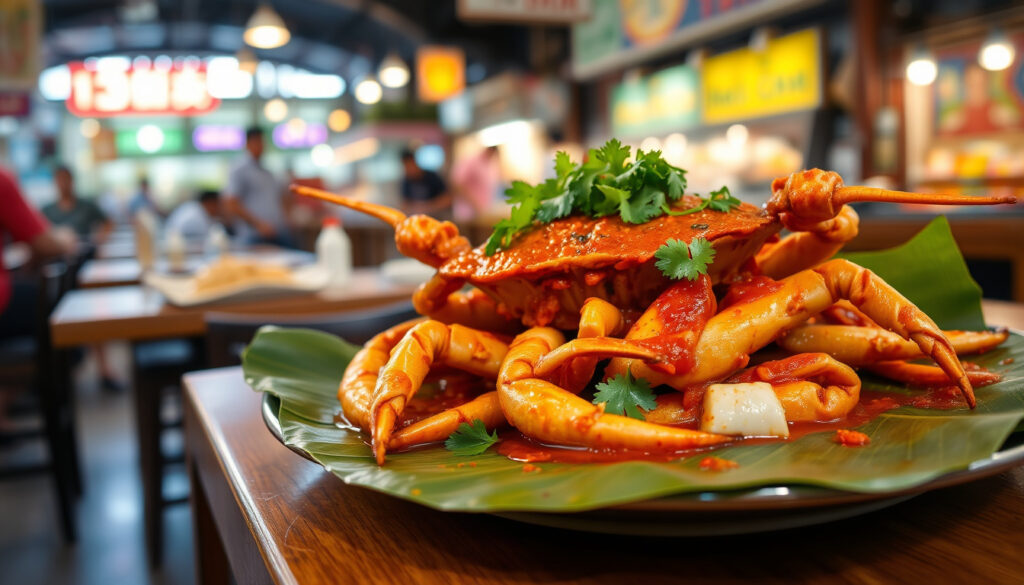
Best Chili Crab Singapore: Where to Eat & What to Pay
There’s a moment every visitor to Singapore faces: you’re staring at a menu, a mud crab stares back, and you wonder if the famous chili crab is worth the hype—and the price. It is, but this guide breaks down the best chili crab spots in Singapore for 2025, from hawker stalls to seafood restaurants, with real prices and crab types so you can eat with confidence.
Year of invention: 1956 ·
Origin: Singapore ·
Main crab variety: Mud crab (Scylla serrata) ·
Typical price range: S$30–S$80 per crab ·
Number of chili crab restaurants: Over 100 in Singapore
Quick snapshot
- Chili crab originated in Singapore in the 1950s (MICHELIN Guide (global restaurant rating authority))
- Mud crab is the standard crab used (National Geographic (authoritative travel publication))
- Exact recipe variations between restaurants remain proprietary (Business Insider (business news))
- Whether Sri Lankan crab is superior to mud crab is debated (Business Insider (business news))
- Jumbo Seafood is the most recognized restaurant, but other restaurants also have strong claims (Business Insider (business news))
- 1956: Cher Yam Tian invents chili crab in Singapore (MICHELIN Guide)
- More restaurants offering delivery via GrabFood and Deliveroo (Eatbook (Singapore food blog))
- Seasonal price fluctuations depending on crab supply (Eatbook (Singapore food blog))
The following table summarizes the essential attributes of chili crab.
| Attribute | Value |
|---|---|
| Dish name | Chilli Crab |
| Origin | Singapore |
| Year invented | 1956 |
| Inventor | Cher Yam Tian |
| Main ingredient | Mud crab |
| Sauce base | Tomato and chili |
| Typical price | S$30–S$80 per crab |
What is the best crab for Singapore chilli crab?
Mud crab vs Sri Lankan crab
According to National Geographic (authoritative travel publication), Sri Lankan mud crabs are the preferred species for chili crab. Mud crab (Scylla serrata) is the traditional workhorse — its firm, sweet meat holds up to the thick sauce. Upscale restaurants sometimes use larger Sri Lankan crabs for a more impressive presentation, but the difference is mostly about size and show.
How to identify fresh crab
- Bright, clear eyes — not sunken or cloudy
- Heavy for its size (a sign of good meat yield)
- Lively movement when handled
The implication: mud crab remains the benchmark for chili crab, while Sri Lankan crab offers a premium alternative for special occasions.
Where is the best chilli crab in Singapore?
Top hawker centres for chili crab
Hawker centres like Eng Seng and Hua Yu Wee offer the dish at S$20–S$40 per crab, according to Eatbook (Singapore food blog). These are no-frills settings where the sauce takes center stage.
Famous seafood restaurants: Jumbo, Mellben, No Signboard
- Jumbo Seafood at East Coast Park is the most popular tourist destination, with prices at S$7.90–S$8.60 per 100g (Business Insider (business news)).
- Mellben Seafood in Ang Mo Kio is a local favorite known for its thick, rich sauce (Daniel Food Diary (food blog)).
- No Signboard Seafood has a long history but mixed reviews on consistency.
Recommendations from locals vs tourists
Reddit threads on r/askSingapore often recommend Mellben and Hua Yu Wee as affordable alternatives, while tourists flock to Jumbo for the iconic experience.
A tourist who only visits Jumbo will pay nearly double what a local pays at Mellben — and the difference in sauce quality is often negligible.
The pattern: locals seek value and thick sauce at Mellben and Hua Yu Wee, while tourists gravitate to the brand experience at Jumbo.
How much should I pay for chilli crab in Singapore?
Price range at restaurants vs hawker
Seven prices across seven venues tell a clear story: hawker centres charge S$20–S$40 per crab, while premium restaurants like Jumbo and Paradise Teochew charge S$80–S$108 for a single crab portion. Business Insider (business news) reports that Jumbo Seafood’s Jewel Changi Airport outlet charges S$86 for a 1kg crab and S$108 for a 1.2kg portion.
Jumbo Seafood pricing
Jumbo’s East Coast outlet charges S$7.90 per 100g for crabs under 1kg and S$8.60 per 100g for crabs 1kg and above. That means a 1.2kg crab costs around S$103.20 before GST.
Factors affecting price
- Crab size (larger crabs cost more per kg)
- Market price (seasonal supply affects rates)
- Venue type (air-conditioned restaurants add overhead)
One pattern: the markup at tourist spots can be 50% higher than at hawker stalls. Daniel Food Diary (food blog) lists Paradise Teochew’s Sri Lankan crab at S$12 per 100g — the highest recorded.
The catch: prices vary widely by venue and crab size, so a savvy diner can save significantly by choosing a hawker stall over a tourist spot.
Is Singapore chili crab good?
Why chili crab is a national dish
Chili crab is consistently ranked among Singapore’s must-try dishes, according to MICHELIN Guide (global restaurant rating authority). It’s the defining dish of the country’s hawker culture — a sweet-spicy-tomato sauce that clings to every piece of mud crab.
Flavor profile: sweet, spicy, savory
The sauce balances sweetness from ketchup with heat from fresh chilies, often thickened with eggs. The contrast between the rich sauce and the tender crab meat is what makes it addictive.
Positive reviews from international food critics
“Chilli crab is Singapore’s unofficial national dish.”
— National Geographic (authoritative travel publication)
First-time visitors and food critics alike praise its unique flavor. The dish has been featured by Bon Appétit, CNN Travel, and the New York Times.
Which country has the best chilli crab?
Singapore vs Malaysia chili crab differences
Singapore is widely recognized as the origin of chili crab, with a tomato-based sauce. Malaysian versions often include curry leaves and are spicier, according to regional food writers. The debate is subjective, but Singapore’s version is more iconic globally.
Other Southeast Asian variations
In Thailand, chili crab is sometimes stir-fried with holy basil. In Indonesia, it’s served with a sweeter, thicker sauce. But the original Singaporean recipe remains the benchmark.
Two countries, two approaches — one clear winner for global recognition. The implication: if you’re visiting Singapore, you’re eating the original.
Comparison: Singapore vs Malaysia chili crab
Three key differences, one pattern: Singapore’s version is sweeter and more widely exported, while Malaysia’s is spicier and more local.
| Attribute | Singapore | Malaysia |
|---|---|---|
| Sauce base | Tomato ketchup + chili | Curry leaves + chili paste |
| Spice level | Mild to medium | Medium to hot |
| Typical crab | Mud crab (Scylla serrata) | Flower crab or mud crab |
| Global recognition | Higher (tourist favourite) | Lower (regional staple) |
| Average price | S$30–S$80 per crab | RM 30–RM 70 per crab |
Singapore’s version is more accessible to international palates, but purists seeking a fiery kick may prefer Malaysia’s interpretation.
The trade-off: the choice between Singaporean and Malaysian styles ultimately depends on your preferred balance of sweetness and heat.
Upsides
- Unique sweet-spicy flavor that’s hard to replicate
- Widely available at all price points
- Fresh mud crab is high in protein and low in fat
Downsides
- Can be messy to eat (requires crab crackers and bibs)
- Prices vary wildly — easy to overspend as a tourist
- Not ideal for those with shellfish allergies
Clarity check
Confirmed facts
- Chili crab originated in Singapore in the 1950s (MICHELIN Guide (global restaurant rating authority))
- Mud crab is the standard crab used (National Geographic (authoritative travel publication))
What’s unclear
- Exact recipe variations between restaurants remain proprietary
- Whether Sri Lankan crab is superior to mud crab is debated
- Jumbo Seafood is the most recognized restaurant, but other restaurants also have strong claims (Business Insider (business news))
The takeaway: while many facts are well-established, the debate over which restaurant serves the best chili crab remains open.
Quotes from the experts
“Chilli crab is Singapore’s unofficial national dish.”
— National Geographic (authoritative travel publication)
“Mellben Seafood in Ang Mo Kio is the best chili crab in Singapore — the sauce is thick and not too sweet.”
— Reddit user r/askSingapore (local recommendation)
For first-time visitors to Singapore, the choice is clear: head to a hawker centre for an authentic, affordable meal, or a restaurant for a polished experience — either way, you’ll be cracking into one of the world’s best seafood dishes.
reddit.com, reddit.com, reddit.com, thediningexperience.org, tripadvisor.com, instagram.com, facebook.com
Frequently asked questions
What is the best time to eat chili crab in Singapore?
Crab is cheapest during the monsoon season (November–January) when supply is high. Prices can drop by 20–30%.
Can I find chili crab in hawker centres?
Yes. Hawker centres like Eng Seng and Hua Yu Wee serve chili crab at S$20–S$40 per crab.
Is chili crab gluten-free?
The sauce is typically made with ketchup, chili, and eggs — no wheat. But confirm with the restaurant as some add soy sauce.
How spicy is Singapore chili crab?
Mild to medium. The sweetness from ketchup balances the heat. Most visitors find it manageable.
Do I need to make reservations at Jumbo Seafood?
Yes, especially for the East Coast Park outlet. Weekend waits can exceed 1 hour.
What side dishes pair well with chili crab?
Deep-fried mantou (buns) to soak up the sauce, and cereal prawns for a crunchy contrast.
How do you eat chili crab without making a mess?
Use the provided crab crackers and bib. Some restaurants offer wet towels. Don’t be shy — it’s a hands-on dish.
These answers should help you navigate your first chili crab experience with confidence.
Related reading
More related posts
 Convert SGD to Yen: Live Exchange Rate & Guide for 2026
 High Tea 1-for-1 – Best Singapore Hotel Deals 2025
 Suki-Ya Outlets: SUKIYA Gyudon Chain Guide & Facts
 Body Contouring Singapore: Costs & Best Procedures 2025
 Cast of Business Proposal: Full 2022 K-Drama Actors List
 How to Find Your IP Address: The Complete 2024 Guide
 Southeast Asia Countries: 11 Nations List & ASEAN Guide
 2025 March School Holidays Singapore: MOE Term Dates & Break