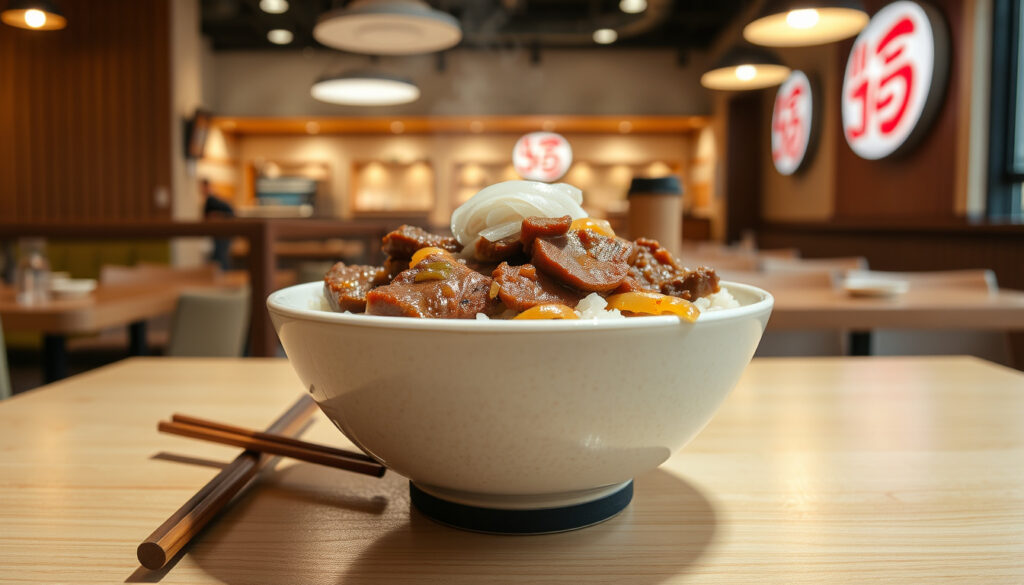
Suki-Ya Outlets: SUKIYA Gyudon Chain Guide & Facts
Anyone who has ever craved a quick, affordable beef bowl in Japan has almost certainly walked past a SUKIYA — but the name “Suki-Ya” actually refers to two very different restaurant chains: the dominant gyudon specialist SUKIYA and the hotpot buffet brand Suki-Ya. This guide sorts out the confusion, focusing on SUKIYA’s massive outlet network, menu, pricing, and what makes it Japan’s largest beef bowl chain.
SUKIYA outlets in Japan: 1,900+ (as of 2023) · Parent company: Zensho Holdings · Founded: 1982 · Average meal price (Japan): ~500 yen
Quick snapshot
- Japanese fast-food chain specializing in gyudon (SUKIYA official site).
- Founded in 1982 by Zensho Holdings (Wikipedia).
- Over 1,900 outlets in Japan (Statista).
- Outlets in China, Thailand, Singapore, and more (Reuters).
- Singapore locations: Novena, Suntec City, etc. (SUKIYA official site).
- Expanding in Southeast Asia (Wikipedia).
- Affordable compared to other fast food (Gurunavi).
- Frequent promotions and combo deals (Gurunavi).
- Average meal under ¥500 (The Japan Times).
Key specifications of SUKIYA at a glance.
| Attribute | Value |
|---|---|
| Number of outlets in Japan | 1,900+ |
| Parent company | Zensho Holdings |
| Year founded | 1982 |
| Average bowl price | ¥350–¥500 |
| Operating hours | 24 hours (many locations) |
How many SUKIYA outlets are there in Japan?
SUKIYA operates more than 1,900 outlets across Japan, making it the country’s largest gyudon chain by store count. Statista (market research firm) reported that as of January 2025, SUKIYA had 1,960 facilities — the most among Japanese-style restaurant brands. Reuters (news agency) put the figure at 1,965 stores at the end of 2024. The company’s own site describes itself as “Japan’s leading gyudon restaurant chain” with approximately 2,000 outlets nationwide.
Global expansion of SUKIYA
- Roughly 650 stores internationally across China, Southeast Asia, and Latin America, with a combined total exceeding 2,600 stores worldwide (Reuters).
- Wikipedia lists operating markets as Japan, China, Taiwan, Brazil, Mexico, Thailand, Malaysia, and Vietnam.
SUKIYA’s domestic density is unmatched: with roughly 1,960 stores in a country of 125 million people, there’s a SUKIYA within a few minutes’ walk in most urban areas. For international travelers, the chain’s growing footprint in Southeast Asia means the same ¥450 beef bowl is now available in Bangkok and Singapore.
The implication: SUKIYA’s sheer scale gives it pricing power and supply-chain advantages that smaller competitors struggle to match.
Is SUKIYA expensive?
No — SUKIYA is known for its budget-friendly prices. A regular gyudon bowl costs between ¥350 and ¥500, depending on size and location. In 2025, The Japan Times reported that the chain cut the regular beef bowl price to ¥450, the first reduction in 11 years. Large and extra-large bowls were priced at ¥680 and ¥880 before the cut.
Price range of SUKIYA menu items
- Mini gyudon: from ¥350 (Gurunavi).
- Regular gyudon: ¥450 after 2025 price cut (The Japan Times).
- Value sets and combo meals available for around ¥600–¥800.
Comparison with competitors like Yoshinoya
Yoshinoya, SUKIYA’s main rival, also offers gyudon at similar price points. However, SUKIYA’s frequent promotional campaigns — such as limited-time toppings like cheese curry and kimchi — often give it a slight edge on perceived value. The trade-off: SUKIYA’s menu is broader, but Yoshinoya’s brand recognition is stronger overseas.
While the ¥450 regular bowl is cheap, the 2025 price cut came after a temporary closure of nearly 2,000 stores due to a rat contamination incident. The discount may be a recovery play rather than a sustainable pricing strategy.
What this means: for budget-conscious diners, SUKIYA remains the cheapest sit-down meal in Japan, but the long-term price stability depends on how the chain rebuilds trust after the 2025 crisis.
What is SUKIYA famous for?
SUKIYA’s flagship item is gyudon — a bowl of rice topped with simmered beef and onions. The dish is prepared in under five minutes and costs around ¥450. The chain is also known for its yakiniku bowls, curry rice, and a rotating selection of seasonal toppings.
Signature dishes: gyudon, yakiniku, curry rice
- Gyudon: thin-sliced beef and onion in a sweet soy broth (SUKIYA official site).
- Yakiniku bowl: grilled beef with a spicy sauce.
- Curry rice: a thick, mildly spiced curry served with beef or chicken.
Why is Sukiya so popular?
- Quick service: meals prepared in under 5 minutes, customers often eat in 10–15 minutes.
- 24-hour operations: many locations open around the clock, catering to night workers and students.
- Affordable prices: a filling meal for under ¥500.
“SUKIYA describes itself as Japan’s leading gyudon restaurant chain with approximately 2,000 outlets nationwide.”
— SUKIYA official website
The pattern: SUKIYA’s popularity rests on a simple formula — speed, price, and ubiquity. For a worker on a 30-minute lunch break, it’s hard to beat.
Is SUKIYA a Japanese brand?
Yes, SUKIYA is a Japanese fast-food chain founded in 1982 and headquartered in Tokyo. It is operated by Zensho Holdings, one of Japan’s largest restaurant conglomerates. The brand is distinctly Japanese, not Chinese — a common misconception due to the kanji characters used in its logo.
Ownership by Zensho Holdings
- Zensho Holdings also owns chains like Hama-Sushi and Nakau (Wikipedia).
- Zensho reported annual revenue of over ¥500 billion in 2023.
Origin and history
- First store opened in 1982 in Tokyo.
- Expanded rapidly through the 1990s and 2000s.
- International expansion began in the 2000s.
For consumers outside Japan, the SUKIYA name is often confused with the Suki-Ya hotpot chain. The gyudon chain is Japanese, while Suki-Ya hotpot is a separate brand operated by different entities in Malaysia and Singapore.
Why this matters: brand confusion can lead to wrong expectations. Travelers expecting a gyudon bowl at a Suki-Ya hotpot buffet will be disappointed, and vice versa.
How fast can I finish a meal at Sukiya?
Very fast. The entire process — order, payment, pickup — can be completed in under two minutes. Most customers eat their bowl in 10–15 minutes, making SUKIYA a favorite for solo diners on a tight schedule.
Ordering process and typical service speed
- Use the ticket vending machine at the entrance to order and pay.
- Hand the ticket to the counter staff.
- Food is ready in 3–5 minutes (Entabe).
- Self-service water and condiments speed up the process.
“SUKIYA temporarily closed nearly all of its approximately 2,000 Japan outlets for four days starting March 31, 2025.”
— Reuters
The trade-off: speed and convenience come at the cost of ambiance. SUKIYA is utilitarian — no one lingers. For a quick, cheap meal, it’s ideal. For a relaxed dinner, look elsewhere.
SUKIYA vs. Suki-Ya Hotpot: A Comparison
Two brands, one name — but entirely different dining experiences. Here’s how they stack up.
| Attribute | SUKIYA (Gyudon Chain) | Suki-Ya (Hotpot Buffet) |
|---|---|---|
| Business model | Fast food, counter service | Buffet, table service |
| Main menu | Gyudon, yakiniku, curry rice | Shabu-shabu, sukiyaki hotpot |
| Pricing | ¥350–¥500 per bowl | RM39.80++ (weekday adult) per person |
| Outlet count | 1,900+ in Japan, 2,600+ worldwide | ~20 locations in Malaysia, Singapore |
| Operating hours | 24 hours (many locations) | Dinner from 5pm to 9:30pm |
| Target audience | Students, office workers, solo diners | Groups, families, buffet lovers |
Pricing and hours for Suki-Ya are from Suki-Ya Malaysia.
The pattern: one is about speed and price, the other about leisure and variety. Choosing the wrong one can ruin your evening. For more dining guides, see our Korean BBQ guide and family dining spots.
Confirmed facts and what’s unclear
Confirmed facts
- SUKIYA is a Japanese brand owned by Zensho Holdings (SUKIYA).
- Over 1,900 outlets in Japan as of 2023 (Statista).
- Gyudon is the most popular menu item (SUKIYA).
- Regular gyudon price cut to ¥450 in 2025 (The Japan Times).
What’s unclear
- Exact number of international outlets per country (Reuters reports 650 total, but breakdowns are inconsistent).
- Future expansion plans for the Suki-Ya hotpot chain (separate from SUKIYA).
- Whether the 2025 price cut will be permanent or promotional.
- International stores in 8+ countries — exact figures per country are not consistently reported.
“Suki-Ya Malaysia lists weekday adult buffet pricing at RM39.80++ and a 120-minute dining duration.”
— Suki-Ya Malaysia official website
For anyone planning a visit to either chain, the key takeaway is to check the brand name carefully: “SUKIYA” (all caps, gyudon) vs. “Suki-Ya” (capitalized with hyphen, hotpot).
For the budget traveler in Japan, the choice is clear: SUKIYA offers the fastest, cheapest meal on the go. For families in Malaysia and Singapore looking for a fun hotpot night, Suki-Ya buffet is the better bet. Confusing the two could mean missing out on exactly what you wanted.
instagram.com, scribd.com, sudachirecipes.com, tokyodeep.blogspot.com
Frequently asked questions
Is SUKIYA halal?
Most SUKIYA outlets in Japan do not serve halal-certified beef. However, some locations in Malaysia and Singapore may offer halal options. Check with the specific outlet.
Does SUKIYA offer delivery?
Yes, SUKIYA partners with delivery platforms like Uber Eats, DoorDash, and local services in various countries. Not all locations offer delivery.
What is the most popular SUKIYA item?
The regular gyudon (beef bowl) is the flagship and best-selling item. It accounts for the majority of orders.
How many calories are in a SUKIYA gyudon?
A regular gyudon contains approximately 700–800 calories, depending on toppings and size. The mini version is around 500 calories.
Is SUKIYA open 24 hours?
Many SUKIYA locations in Japan operate 24 hours. In other countries, hours vary. Check the specific outlet’s page.
Can I find SUKIYA outside Asia?
Currently, SUKIYA’s international presence is concentrated in Asia (China, Thailand, Singapore, Malaysia, Vietnam, Taiwan) and Latin America (Brazil, Mexico). No outlets in Europe or North America as of 2025.
More related posts
 Lynn Chia Stroke Recovery: Her Story and What You Need to Know
 Al Azhar Bukit Timah: Menu, Hours, Location & Orders
 Electrician Singapore Price List Transparent Rates 2025
 Lee Jung-eun: From Stage Veteran to Parasite Icon
 Map of Singapore MRT: Lines, PDF Download & Tourist Guide
 Singapore Airlines Miles Redemption: Value, Chart, and Tips
 T-Bill Interest Rate Today: Current Rates and How to Invest
 Good Morning Thursday Images: Free, Funny & WhatsApp Guide