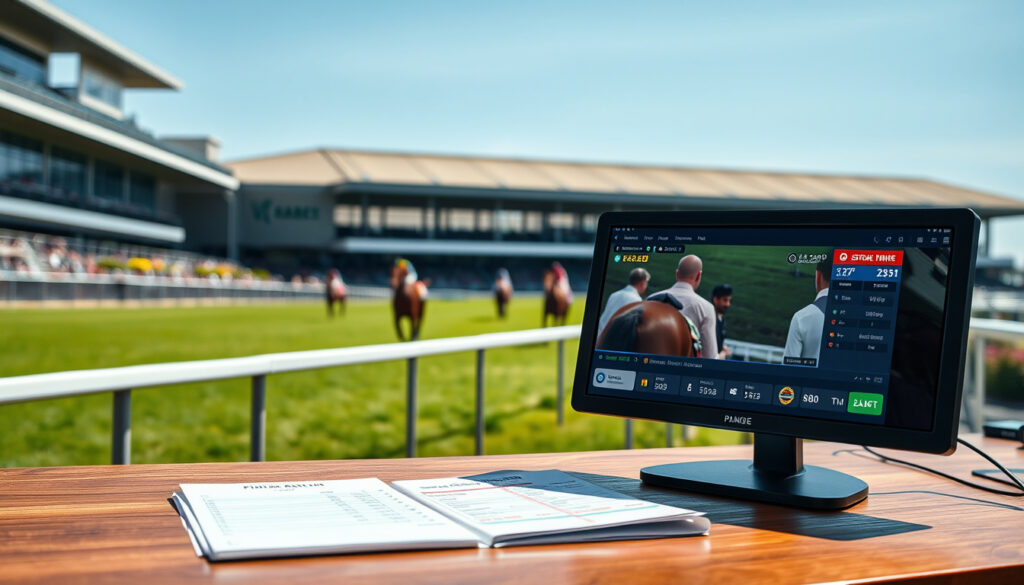
South Africa Race Card: Tips, Results & Live Streaming
Anyone who’s glanced at a South African horse racing race card knows the feeling: a page full of numbers, abbreviations, and names that don’t immediately make sense. This guide breaks down exactly what each section of the card means, where to find today’s race cards and tips, and how to check results live. Racing and Sports (specialist form guide provider) publishes daily race cards with sectional times and full form for every meeting, so you can start decoding the action.
Regulatory body: National Horseracing Authority of Southern Africa ·
Major race events: Sun Met (January), Durban July (July) ·
Racecourses: Kenilworth, Turffontein, Greyville, Fairview, Vaal ·
Daily race meetings: Typically 3-4 per day
Quick snapshot
- Daily race cards available online for South African meetings (Raceform (racecard aggregator))
- Racing and Sports collates thoroughbred form guides with sectional times (Racing and Sports (specialist form guide provider))
- Gold Circle publishes official race meeting listings including times, distances, and stakes (Gold Circle (official tote operator))
- Exact number of race meetings per week varies by season
- Whether every race card includes odds from multiple bookmakers is not standardised across providers
- Race cards are typically available two days before race day via aggregators like Raceform (Raceform (racecard aggregator))
- Check upcoming entries for tomorrow’s meetings on dedicated racecard pages (Raceform (racecard aggregator))
The following table condenses the regulatory framework and key data points that define South African racing, sourced from the National Horseracing Authority and Gold Circle.
| Metrics | Details |
|---|---|
| Regulatory body | National Horseracing Authority of Southern Africa (NHRA) |
| Major racecourses | Kenilworth, Turffontein, Greyville, Fairview, Vaal |
| Top annual races | Sun Met (January), Durban July (July), Summer Cup (November) |
| Racing season | Year-round, with prime season August to April |
| Typical race times | Afternoons/evenings, first race usually 13:00–19:40 SAST |
What are today’s and tomorrow’s South Africa race cards?
Websites offering free race cards for current meetings
Race cards for today’s and tomorrow’s South African meetings are published daily by several aggregators. Raceform (racecard aggregator) lets users click a date and track link to open a full racecard with form and ratings. Racing and Sports (specialist form guide provider) covers thoroughbred meetings across the country, including sectional times.
How to access race cards from your mobile device
Most providers optimise their pages for mobile browsers. Gold Circle (official tote operator) offers a mobile-friendly interface listing race numbers, post times, distances, and purse values in rand.
Differences between race cards and form guides
A race card lists the runners, weights, jockeys, and trainers for a specific meeting. A form guide adds historical performance data such as finishing positions, sectional times, and speed ratings. Racing and Sports and Raceform offer both on the same page.
For beginners, the race card is your entry point; the form guide tells you why a horse might win. Both are free and updated daily.
Where can I find South Africa horse racing tips?
Free tip providers vs premium tip services
Several free tip providers operate alongside race cards. Racing and Sports includes expert tips and statistical analysis for each race. Raceform also offers tipping commentary from analysts. Premium subscription services exist but are less common in the South African market.
Tips based on form guides and expert analysis
Tips often draw on recent form, track conditions, jockey and trainer statistics, and sectional times. Racing and Sports emphasizes sectional times as part of its South African race analysis, helping bettors assess performance beyond finishing position.
How to evaluate tip accuracy
No tip service guarantees success. The best approach is to track a tipster’s record over several meetings and compare their recommendations against the actual results published by Gold Circle or other official sources.
Free tips are a good starting point, but treat them as opinions—always cross-check with the form guide and your own reading of the race card.
How to check South Africa race card results?
Official results from the National Horseracing Authority
The NHRA publishes official results shortly after each race, including finishing order, margins, and winning times. However, for most bettors, aggregator sites are faster. Raceform presents both entries and results together, supporting live follow‑up from today’s fields to outcomes.
Results on aggregator sites
Sites like Racing and Sports and Raceform update results within minutes of a race finishing. They show the final order, SP prices, and any dividends.
Mobile apps for real‑time results
Gold Circle’s mobile site and the Gallop TV app provide real‑time results and race replays. Gold Circle (official tote operator) integrates betting‑service support directly into its racecard pages.
Official NHRA results are the gold standard, but aggregators like Raceform are faster and also archive historical data. Using both gives you accuracy from NHRA and speed from aggregators.
What are the entries for South Africa race cards?
Where to find entry lists
Entries are typically published two days before race day. Raceform and Gold Circle both list entries with horse names, assigned weights, and jockey bookings.
Entry conditions (age, class, weight)
Each race has conditions: age restrictions, class, and weight‑for‑age allowances. These appear on the racecard. The The Jockey Club (racing authority) provides universal guidance on reading these conditions, which apply to South African cards as well.
Late scratchings and replacements
Scratchings (withdrawals) are updated on race day. Raceform and Gold Circle flag late changes. Modern racecards also include QR‑code updates for scratches and pre‑race changes (AmWager (betting platform)).
A late scratching can completely change a race. Always check the official card on race day for the final field.
How to watch South Africa horse racing live?
Official live streaming services (Gallop TV)
Gallop TV provides free live streaming of South African races, including Grade 1 contests “where champions are crowned and legends are made,” as the platform describes. It also offers race replays and interviews.
International live streaming options
Some international betting sites offer live video for account holders, but access may be limited by region. Racing and Sports does not offer live streaming itself but links to official broadcast partners.
Free vs paid streaming
Gallop TV is free. Premium services may offer additional features like multi‑camera views or expert commentary. For most South African racing, the free Gallop TV stream is sufficient.
Free streaming is generous, but it may be geo‑blocked in some countries. Check Gallop TV’s availability before race day.
How to Read a South Africa Race Card
Understanding a racecard is the first skill every punter needs. Here is a step‑by‑step breakdown using universal form‑reading conventions applied to South African cards.
- Identify the race header. Look for the race number, approximate post time, distance, and class. AmWager (betting platform) notes that program numbers (for betting) may differ from post positions.
- Read the horse line. Each row shows the horse number, silks (colours), name, jockey, trainer, weight, and recent form figures. The form runs left‑to‑right, oldest first (The Jockey Club (racing authority)).
- Interpret form numbers. Numbers 1–9 indicate finishing position; 0 means the horse finished outside the first nine. “P” or “PU” means pulled up. A dash separates racing seasons; a slash indicates a longer gap (The Jockey Club).
- Check abbreviations. “C” = course winner, “D” = distance winner, “CD” = course and distance winner. “BF” = beaten favourite (The Jockey Club).
- Review pedigree and comments. The card includes sire and dam names, plus trainer comments. A YouTube tutorial on reading race cards points out that pedigree can hint at a horse’s preferred going (track surface).
- Check late changes. Before betting, confirm scratches and jockey changes via the QR‑code updates or the racecard provider’s official site.
Reading a racecard becomes intuitive after a few attempts. Start by focusing on form figures and the CD/BF abbreviations—they reveal the most about a horse’s chances.
Confirmed facts
- Daily race cards are available on Raceform, Racing and Sports, and Gold Circle.
- Gallop TV provides free live streaming of South African races.
- The National Horseracing Authority of Southern Africa regulates the sport.
- Form abbreviations (C, D, CD, BF, PU) follow global conventions as explained by The Jockey Club.
What’s unclear
- Exact number of race meetings per week varies and is not centrally published.
- It is unclear whether all race cards include odds from multiple bookmakers; some providers list only fixed dividends.
- Whether the NHRA intends to introduce centralised real‑time result feeds for the public remains unconfirmed.
- The long‑term impact of recent regulatory changes on betting card availability is uncertain.
Detailed horse racing form guides, race cards, and race fields for South Africa contain all the tab information you require for the races today.
— Racing and Sports (specialist form guide provider), homepage description
Grade 1 contests: where champions are crowned and legends are made.
— Gallop TV, platform description
Horses carry numbers based on the betting program, not post positions—program numbers never change even if a horse is scratched.
— AmWager (betting platform), guide to reading a program
The older runs are on the left, the most recent on the right—a dash separates seasons, and a slash indicates a longer break.
— The Jockey Club (racing authority), reading the form
The ability to read a South African race card is no longer a skill reserved for old‑timers at Kenilworth. With free tools from Raceform, Racing and Sports, and Gallop TV, anyone can access daily cards, tips, results, and live streaming. For the beginner, the path is clear: start with the form figures and CD abbreviation, ignore the noise, and check for late scratches. For the seasoned punter, sectional times from Racing and Sports offer the edge needed to move beyond position‑based betting. The trade‑off is constant: convenience versus depth. Yet in South African racing, the data is freely available—the missing piece is the discipline to use it.
Frequently asked questions
What is a race card in horse racing?
A race card lists the runners, weights, jockeys, trainers, and betting numbers for a specific race meeting. It may also include recent form figures and odds.
How often are South Africa race cards updated?
Race cards are updated daily for each meeting. Entries are usually published two days before race day, and late scratches are updated on race day itself.
Are South Africa race cards free to access?
Yes. All major providers—Raceform, Racing and Sports, and Gold Circle—offer free race cards for upcoming meetings.
Do race cards include betting odds?
Many race cards include dividend (odds) information, but not all providers display odds from multiple bookmakers. Gold Circle and Raceform typically show tote dividends.
What is the difference between a race card and a form guide?
A race card is the field for a meeting; a form guide adds historical performance data (finishing positions, sectional times, ratings). Most sites combine both on one page.
Can I get race cards for prior days?
Yes. Raceform and Racing and Sports archive past race cards and results, allowing you to review yesterday’s or last week’s meetings.
Which mobile apps provide South Africa race cards?
Gold Circle’s mobile site and the Gallop TV app are the best free options. Racing and Sports also offers a mobile‑friendly web version.
More related posts
 Halal Cake Shop Near Me: Find, Check, and Order Safely
 FC Barcelona vs Levante UD Lineups: Confirmed Starting XI
 Dragon Brand Bird Nest: Review, Price & Health Benefits
 Sentenced to Be a Hero: Season 2, Episodes, Where to Watch & More
 DBS Bank Near Me: Find Branches, Hours & Open Account Online
 Who Won the 2025 Irish Presidential Election Results
 Lee Byung-hun – Career Films Awards Family Overview
 Singtel Mobile Plan Promotion: Best Seniors Deals