Lake Shikotsu Ice Festival 2026: Tickets, Dates & How to Get There
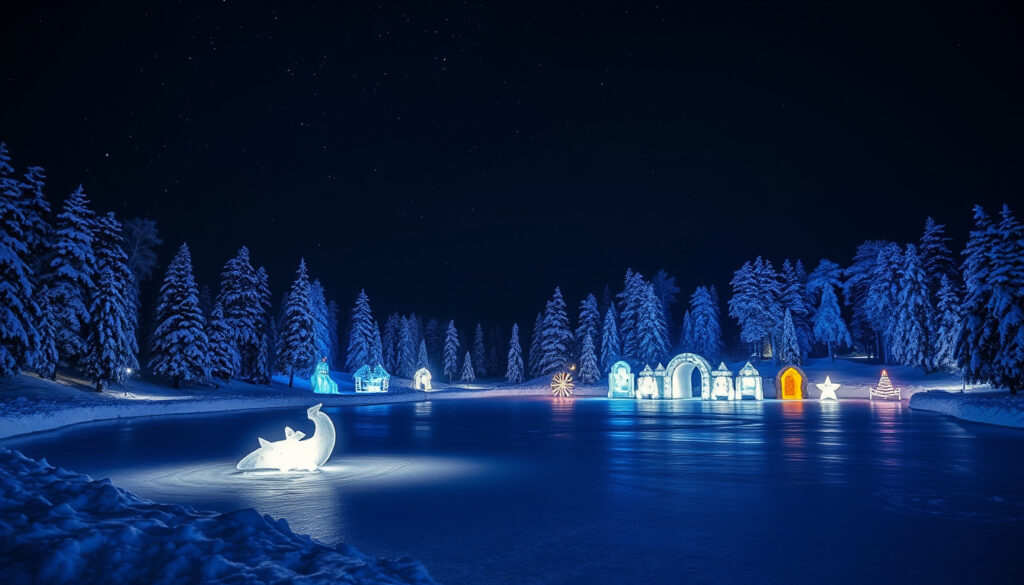
There’s a moment, just after dusk, when the ice sculptures along Lake Shikotsu’s shore start to glow — and the crowds of Sapporo’s bigger winter festival feel very far away. That quiet pull is why travelers keep returning to the Chitose and Lake Shikotsu Ice Festival. The 2026 edition ran January 31 through February 23, a roughly three-week window confirmed by the festival’s official 2026 site. If you’re weighing a Hokkaido winter trip and want the ice without the crowds, this is the guide to read first.
2026 dates: Jan 31 – Feb 23 ·
Admission (junior-high +): ¥1,000 ·
Hours: 10:00 – 20:00 ·
Illumination: from 16:30 ·
Location: Lake Shikotsu Onsen, Shikotsu-Toya National Park ·
Typical duration: about 3 weeks
Quick snapshot
- Open daily 10:00–20:00, with illumination from 16:30; cash, major credit cards, and PayPay accepted (official festival site) (official 2026 festival pamphlet)
- Admission: ¥1,000 for junior-high students and older; elementary-school children and younger enter free (official 2026 festival pamphlet)
- 2027 dates were not yet posted on the official site when this guide was written.
- Seasonal shuttle fares and schedules for the next edition may change; published figures come from third-party listings.
- 2026 edition: January 31 – February 23 (dates per the official site above).
- Illumination runs 16:30–20:00 each evening, the window most visitors plan around (per official site).
- Watch the official site for the next edition’s dates. (Navitime Japan Travel’s transport guide)
- If the seasonal Hyoto BLUE LINER shuttle returns, book ahead — it requires advance reservation (Navitime Japan Travel’s transport guide).
Nine rows, one pattern: the official numbers are sharper than most English-language guides suggest.
| Detail | Value |
|---|---|
| Official name | Chitose and Lake Shikotsu Ice Festival |
| Location | Lake Shikotsu Onsen, Chitose, Hokkaido (Shikotsu-Toya National Park) |
| 2026 dates | January 31 – February 23 |
| Daily hours | 10:00 – 20:00 |
| Illumination window | 16:30 – 20:00 |
| Admission (junior-high +) | ¥1,000 |
| Admission (elementary and younger) | Free |
| Payment accepted | Cash, major credit cards, PayPay |
| Nearest rail gateway | JR Chitose Station (then bus or event shuttle) |
How do I get to Lake Shikotsu Ice Festival from Sapporo?
The festival is held at Lake Shikotsu Onsen, the hot-spring village in Chitose, Hokkaido. Public transport needs one transfer and one decision: the seasonal shuttle, a regular bus, or a sightseeing tour.
Bus transport options
- Hyoto BLUE LINER (seasonal shuttle): connects New Chitose Airport, JR Chitose Station, and Lake Shikotsu Onsen, according to Traveloka’s festival guide.
- Advance reservation: the shuttle is described as requiring a booking ahead of travel, per Navitime Japan Travel.
- Reported fare: ¥2,000 for junior-high students and older, ¥1,000 for elementary students (per Traveloka’s listing).
- Capacity catch: the shuttle reportedly has 45 seats and no standing room, so latecomers can be left at the stop (Traveloka reports).
From Sapporo, the most common route is the Rapid Airport train to JR Chitose Station, then a connecting bus or the event shuttle, a combination described by the travel blog Characters Across the World.
One travel-blog tip: book the seasonal shuttle by the evening before you plan to ride (Characters Across the World). The shuttle’s small capacity makes same-day plans risky.
Driving route
Driving to the lake is straightforward from Chitose, but the official English materials don’t detail festival-period parking. Given the shuttle’s 45-seat, no-standing capacity, the parking question matters more than most guides admit.
For visitors with a rental car, the approach runs through Chitose and into Shikotsu-Toya National Park, where the festival’s onsen village sits. If you’d rather not gamble on a spot, the shuttle and sightseeing bus remove the risk entirely.
Tour packages
- Sightseeing bus from Sapporo: a round-trip course running 13:50–19:33, with about 90 minutes at the lake (Japan Bus Online course listing).
- Adult fare: ¥5,500; child fare ¥2,800 (fare details on Japan Bus Online).
- Illumination timing: the itinerary includes viewing from about 16:30, matching the official start (itinerary notes on Japan Bus Online).
The sightseeing bus is the most hands-off option: no transfers, a set seat, and a return that lands you back at Sapporo Station by 19:33.
The pattern: shuttle math depends on where you’re staying, but the sightseeing bus wins for travelers who don’t want to manage a transfer in the dark.
The catch: whichever option you pick, book early and check for updates — the 45-seat shuttle fills fast.
What is the most famous snow festival in Japan?
Ask most travelers to name Japan’s winter festival and they’ll say the Sapporo Snow Festival. That’s the big one — the early-February event that fills Sapporo’s central sites with snow and ice sculptures. Lake Shikotsu is a different animal: smaller, quieter, and built around illuminated ice on a lake shore.
Sapporo Snow Festival
- The event most international visitors mean when they ask about Japan’s snow festival.
- Held in early February in Sapporo, Hokkaido’s capital.
- A good pairing with Lake Shikotsu if you time both in the same week.
Other famous snow festivals
- Hokkaido’s regional towns host their own smaller ice and snow events through February.
- Local tourism offices publish seasonal details; the Lake Shikotsu official site is the reference to check for this festival’s dates.
What this means: Sapporo earns the fame, but it doesn’t make Lake Shikotsu redundant — the two reward different travel styles.
Is Lake Shikotsu worth visiting?
Yes — for a specific kind of traveler. The festival runs daily, admits elementary-age kids free, and costs ¥1,000 once kids are older. The catch is the same thing that makes it special: it’s a small, lakeside event, not a city spectacle.
Why visit?
- The ice itself: sculptures made from the lake’s clear water, illuminated from 16:30 each evening — the detail most tour operators lead with.
- Family economics: elementary-school children and younger enter free, keeping a family visit inexpensive.
- Setting: a working hot-spring village at the edge of Shikotsu-Toya National Park, so the trip pairs ice with onsen bathing.
What to see
- Illuminated ice sculptures against the lake, best seen after 16:30 when the lights take over.
- The official site describes the event as the “Chitose and Lake Shikotsu Ice Festival” — the name you’ll see on signs and tickets.
- Nighttime is the main event: the festival’s operating day runs to 20:00, with illumination filling the last 3.5 hours.
Pros and cons
Upsides
- Noticeably quieter than Sapporo’s Snow Festival.
- Free entry for elementary-school children and younger.
- Illuminated ice on a lake shore, with onsen lodging nearby.
- Reachable as a day trip from Sapporo.
Downsides
- Admission applies from junior-high age (¥1,000 per the official pamphlet).
- Seasonal shuttle has only 45 seats and no standing — late bookings are risky.
- Smaller scale than Sapporo: the variety of installations is limited.
- Winter evenings at the lake are cold; plan for wind and snow.
The trade-off: you swap scale for calm and a prettier setting — and for most families, the free kids’ entry settles the math.
In short, the festival suits those who value atmosphere over scale, and families benefit from free admission for young kids.
What are the major snow festivals in Japan in 2026?
For a 2026 winter trip, the two that matter for most visitors are the Sapporo Snow Festival and the Chitose and Lake Shikotsu Ice Festival. Both sit in Hokkaido, and their February windows overlap.
Sapporo Snow Festival
- Hokkaido’s best-known winter event, centered in Sapporo’s downtown.
- Typically held in early February.
Lake Shikotsu Ice Festival
- Official 2026 dates: January 31 – February 23, the window confirmed by the festival’s official site.
- A lighter, lake-side alternative to Sapporo’s city-scale event.
Other notable festivals
- Hokkaido’s regional towns run their own smaller snow and ice events through winter; the Lake Shikotsu official site remains the best reference for this event specifically.
The pattern: 2026’s Hokkaido winter calendar is basically a two-tier story — Sapporo for scale, Lake Shikotsu for atmosphere — and a week-long trip can honestly cover both.
When to not visit Japan in 2026?
If the ice festival is your anchor, plan around late January to late February. The rest of the year is a different trip, and some windows are actively awkward for a festival-focused itinerary.
Avoiding Golden Week
- Golden Week in late April and early May is Japan’s busiest domestic holiday stretch — trains, hotels, and sights get squeezed.
- It’s also well after the ice festival season, so it only matters if you’re extending a longer Japan trip.
Winter travel considerations
- February in Hokkaido means short daylight and real cold; the festival’s illumination is the evening payoff, so dress for standing around after dark.
- The lake sits in mountain country, so conditions change faster than in Sapporo.
- If a winter itinerary feels riskier than a summer one, a coverage check for transport delays is a standard part of the plan — see the Great Eastern Travel Insurance: Claims and Coverage Guide.
Weather in Hokkaido
The festival’s real show runs 16:30–20:00 in the open air — and the shuttle that gets you there has 45 seats, no standing, and an advance-booking rule. Sort transport before you freeze at the stop.
The catch: there’s no bad festival date in February, but there are bad plan-ahead gaps — lock transport down first, and the cold becomes a detail, not a problem.
Lake Shikotsu vs. Sapporo Snow Festival: which fits your trip?
Five rows, one pattern: Lake Shikotsu trades scale for calm, and the trade is the point.
| Factor | Lake Shikotsu Ice Festival | Sapporo Snow Festival |
|---|---|---|
| Setting | Lakeside hot-spring village in Shikotsu-Toya National Park | Central-city sites in Sapporo |
| Signature material | Ice sculptures carved from the lake’s clear water, illuminated at night | Large-scale snow and ice installations |
| Typical timing | Late January – late February (2026: Jan 31 – Feb 23) | Early February |
| Best for | Quiet evenings, families, photography | First-timers who want the classic Japan winter-festival spectacle |
| Getting there from Sapporo | Train to JR Chitose + shuttle, or sightseeing bus | City transit or taxi within Sapporo |
Why this matters: “which is better” is the wrong question — they’re different experiences. Lake Shikotsu is the evening you remember; Sapporo is the landmark you show friends.
How to plan your visit, step by step
Five steps, one logic: decide transport first, then let the evening schedule run the day.
- Confirm the dates. Check the official site before booking flights; 2026 ran Jan 31 – Feb 23, but the next edition’s dates weren’t posted when this guide was written.
- Choose your transport. Seasonal shuttle (advance reservation required), sightseeing bus, or car — the shuttle needs booking by the evening before, and the sightseeing bus returns to Sapporo Station by 19:33.
- Book anything that needs a seat. The shuttle has 45 seats and no standing; the sightseeing bus runs on a fixed itinerary.
- Arrive before 16:30. Illumination starts then, and the first 30 minutes give you the daylight-to-dark transition.
- Budget the gate cost. ¥1,000 per junior-high+ visitor; kids through elementary age get in free — then find an onsen spot for after.
The sequence matters more than the details — every step exists to protect the 16:30–20:00 window.
2026 festival timeline
Four marks, one pattern: the 16:30 illumination is the center of gravity, and everything else orbits it.
| When | What happens | Why it matters |
|---|---|---|
| Late January – late February | Festival season at Lake Shikotsu | 2026’s official window: Jan 31 – Feb 23 |
| 16:30 daily | Illumination starts | The main viewing window opens; bus itineraries sync to it |
| 13:50 – 19:33 | Sapporo sightseeing-bus course | Round trip with about 90 minutes at the lake |
| Early February | Sapporo Snow Festival | The bigger festival you can pair with this one |
The takeaway: build your day around the 16:30 switch-on, not around lunch — the real show starts when the light goes blue.
What’s confirmed, and what’s still unclear
Confirmed facts
- 2026 dates: January 31 – February 23 (official site).
- Hours and illumination: 10:00–20:00, lights from 16:30 (official site).
- Admission: ¥1,000 junior-high+; elementary and younger free (official pamphlet).
- Sapporo sightseeing-bus course: ¥5,500 adult / ¥2,800 child, 13:50–19:33 (Japan Bus Online).
What’s still unclear
- 2027 dates and ticket availability: not posted on the official site at the time of writing.
- Next edition’s shuttle fares: published figures come from third-party listings, not the organizer.
- Festival-period parking and accessibility details: not covered in the official English materials reviewed.
- Whether the seasonal shuttle route returns unchanged: unconfirmed.
What this means: the event itself is well documented; the gaps are all on the transport and next-edition side, and those are the details that change.
What organizers and tour operators say
“The Chitose and Lake Shikotsu Ice Festival is an ice festival held in Lake Shikotsu hot springs.”
The festival’s official 2026 site (organizer)
“…a truly enchanting winter experience, showcasing illuminated ice sculptures crafted from the lake’s crystal-clear waters.”
KKday, a travel-activity booking platform
The gap between the two quotes is the whole story: the organizer talks in practical terms, the operator sells the glow — both are describing the same lake, and both are right.
So, is Lake Shikotsu worth the trip?
If you came here for a simple yes-or-no: yes, for most winter visitors to Hokkaido, the 2026 Lake Shikotsu Ice Festival is worth the hour from Sapporo — especially if you time it for the 16:30 illumination and keep expectations at “intimate lakeside event” rather than “city-wide spectacle.” The official admission numbers are fair, kids through elementary age get in free, and the seasonal transport is manageable if you book it. For travelers weighing a Hokkaido winter itinerary, the decision is clear: pair Sapporo’s spectacle with one quiet evening at the lake — or, if you only have one night in February, spend it at Shikotsu and treat the crowds as optional.
Frequently asked questions
How long does it take to get from Sapporo to Lake Shikotsu by bus?
By car or direct bus, roughly an hour from Sapporo. The sightseeing-bus course runs 13:50–19:33 and leaves about 90 minutes at the lake, per Japan Bus Online.
Can I buy tickets in advance?
Festival admission is paid on site; the official site lists cash, major credit cards, and PayPay. Reserve transport ahead instead — the seasonal shuttle requires advance reservation.
Is the festival wheelchair accessible?
Accessibility details were not covered in the official English materials we reviewed. The venue is an open-air lakeside site in winter, and we can’t confirm specific accessibility provisions.
What is the best time of day to visit?
The illumination window, 16:30–20:00. Arriving just before 16:30 lets you watch the sculptures light up as the light fades.
Are there food stalls at the festival?
The official English materials we reviewed don’t itemize food stalls. The festival sits in a hot-spring village, so nearby lodging and dining exist, but don’t rely on a stall-by-stall plan from this guide.
Is Lake Shikotsu Ice Festival suitable for children?
Yes. Elementary-school children and younger enter free, and junior-high students and older pay ¥1,000 — the official pamphlet’s pricing makes it a low-cost family stop.
What other winter activities are available at Lake Shikotsu?
The sources for this guide focus on the festival itself. The lake sits inside Shikotsu-Toya National Park, but we didn’t verify a specific winter activities list — ask locally once you arrive. If you’re extending the trip, the best places to visit in Osaka adds a milder later leg.
More related posts
 Gold Price Per Gram Singapore: 24K, 22K & 916 Rates Today
 Fraser Place Central Seoul: Location, Noise & Transfer Guide
 Dragon Brand Bird Nest: Review, Price & Health Benefits
 Nearest Polyclinic Singapore: Walk-In, Costs & Hours
 How to Turn Off Read Receipts on iPhone: Step-by-Step Guide
 Cast of Buried Hearts: Full List, Characters & Family Tree
 Far East Square Food – Dining Guide to Chinatown Singapore
 Flamengo vs Bayern Munich Lineups: Confirmed XI & Score