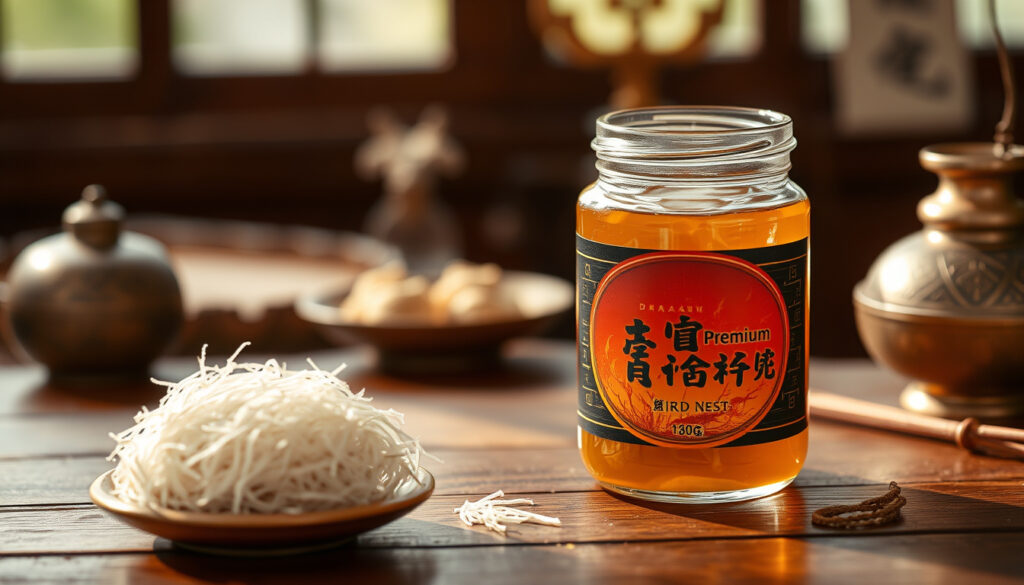
Dragon Brand Bird Nest: Review, Price & Health Benefits
Bird’s nest has been a treasured ingredient in Chinese culinary tradition for centuries, but for many Singaporeans, the name Dragon Brand has become a shortcut to quality and heritage. Founded in 1957, the brand has grown from a modest operation into a household name for bottled bird’s nest beverages, now sold at major retailers from NTUC FairPrice to Marina Bay Sands.
Year founded: 1957 · Headquarters: Singapore · Main product: Bottled bird’s nest beverage · Bird’s nest type: Top quality ‘Jin Si’ (golden silk) · Available at: NTUC FairPrice, Takashimaya, MBS, Shopee, official online store · Popular variant price range: $39.90 – $183.50 SGD per bundle
Quick snapshot
- Dragon Brand was founded in 1957 in Singapore (Dragon Brand official site)
- Products contain Jin Si (golden silk) bird’s nest (Dragon Brand product page)
- Available at NTUC FairPrice, Takashimaya, MBS, Shopee, and official online store (FairPrice listing; Takashimaya brand page; Merchant directory)
- Exact health benefits compared to collagen in human clinical trials
- Percentage of authentic bird’s nest content in bottled drinks
- Full ingredient list for each variant (e.g., preservatives)
- 1957: Dragon Brand founded in Singapore (Dragon Brand official site)
- Present: Asia’s leading premium heritage bird’s nest brand per Instagram bio (Dragon Brand official site)
- Growing demand for transparent labeling and independent testing
- Potential expansion to more modern retail and international markets
- Increased competition from collagen drinks and other beauty supplements
5 key facts, one pattern: Dragon Brand’s core offering revolves around a single premium ingredient — Jin Si bird’s nest — packaged in convenient, ready-to-drink bottles.
| Label | Value |
|---|---|
| Brand origin | Singapore, 1957 |
| Bird’s nest type | Jin Si (golden silk) |
| Key product | Bottled bird’s nest beverage 120ml |
| Price range (SGD) | $39.90 – $183.50 per bundle |
| Sales channels | Online store, Shopee, NTUC FairPrice, Takashimaya, MBS |
What is dragon brand bird nest?
History of Dragon Brand (founded 1957)
Dragon Brand was established in Singapore in 1957, a time when the city-state was still finding its footing as an independent nation. The brand’s focus on edible bird’s nest — a traditional Chinese delicacy made from the solidified saliva of swiftlets — set it apart from the many kopitiams and hawker stalls that dominated the food scene. According to Dragon Brand’s official website (Singapore heritage brand), the company has remained family-owned and dedicated to sourcing only top-quality ‘Jin Si’ (golden silk) bird’s nest, known for its long strands and minimal impurities.
The implication: Dragon Brand’s longevity is a signal of trust in a market where authenticity is everything.
Product range overview
- Classic Bird’s Nest with Rock Sugar (75g, 120ml, 150g bottles)
- Reduced Sugar and Sugar-Free variants
- Royal Concentrated Bird’s Nest (No Sugar, 150g)
- Superior Bird’s Nest in bundles of 12, 20, or 24 bottles
According to Dragon Brand’s product collection (bottled beverages), the range covers both everyday consumption and gift hampers. Prices for a 6-bottle pack of Rock Sugar 75g start at $60.10 at NTUC FairPrice, while a 20-bottle bundle of 120ml goes for $55.00 on Shopee Singapore.
The trade-off: Higher-grade nests mean higher prices, but also a more recognizable product texture.
Jin Si bird’s nest explained
Jin Si, or “golden silk,” refers to a grade of edible bird’s nest prized for its long, unbroken strands and golden hue. It is sourced from swiftlet houses in Southeast Asia, where the birds build their nests in controlled environments. Dragon Brand (premium bird’s nest supplier) states that their Jin Si nests are hand-cleaned to remove feathers and debris, then slow-cooked in rock sugar syrup. The result is a beverage with visible strands — a sign of authenticity that many consumers look for.
The pattern: Higher-grade nests mean higher prices, but also a more recognizable product texture.
What this means: Dragon Brand’s entire product line is built on a single premium ingredient. The trade-off for higher price is visual proof of authenticity in every bottle.
Is dragon brand bird nest good?
Authenticity and quality control
Dragon Brand emphasizes that its products are Halal-certified and contain no artificial additives. Dragon Brand (Singapore’s heritage bird’s nest brand) claims to use only bird’s nests from swiftlet houses, not caves, which reduces the risk of heavy metal contamination. The visible strands in the bottle are a key selling point — many competitors use powdered or shredded nest that can be harder to verify.
According to a Klook-linked review video (independent consumer review), the texture and sweetness are well-received, though some customers wished for more detailed nutritional information on the bottle. This means the brand’s quality claims are backed by visual proof but not by detailed lab results.
Customer reviews and reputation
On Shopee’s official Dragon Brand store (e-commerce platform with buyer ratings), the brand holds a 4.8 out of 5 star rating across thousands of transactions. Common praise includes consistent quality, nice packaging, and good value for gift-giving. Negative feedback is rare and usually concerns pricing or delivery delays.
What this means: Dragon Brand has built a strong digital reputation, but the glowing reviews are on the brand’s own channels — independent third-party validation is limited.
Price-value assessment
At around $0.92 per 75g bottle (FairPrice pack of 6 at $60.10), Dragon Brand is mid-range compared to other bird’s nest beverages. A 20-bottle bundle of 120ml at $55.00 on Shopee works out to $2.75 per bottle, which is competitive for a premium product. But compared to collagen drinks that cost $1–$2 per serving, bird’s nest is significantly more expensive. The perceived value lies in tradition and the belief in specific health benefits.
The catch: You’re paying for a heritage product and the assurance of whole strands, not just a generic bird’s nest extract.
For a Singapore consumer who values tradition and visible authenticity, Dragon Brand offers a reliable product. But if you’re purely looking for a collagen boost at a lower price, a standard collagen drink may deliver similar benefits for less.
The pattern: Dragon Brand’s value proposition is not cost-efficiency but heritage and visible authenticity.
What this means: Dragon Brand scores high on trust and tradition but low on price competitiveness against modern supplements.
Is bird nest soup actually healthy?
Nutritional content of edible bird’s nest
Bird’s nest is primarily composed of glycoproteins, amino acids, and sialic acid (N-acetylneuraminic acid). Sialic acid is known to support brain development and immune function. According to Healthy Nest Australia (bird’s nest supplier and educator), a 100g serving of dried bird’s nest contains about 50g of protein, 30g of carbohydrates, and negligible fat. However, the bottled beverage form is mostly water and sugar, so the actual nutrient density per bottle is lower.
Traditional Chinese medicine (TCM) holds that bird’s nest nourishes the lungs, improves skin complexion, and strengthens the immune system. Modern research has identified PubMed studies (peer-reviewed biomedical research) suggesting that sialic acid may have anti-inflammatory and antiviral properties, but robust human clinical trials are scarce.
Comparison with collagen
Collagen supplements typically contain hydrolyzed collagen peptides that are proven to improve skin elasticity and joint health in clinical trials. Bird’s nest, by contrast, contains sialic acid and other glycoproteins that may offer different benefits — but the evidence base is weaker.
A consumer review video (Klook-related comparison) noted that bird’s nest is often described as “beauty food” in East Asia, while collagen is backed by Western clinical studies. The pattern: Bird’s nest is a traditional functional food with anecdotal support; collagen is a modern supplement with stronger scientific backing. The choice depends on whether you prioritize heritage or proven efficacy.
Modern scientific research
A 2020 review in the Journal of Ethnopharmacology (peer-reviewed journal) found that bird’s nest extract showed potential in vitro and in animal models for anti-aging, anti-inflammatory, and antiviral effects. However, the authors noted that more human studies are needed. Dragon Brand’s products have not been independently tested in these contexts.
If you’re taking bird’s nest specifically for skin health, the limited human data means you’re relying on centuries of tradition rather than bulletproof science. That’s a valid choice — but it’s worth knowing what you’re buying into.
The implication: Bird’s nest’s health claims are rooted in tradition, not rigorous clinical evidence.
What this means: For skin health, collagen has stronger proof. Bird’s nest offers a cultural experience with uncertain scientific support.
Why is bird’s nest so expensive?
Harvesting difficulty and labor cost
Edible bird’s nests are harvested from caves or purpose-built swiftlet houses. The nests are made of hardened saliva, and each nest weighs only a few grams. Harvesting is a dangerous, skilled job, especially in caves. According to Chinatown Singapore (heritage district merchant directory), Dragon Brand’s clean processing adds to the cost.
Limited supply and high demand
Swiftlets only produce nests during breeding seasons, and conservation regulations limit harvesting in some areas. The global demand, especially from China and Southeast Asia, drives prices up. A kilogram of top-grade Jin Si bird’s nest can retail for over $2,000 USD, making it one of the most expensive animal products by weight.
Processing and purification requirements
Each nest must be soaked, softened, and hand-cleaned to remove feathers, dirt, and other impurities. This labor-intensive process can take hours per nest. Dragon Brand’s bottled version then goes through a cooking and bottling process that preserves the strands while ensuring safety.
The trade-off: Every bottle represents a significant amount of raw material and manual work, which explains the premium price tag.
What this means: The high price is driven by scarce raw material, labor-intensive harvesting, and hand-cleaning — not just brand markup.
How to tell fake bird nest?
Visual inspection techniques
- Authentic nests have a pale yellow to golden color, with visible long strands.
- Fake nests often look too uniform, with a gelatinous or overly glossy surface.
- When soaked, real bird’s nest expands slightly but retains its shape; fake nests may dissolve or turn into a thick paste.
Chemical tests at home
You can test for gelatin-based fakes by adding iodine: real bird’s nest will not turn blue-black, while gelatin will. Another test: drop a piece into boiling water — real bird’s nest remains intact, while fake nests often dissolve or become cloudy.
Buying from reputable sources
The safest way to avoid fakes is to buy from established brands like Dragon Brand, which is available at Takashimaya’s Food Hall (premium department store) and NTUC FairPrice (major supermarket chain). Dragon Brand also provides a direct online store with product descriptions and authentication details.
The implication: For a beginner, sticking to a heritage brand removes the guesswork.
What this means: Buying from Dragon Brand or other established retailers is the easiest way to guarantee authenticity without home tests.
Dragon Brand vs Collagen Drinks: Comparison
4 key differences, one pattern: bird’s nest offers tradition and a broader traditional health claim, while collagen is a targeted supplement backed by modern science.
| Feature | Dragon Brand Bird’s Nest | Typical Collagen Drink |
|---|---|---|
| Key active ingredient | Jin Si bird’s nest (sialic acid, glycoproteins) | Hydrolyzed collagen peptides (type I/III) |
| Primary claim | Nourishes skin, lungs, immunity (TCM) | Improves skin elasticity, joint health |
| Scientific evidence | Limited human trials; in vitro and animal studies | Multiple human RCTs for skin aging |
| Price per serving | ~$2.75 (120ml bottle) | ~$1.50 – $2.00 |
| Heritage & tradition | Centuries-old use in Chinese culture | Modern supplement (since 1980s) |
| Availability in Singapore | NTUC, Takashimaya, MBS, Shopee, online | Guardian, Watsons, iHerb, online |
What this means: If you’re looking for a scientifically proven skin supplement, collagen is the safer bet. If you want a traditional health tonic with a sense of occasion, bird’s nest has its own appeal.
Product Specifications
6 key specs, one pattern: Dragon Brand’s bottled bird’s nest comes in multiple sizes and sugar levels, but the core ingredient remains the same Jin Si nest.
| Specification | Details |
|---|---|
| Product name | Dragon Brand Bird’s Nest with Rock Sugar |
| Net weight | 75g, 120ml, 150g, 150ml (varies by variant) |
| Bird’s nest type | Jin Si (golden silk) |
| Sweetener | Rock sugar (reduced sugar & sugar-free options available) |
| Certification | Halal |
| Preservatives | No artificial preservatives (according to brand) |
| Packaging | Glass bottle |
| Shelf life | Typically 2 years (unopened) |
The pattern: The same core ingredient is offered in different formats to suit different consumption occasions.
Upsides and Downsides of Dragon Brand Bird’s Nest
Upsides
- Heritage brand with over 65 years of history
- Uses premium Jin Si bird’s nest with visible strands
- Halal certified and available at major retailers
- Convenient ready-to-drink format
- Positive customer reviews on official channels
Downsides
- Expensive compared to collagen supplements
- Limited scientific evidence for health claims
- High sugar content in some variants (rock sugar)
- No independent third-party testing of actual bird’s nest concentration
- Not suitable for vegetarians or vegans
The catch: The brand’s strengths (heritage, visibility) are balanced by its weaknesses (price, evidence).
Timeline of Dragon Brand
- 1957: Dragon Brand founded in Singapore (Dragon Brand official site (heritage brand))
- Present: Positioned as Asia’s leading premium heritage bird’s nest brand per Instagram bio (Dragon Brand official site)
Note: The exact timeline of expansion into bottled beverages is not independently confirmed.
What’s confirmed and what’s unclear
Confirmed facts
- Dragon Brand was founded in 1957 in Singapore (Dragon Brand official site)
- Products contain Jin Si bird’s nest (Dragon Brand product page)
- Available at NTUC FairPrice, Takashimaya, MBS, Shopee, and official online store (FairPrice listing; Takashimaya brand page; Merchant directory)
- Price range from $39.90 to $183.50 per bundle (FairPrice; Shopee)
- Halal certified (brand claim)
What’s unclear
- Exact health benefits compared to collagen in human clinical trials
- Percentage of authentic bird’s nest content in bottled drinks
- Full ingredient list for each variant (e.g., preservatives)
- Independent verification of brand’s “no artificial additives” claim
- Exact timeline of expansion into bottled beverages beyond founding year
What experts and customers say
“Dragon Brand has been a trusted name in Singapore for over 60 years, using only the finest Jin Si bird’s nests.”
— Dragon Brand ‘About Us’ page (Dragon Brand official site)
“The product arrives with visible long strands of bird’s nest, which is a good sign of authenticity.”
— Verified buyer review on Shopee Singapore (Dragon Brand BN Official Store)
“Bird’s nest is a traditional beauty food, but collagen has more clinical backing for skin health.”
— Consumer comparison video (Klook-related review)
“Jin Si nests are hand-cleaned and slow-cooked to preserve the natural texture and nutrients.”
Dragon Brand’s bird’s nest is a product that sits at the intersection of tradition and modern convenience. For the Singaporean consumer who values heritage and visible authenticity, it offers a straightforward choice. But the evidence for its health benefits, especially compared to collagen, remains thin. The decision comes down to whether you’re buying a cultural experience or a nutritional supplement. For the budget-conscious shopper, the price per serving is hard to justify without stronger proof. For the gift-giver or the TCM believer, Dragon Brand’s track record and retail presence make it a safe, reputable option.
shopee.sg, lazada.sg, singmalls.app, kaizenaire.com, divedeals.sg, tfsm.com.sg
Frequently asked questions
Where can I buy Dragon Brand bird nest online?
You can order directly from the Dragon Brand official online store or through their Shopee official store.
Does Dragon Brand bird nest contain sugar?
Yes, the classic Rock Sugar variant contains added rock sugar. However, Dragon Brand also offers Reduced Sugar and Sugar-Free options.
How many bottles are in a carton?
Bundles range from 6 to 24 bottles depending on the variant. For example, the 75g Rock Sugar pack comes in 6s, while the 120ml beverage is sold in 12s or 20s.
What is the shelf life of bottled bird’s nest?
Unopened bottles typically last 2 years. Always check the expiry date on the bottle.
Is Dragon Brand bird nest halal certified?
Yes, Dragon Brand products are Halal certified.
Can I drink bird’s nest every day?
Traditional Chinese medicine suggests moderate consumption (e.g., a small bottle 2–3 times a week). There are no known risks, but the high sugar content in some variants is worth considering.
What is the difference between cave nest and house nest?
Cave nests are harvested from natural caves and may contain more impurities. House nests come from swiftlet houses built by humans, which are cleaner and more sustainable. Dragon Brand uses house nests.
How does bird’s nest taste?
Bird’s nest has a mild, slightly sweet taste with a gelatinous, slippery texture. The rock sugar version is sweet and pleasant, while the sugar-free variant is more neutral.
For more on Singapore heritage food brands, check out Bee Cheng Hiang Singapore: History, Pricing, Health. If you’re exploring beauty and wellness in Singapore, our guide to Body Contouring Singapore: Costs & Best Procedures 2025 may also be of interest.
More related posts
 Error Definition, Types, Synonyms, and Web Error Codes Explained
 Terjemahan Bahasa Indonesia ke Inggris – Best Free Tools 2025
 How to Fix Instagram Not Loading: 10 Proven Fixes in 2025
 South Africa Race Card: Tips, Results & Live Streaming
 Singtel Mobile Plan Promotion: Best Seniors Deals
 Class 3 Job Vacancy in Singapore: Salary & Requirements
 Japan Cherry Blossom Forecast 2026: Affordable Season Guide
 I’m Kim Korean BBQ: Location, Menu, Prices & Halal