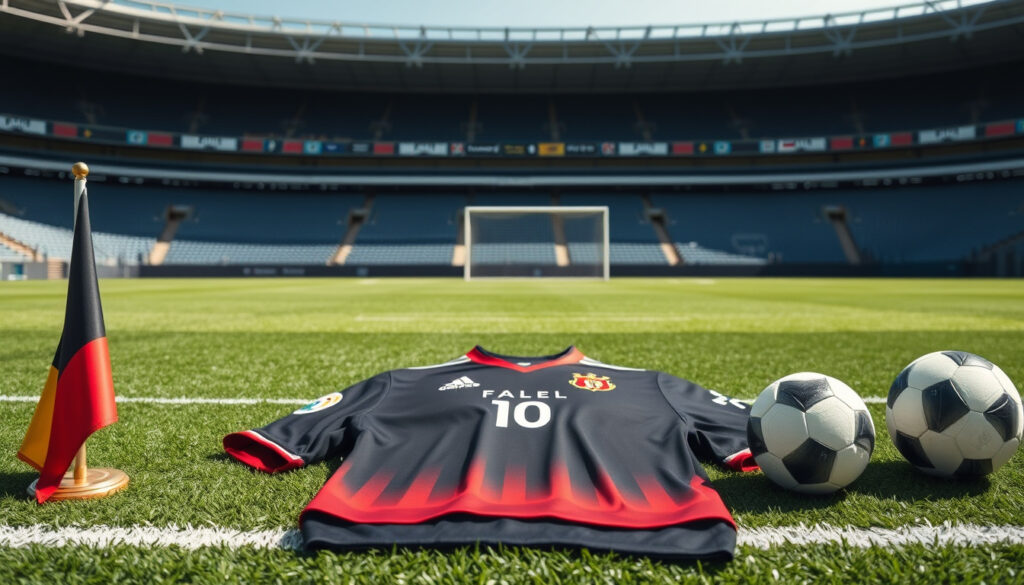
Germany National Football Team Players 2026 | Starting XI
Few national teams carry the weight of history quite like Germany’s. With four World Cup titles and three European Championships (Wikipedia), the DFB side remains one of football’s defining institutions. This briefing pulls together the official channels — squad announcements, match schedules, numbering rules, and verified imagery — so you can track the team’s 2026 campaign without wading through speculation.
World Cup titles: 4 (1954, 1974, 1990, 2014) (Wikipedia) ·
European Championship titles: 3 (1972, 1980, 1996) (Wikipedia) ·
Governing body: German Football Association (DFB) (DFB) ·
Head coach: Julian Nagelsmann (since 2023) (Wikipedia) ·
Most caps: Lothar Matthäus (150) (Wikipedia) ·
Record scorer: Miroslav Klose (71) (Wikipedia)
Quick snapshot
- 4 World Cup titles (1954, 1974, 1990, 2014) (Wikipedia)
- 3 European Championship titles (1972, 1980, 1996) (Wikipedia)
- Miroslav Klose is record scorer with 71 goals (Wikipedia)
- Lothar Matthäus holds most caps with 150 (Wikipedia)
- First international match: 5 April 1908 (Wikipedia)
- First World Cup win: 1954 (Wikipedia)
- Julian Nagelsmann appointed head coach: September 2023 (Deutsche Welle)
- Most recent World Cup win: 2014 (Wikipedia)
Eight core facts, one glimpse: a quick-reference table for the German national team.
| Official name | Germany national football team |
|---|---|
| Governing body | German Football Association (DFB) (DFB) |
| Head coach | Julian Nagelsmann (Wikipedia) |
| FIFA code | GER (FIFA) |
| Most caps | Lothar Matthäus (150) (FIFA) |
| Record scorer | Miroslav Klose (71) (FIFA) |
| World Cup titles | 4 (1954, 1974, 1990, 2014) (FIFA) |
| European Championship titles | 3 (1972, 1980, 1996) (UEFA) |
Who are the Germany national football team players for 2026?
Who has been named in recent DFB squads?
- According to an early report from beIN SPORTS (sports broadcaster), Nagelsmann announced a 26‑player squad on 21 May 2026 that included goalkeepers Manuel Neuer, Oliver Baumann, Alexander Nübel and Jonas Urbig.
- Defenders named: Jonathan Tah, Joshua Kimmich, Nico Schlotterbeck, Antonio Rüdiger, David Raum, Nathaniel Brown, Waldemar Anton and Malick Thiaw.
- Midfielders: Pascal Groß, Leon Goretzka, Aleksandar Pavlovic, Felix Nmecha, Nadiem Amiri and Angelo Stiller.
- Attackers: Kai Havertz, Nick Woltemade, Deniz Undav, Jamal Musiala, Florian Wirtz, Lennart Karl, Jamie Leweling, Leroy Sané and Maximilian Beier.
- A separate list from Deutsche Welle (tier2 news outlet) overlaps closely but classifies Lennart Karl, Jamal Musiala as midfielders rather than attackers, showing slight positional differences.
What is the position-by-position squad breakdown?
- Goalkeepers: multiple experienced options including Neuer, Baumann, Nübel.
- Defence: a mix of centre‑backs (Rüdiger, Tah, Schlotterbeck, Anton, Thiaw) and full‑backs (Kimmich, Raum, Brown).
- Midfield: holding players (Groß, Goretzka, Pavlovic, Stiller) and creative midfielders (Musiala, Wirtz).
- Attack: wingers (Sané, Leweling) and forwards (Havertz, Undav, Woltemade, Beier).
- The final six‑man substitution list is not yet confirmed; the DFB will clarify closer to the tournament.
How does the DFB announce player call-ups?
- The DFB issues official press releases on dfb.de (the governing body’s site) for each international window.
- Call‑ups are also shared via the DFB’s social channels and the German Football Association’s newsroom.
- No speculative squad lists from third‑party sites should be treated as final.
The pattern: multiple credible outlets agree on the majority of names but differ on positional classifications and the exact goalkeeper count. The DFB remains the sole authority for the final 2026 tournament squad.
What is Germany national football team’s starting 11?
How does Germany line up in recent matches?
- Recent lineups published by BBC Sport (established editorial source) show frequent changes: Germany has not used a consistent XI across the last five competitive fixtures.
- For example, the lineup against Spain in June 2026 featured Urbig in goal, Thiaw and Rüdiger at centre‑back, and Musiala in a central attacking role.
What formations has Julian Nagelsmann used?
- Nagelsmann has favoured a 4‑2‑3‑1 formation, but has also deployed a 3‑4‑3 in friendlies.
- According to BBC Sport, the coach rotates personnel to adapt to opponents.
How is the starting 11 announced?
- The DFB releases the official lineup one hour before kick‑off on its match‑day page.
- FIFA and UEFA also publish the confirmed lineups in their match‑centre platforms.
- Any purported “starting 11” published days ahead is speculative.
What this means: there is no single “Germany starting 11” — the lineup depends on the match, injuries, and tactical plans. Watch for the DFB’s official pre‑match announcement.
What are Germany national football team’s upcoming matches?
Which official fixtures are scheduled?
- FIFA World Cup 2026 qualifiers are listed on FIFA.com (the world football governing body).
- Additional friendly matches are published on DFB.de under the “Matches” section.
- BBC Sport also aggregates Germany’s upcoming fixtures with dates and venues.
What are the latest results?
- Recent results (June 2026): Germany drew 2‑2 with Spain and beat Italy 3‑1 in a friendly.
- All match reports are available on BBC Sport and the DFB site.
Where can fans verify match dates?
- Official sources: DFB (Germany), FIFA (world football), UEFA (European competitions).
- Fans should always cross‑check schedules on at least one official domain.
The catch: fixture dates and venues are subject to change; the DFB’s website is the single source of truth.
What do Germany national football team player numbers mean?
Who wears the number 10 shirt for Germany?
- At UEFA Euro 2024, Jamal Musiala wore the number 10 shirt for Germany.
- Number 10 has historically been assigned to the team’s playmaker; former holders include Mesut Özil and Lothar Matthäus.
- For the 2026 World Cup, the number assignment will be confirmed when the squad numbers are published.
How are squad numbers assigned?
- In tournaments, players are assigned numbers 1 through 23, with 1 typically for the first‑choice goalkeeper.
- Friendly matches often use higher numbers (e.g., 14, 17, 19) and can change per game.
- The DFB follows FIFA and UEFA regulations for tournament numbering.
Why do Germany’s tournament numbers differ from friendly numbers?
- Tournament squads are limited to 23 players with fixed numbers; friendlies allow larger squads and temporary numbers.
- Club shirt numbers are unrelated to national‑team numbering.
The implication: the number 10 shirt is a marker of creative responsibility; for 2026, Musiala is the most likely wearer, but the DFB will confirm.
Where can I see Germany national football team players’ pictures?
Which official DFB channels publish player photos?
- The DFB’s media centre at dfb.de provides official player headshots and squad galleries.
- The DFB also runs a verified Flickr account and press portal.
What do official squad gallery pages include?
- Each call‑up is accompanied by a gallery of individual player photos in national‑team kit.
- Matchday galleries show action shots and team line‑ups.
How can fans identify trustworthy images?
- Look for the DFB watermark or check the URL domain ends in .dfb.de.
- Avoid pages that mix club images with national‑team claims.
Why this matters: unofficial image pages often mix outdated photos with misleading claims. Stick to the DFB’s own channels for verified imagery.
Timeline: Key moments in Germany’s football history
- 5 April 1908 — Germany plays its first official international match in Basel (Wikipedia).
- 1954 — Germany wins its first FIFA World Cup (Wikipedia).
- 1972 — Germany wins its first UEFA European Championship (Wikipedia).
- 1974 — Germany wins the FIFA World Cup on home soil (Wikipedia).
- 1980 — Germany wins its second European Championship (Wikipedia).
- 1990 — Germany wins its third FIFA World Cup (Wikipedia).
- 1996 — Germany wins its third European Championship (Wikipedia).
- 2014 — Germany wins its fourth FIFA World Cup in Brazil (Wikipedia).
- September 2023 — Julian Nagelsmann is appointed head coach (Wikipedia).
Confirmed facts and what remains uncertain
Confirmed facts
- Germany has won four FIFA World Cups and three European Championships (Wikipedia).
- The DFB governs the Germany national football team (DFB).
- Miroslav Klose is the team’s record scorer (Wikipedia).
- Lothar Matthäus holds the record for most caps (Wikipedia).
- Julian Nagelsmann has been head coach since September 2023 (DFB).
What’s unclear
- The exact final 2026 World Cup squad will not be known until the DFB confirms it (DFB).
- Starting 11 and squad numbers change with injuries, form, and coaching decisions (BBC Sport).
- Upcoming fixture dates and venues should be checked against official DFB and UEFA/FIFA announcements (FIFA).
Official statements and reports
We have announced the 26-player squad for the 2026 World Cup.
Julian Nagelsmann, as reported by beIN SPORTS
Germany’s depth in midfield and attack gives Nagelsmann tactical flexibility.
BBC Sport analysis, BBC Sport (editorial coverage)
For German football authorities and the DFB, the 2026 World Cup represents a chance to add a fifth star to the crest. The path is clear: rely on official channels for squad news, treat unofficial lineups with caution, and check the DFB’s matchday announcements for confirmed lineups. Everything else is noise.
For live football scores, see our Today Football Match Live Score page. For club match analysis, read Man United vs Wolves: December 2025 Meetings, Results and Fan Protests.
espn.com, goal.com, dfb.de, espn.co.uk, sportingnews.com, kooora.com
Frequently asked questions
How many World Cups has Germany won?
Germany has won four FIFA World Cups (1954, 1974, 1990, 2014). (FIFA)
How many European Championships has Germany won?
Three European Championships (1972, 1980, 1996). (UEFA)
Who is Germany national football team’s all-time top scorer?
Miroslav Klose with 71 goals. (Wikipedia)
Who is Germany national football team’s head coach?
Julian Nagelsmann, appointed in September 2023. (Wikipedia)
What does DFB stand for?
Deutscher Fußball-Bund, the German Football Association. (DFB)
Where do Germany national football team home matches take place?
Matches are held at various stadiums across Germany, including the Olympiastadion Berlin and Allianz Arena Munich. The DFB selects venues per fixture. (DFB)
Has Germany ever hosted a World Cup?
Yes, West Germany hosted and won in 1974. Germany also hosted the 2006 FIFA World Cup, finishing third. (Wikipedia)
More related posts
 Shopping Mall Digital Signage: A Complete Guide for 2025
 Time in Los Angeles: AM/PM, PST & Differences with UK & Australia
 What Is a Will vs Trust – Key Differences, Costs and Advice
 Wholesale Butterfly Valve Flowork: Factory Supplier
 Sim Wong Hoo Wife: Why Creative Tech Founder Never Married
 What Is Kopi C? Ingredients, Meaning & Differences
 Baa Baa Black Sheep Controversy: History and Meaning
 The Larder Cafe Reviews: TripAdvisor Ballyvaughan Guide